The Blakelys · Book p. 88
Cracks in the Breech
The gun nearly destroyed itself on its first firing — because the manual had not arrived.
Drag to compareLibrary of Congress
There almost wasn't a “Whopper.”
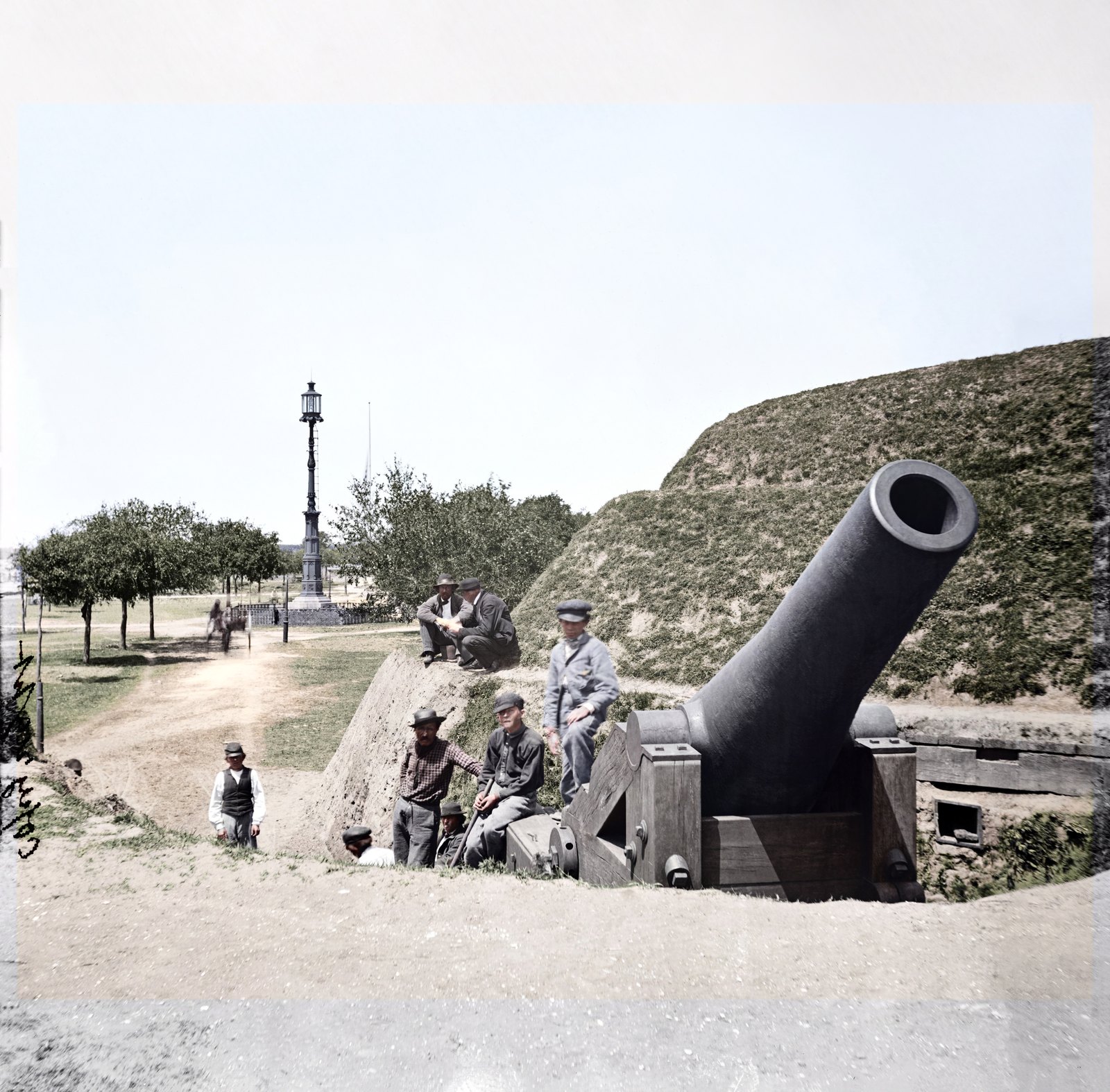
The gun was mounted on its carriage around September 3rd or 4th, 1863, and the Confederate artillerists were eager to try it. The instruction manual had not arrived with it. Looking at the breech, they found a cavity — and could not work out what it was for, so they filled it with powder.
It was an air chamber, designed to cushion the shock of the charge. Filling it meant firing the gun with the pressure of a full charge against solid metal where the design intended air.
The shell flew eight hundred yards and skipped another two hundred along the surface of the Cooper River. The cast-iron breech was found to be cracked in eleven places.
Word travelled fast and blame travelled with it. Colonel Josiah Gorgas, Chief of Ordnance, laid the fault on Brigadier General Roswell Ripley, commanding the First Military District of South Carolina, and pronounced the gun destroyed. He was premature. The Confederates took the cracked tube to James M. Eason's iron foundry in Charleston, had it fitted with a new breech, and put it back in Battery Ramsay — where it served until they blew it up themselves seventeen months later.
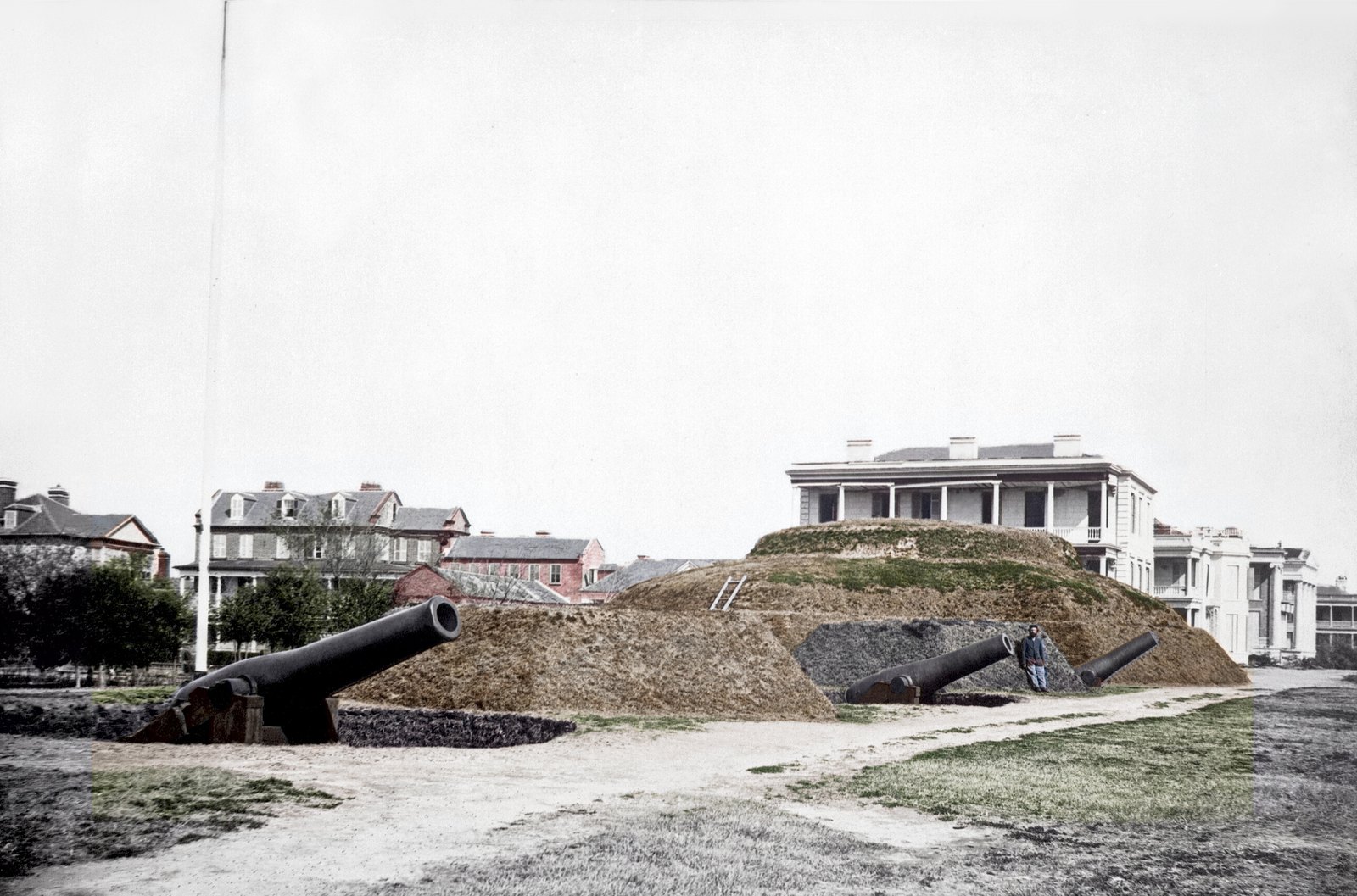
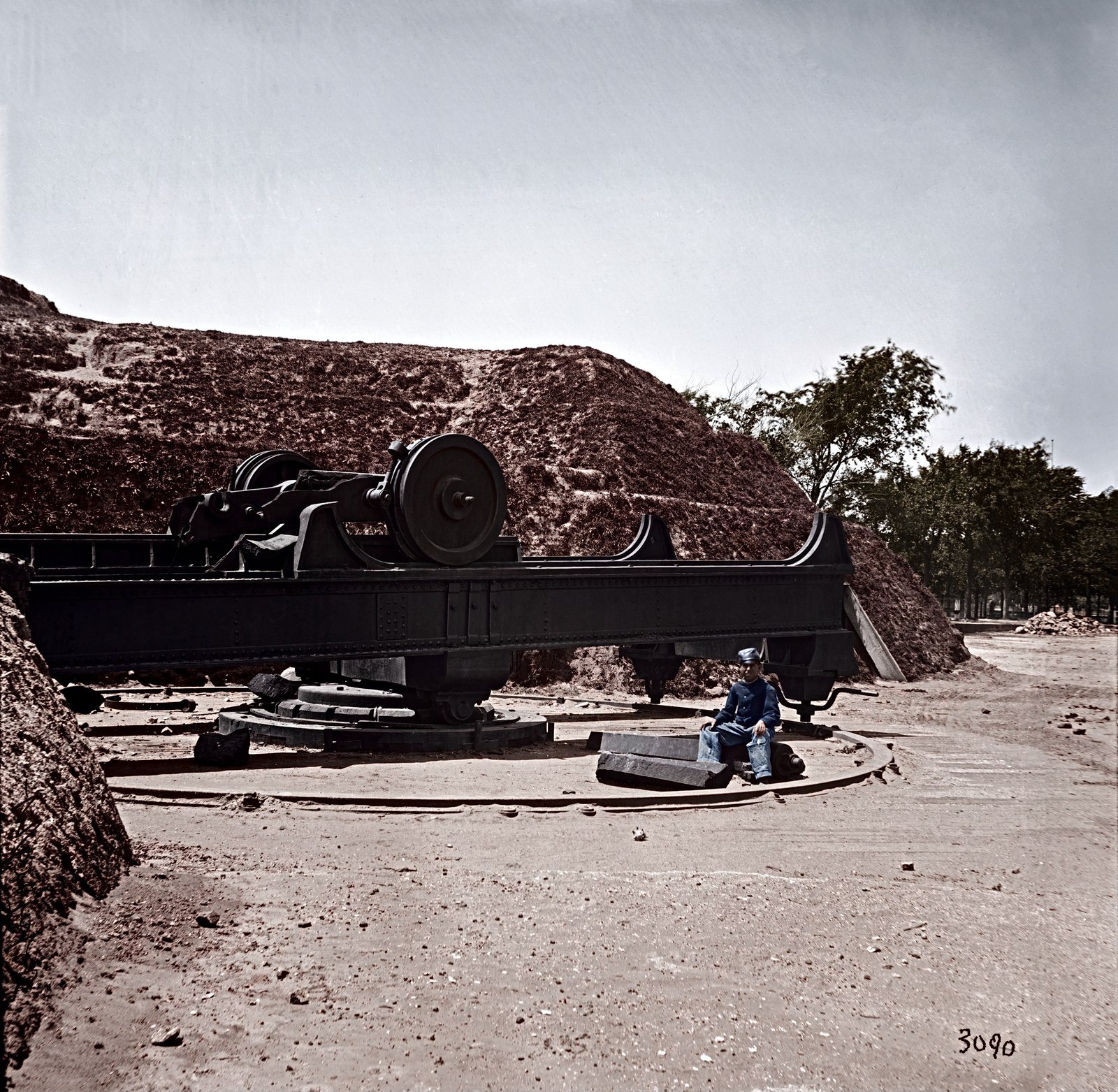
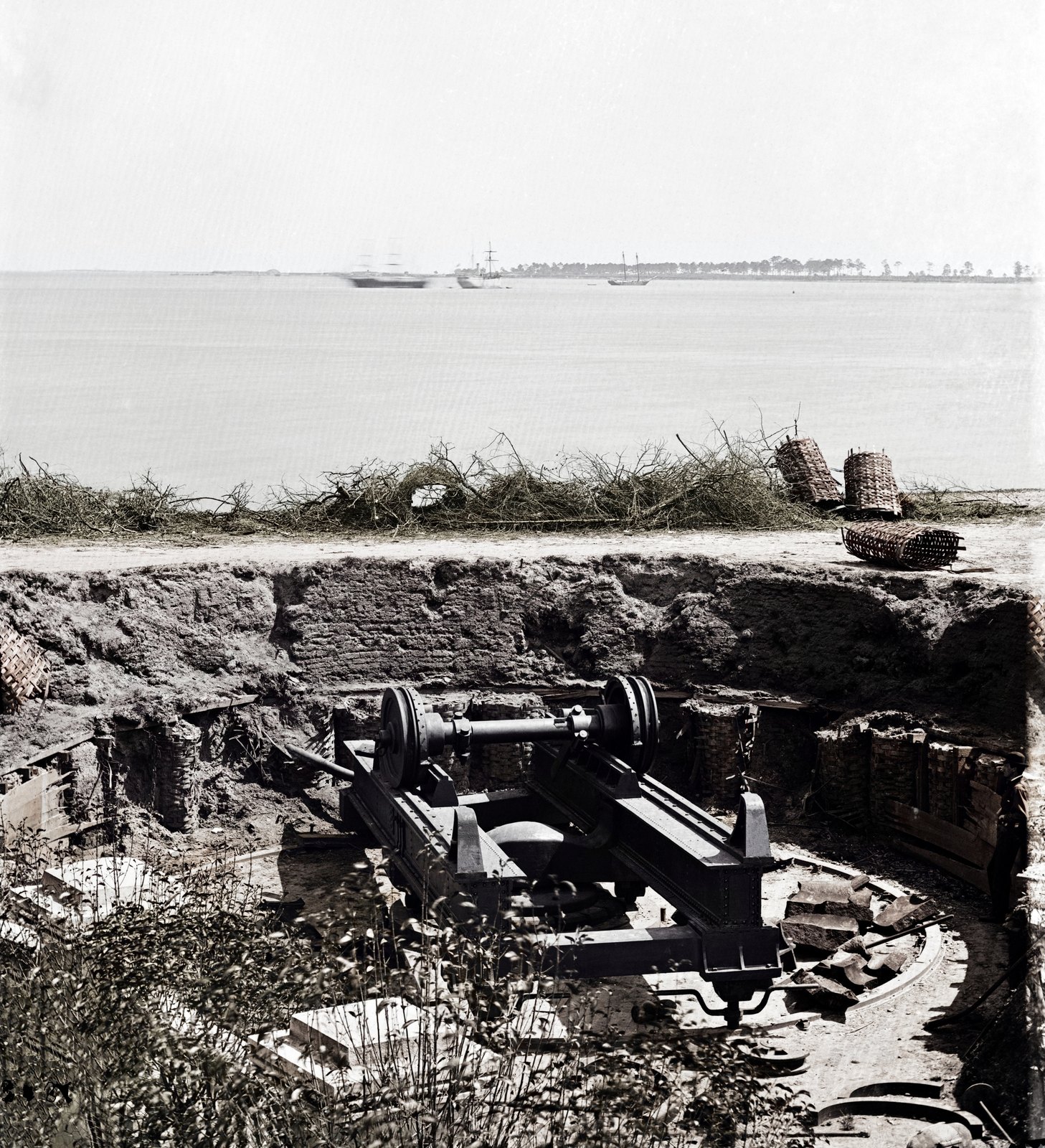
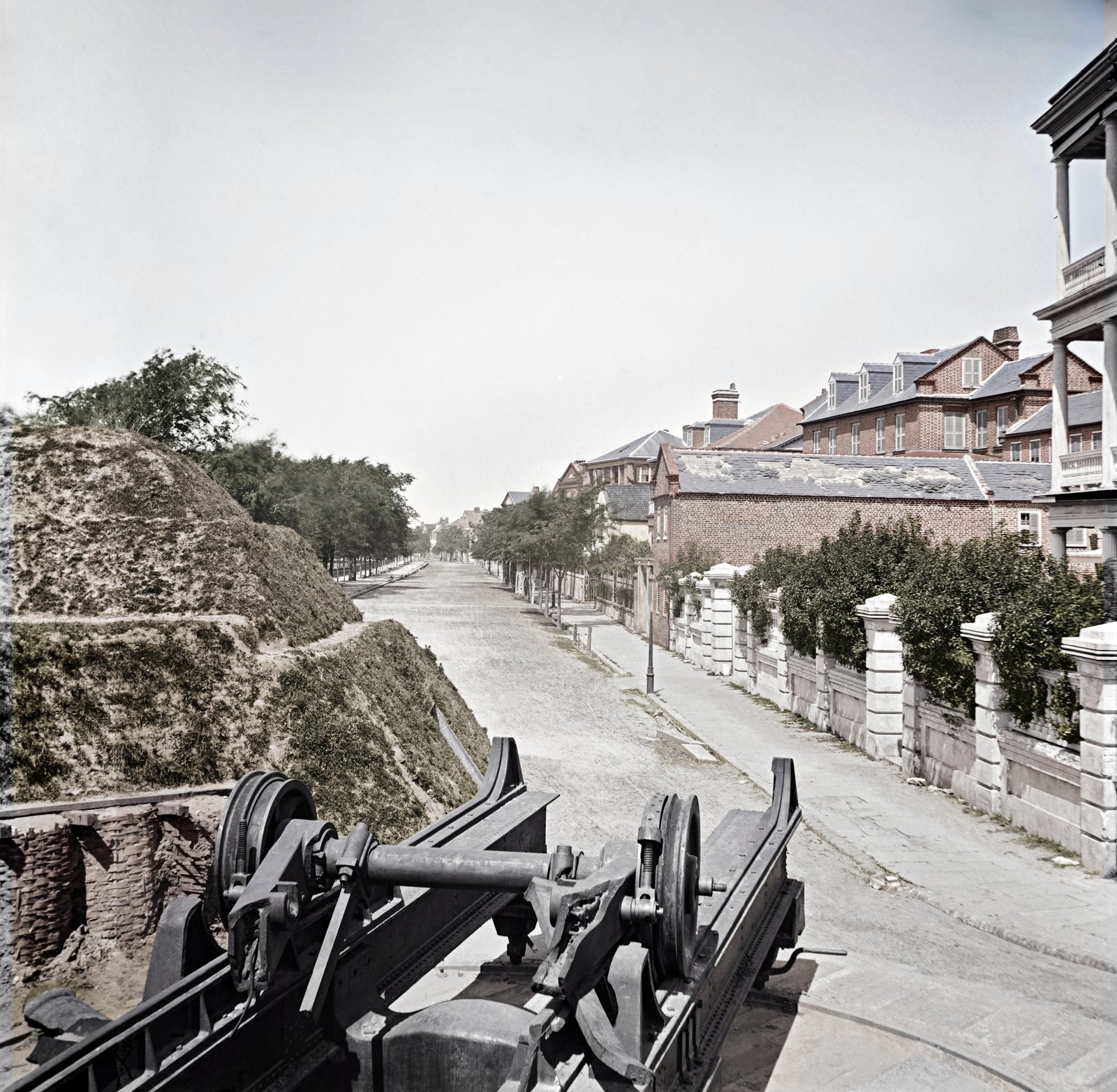
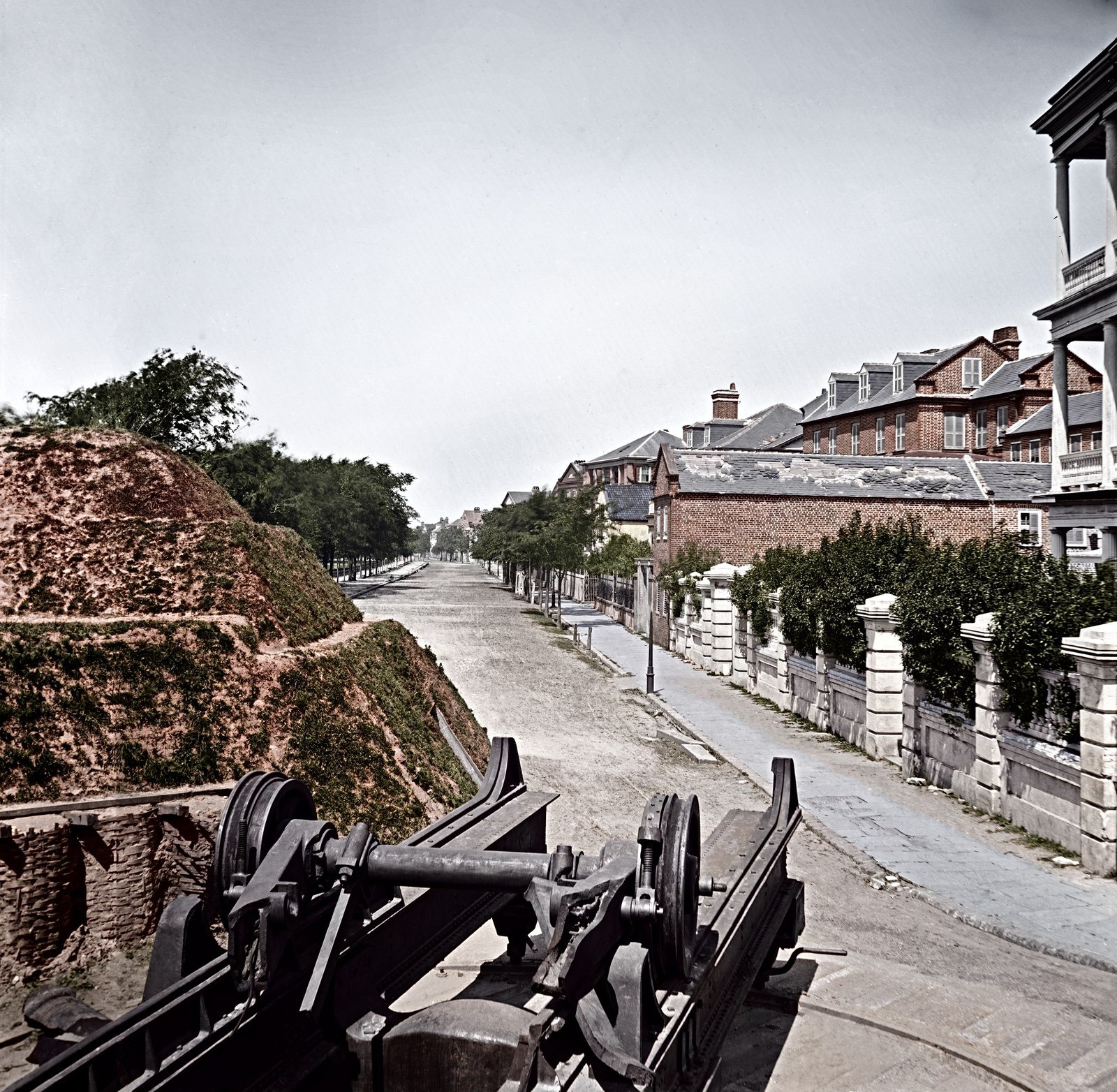
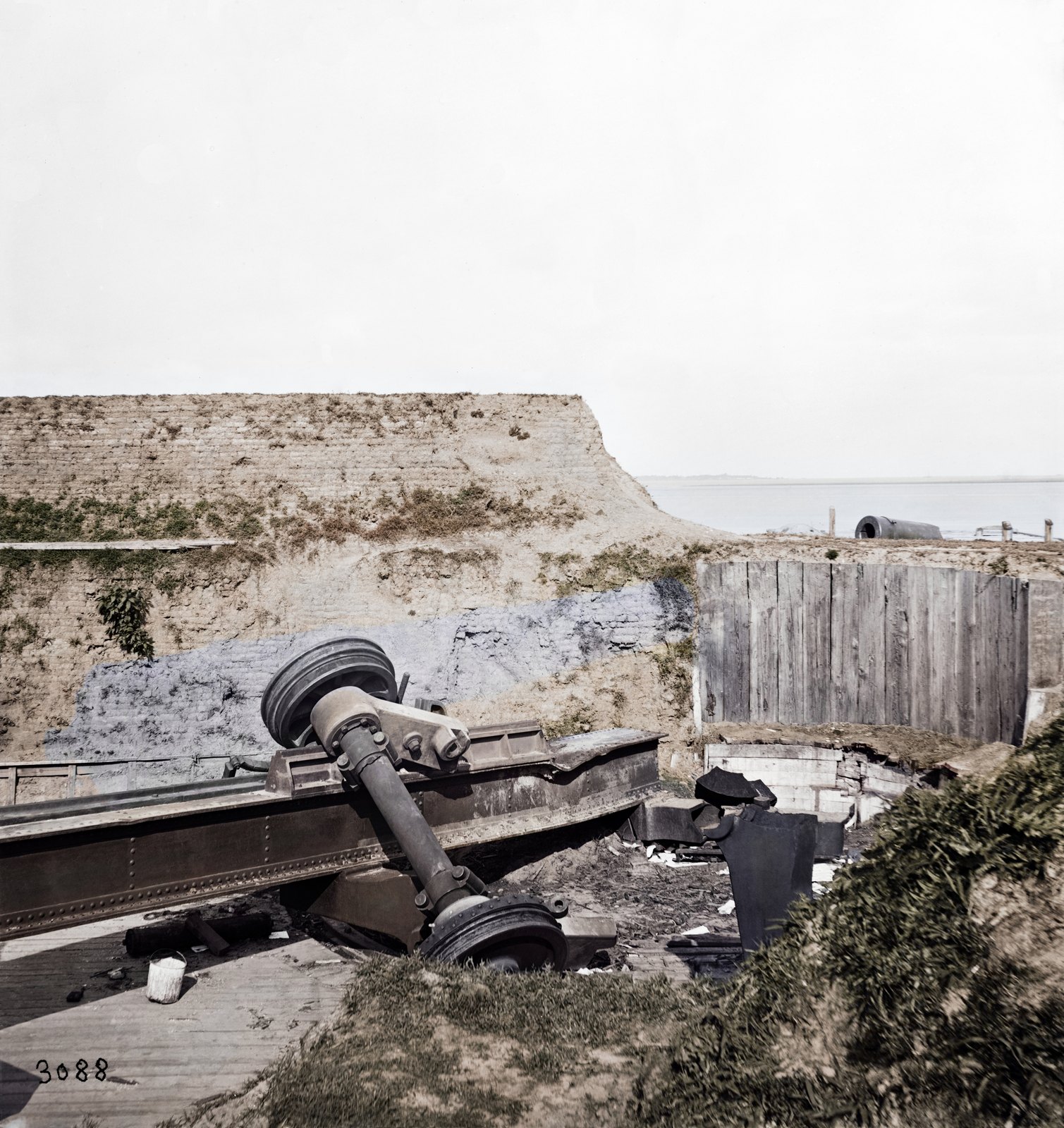
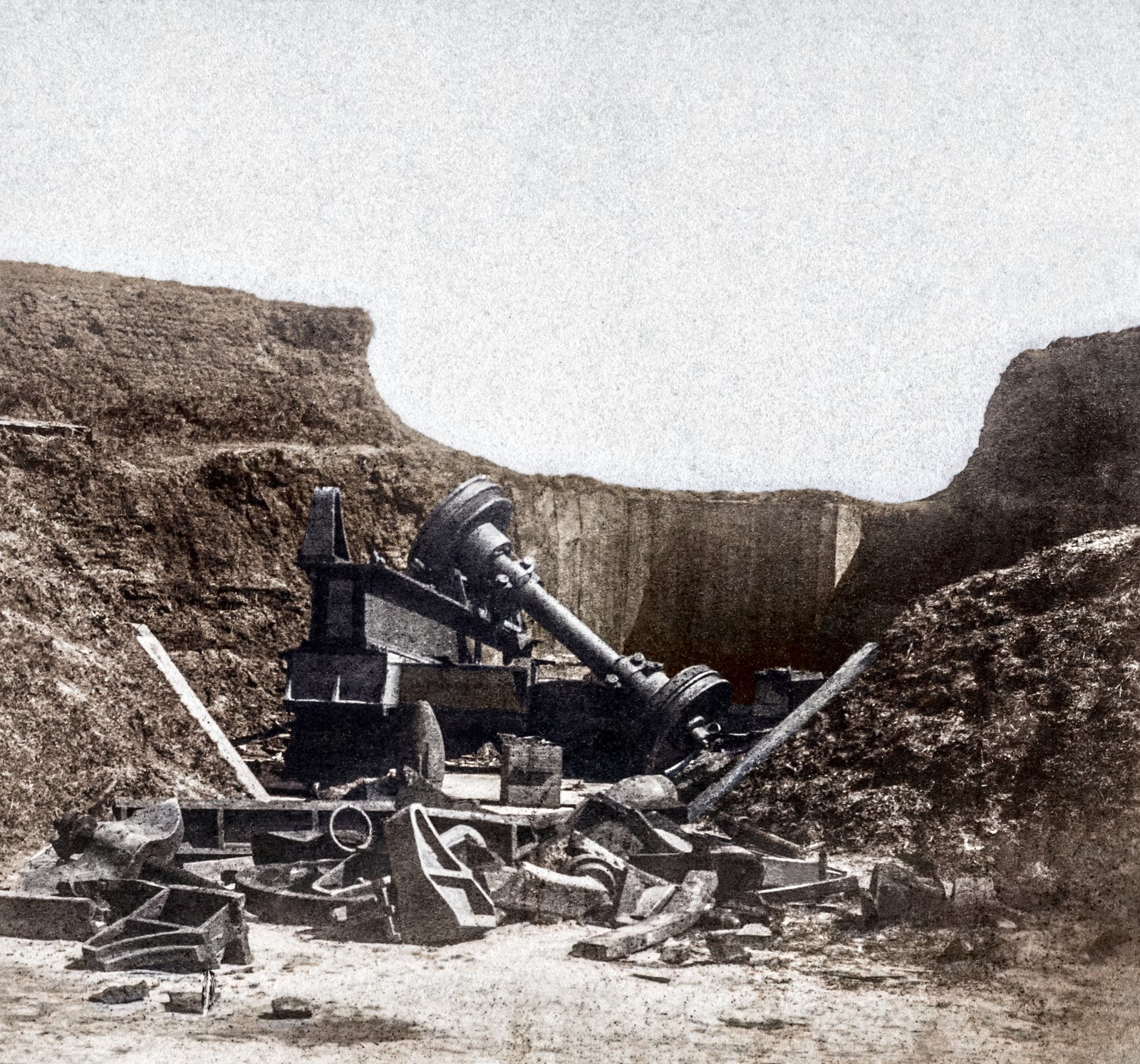
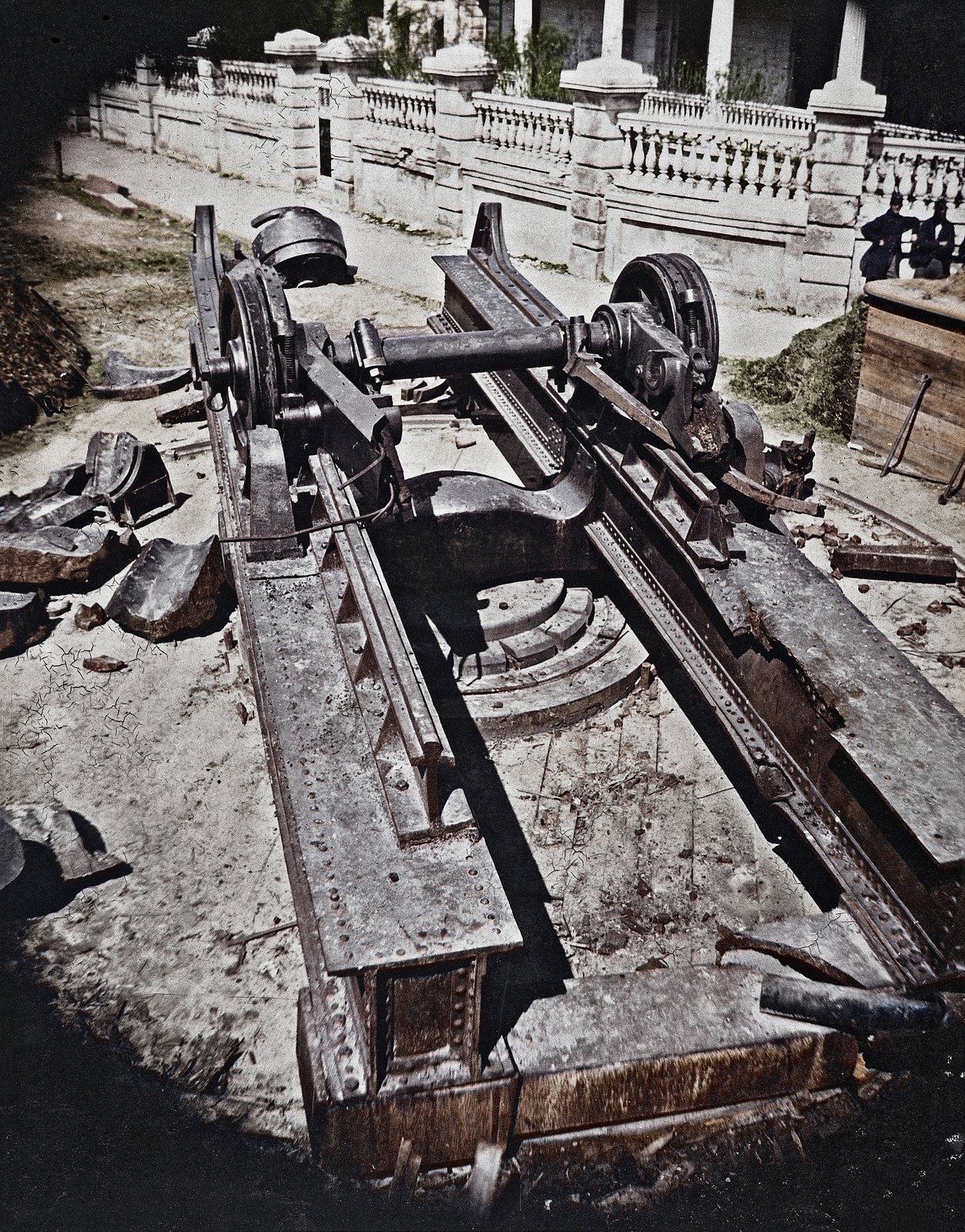
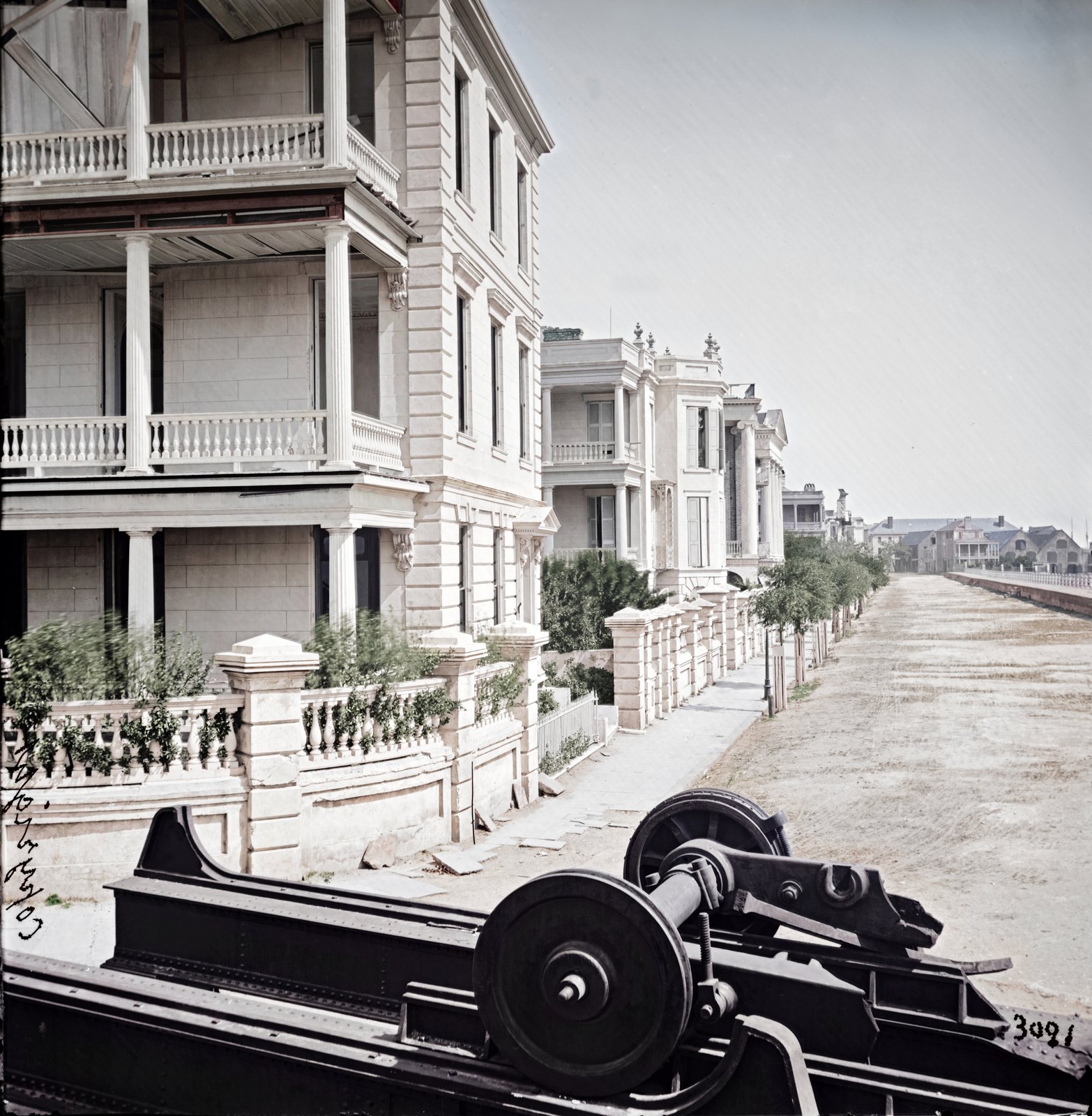
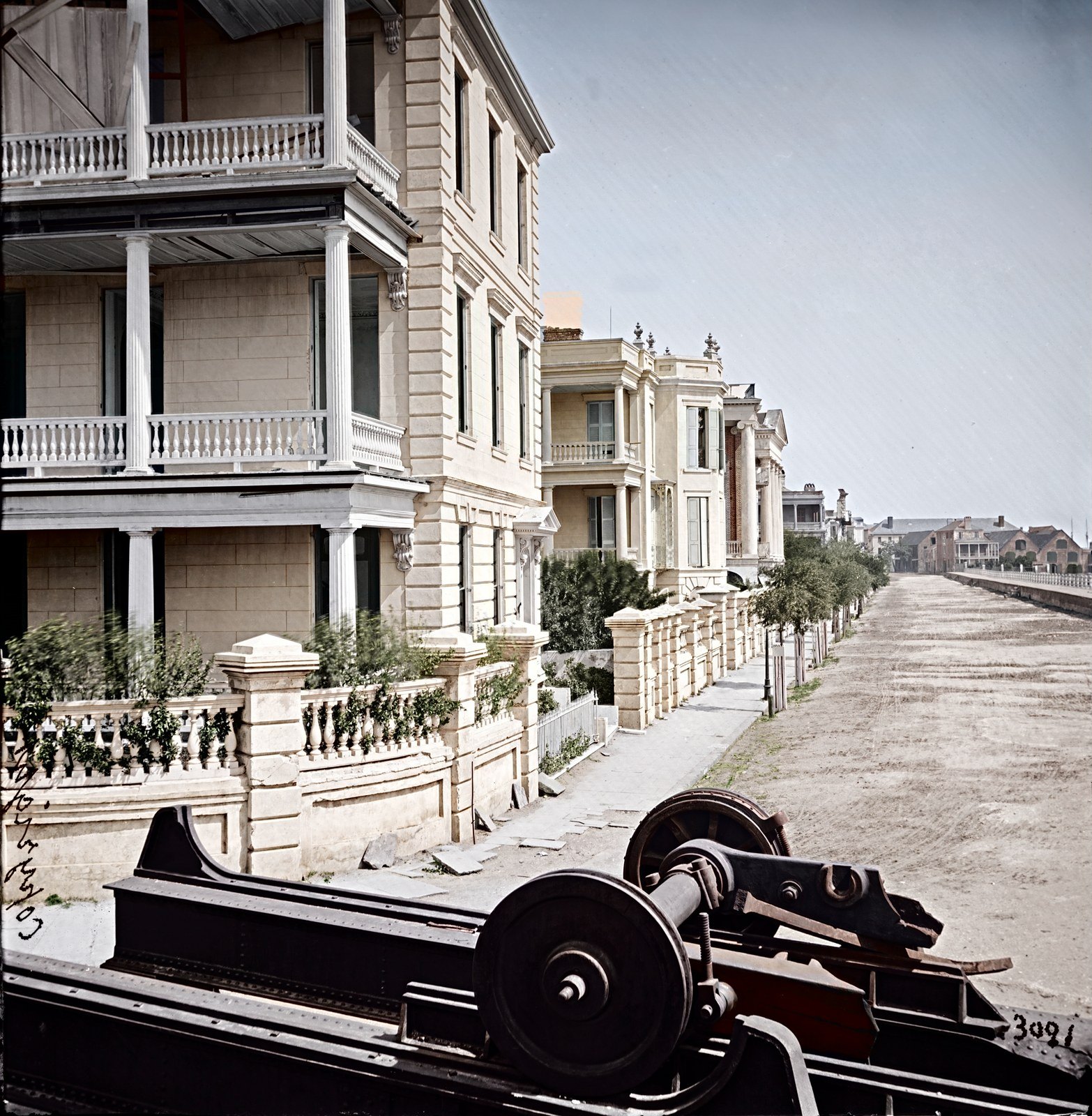
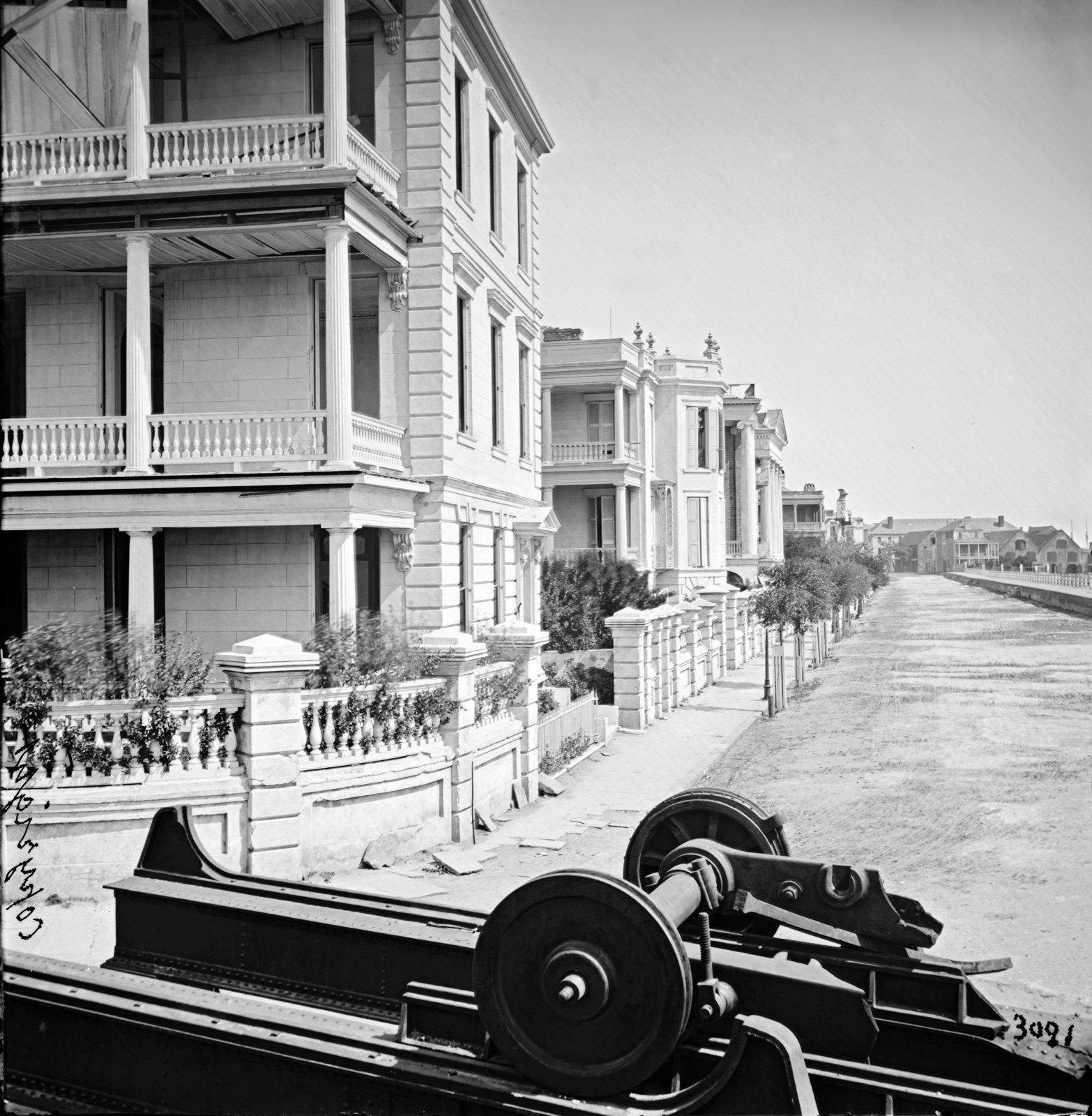
This photograph was made well after Barnard's earlier view of the same ground: the earthen embankments have been shovelled away as part of the Federal clearing of White Point Garden. In the blast of February 1865 the breech was broken off the gun. The Federals carried it to the Charleston Arsenal, and it eventually went to West Point, where it remains — beside the muzzle of the other Blakely, from Fraser's Wharf.
Also at White Point Garden