The Blakelys · Book p. 91
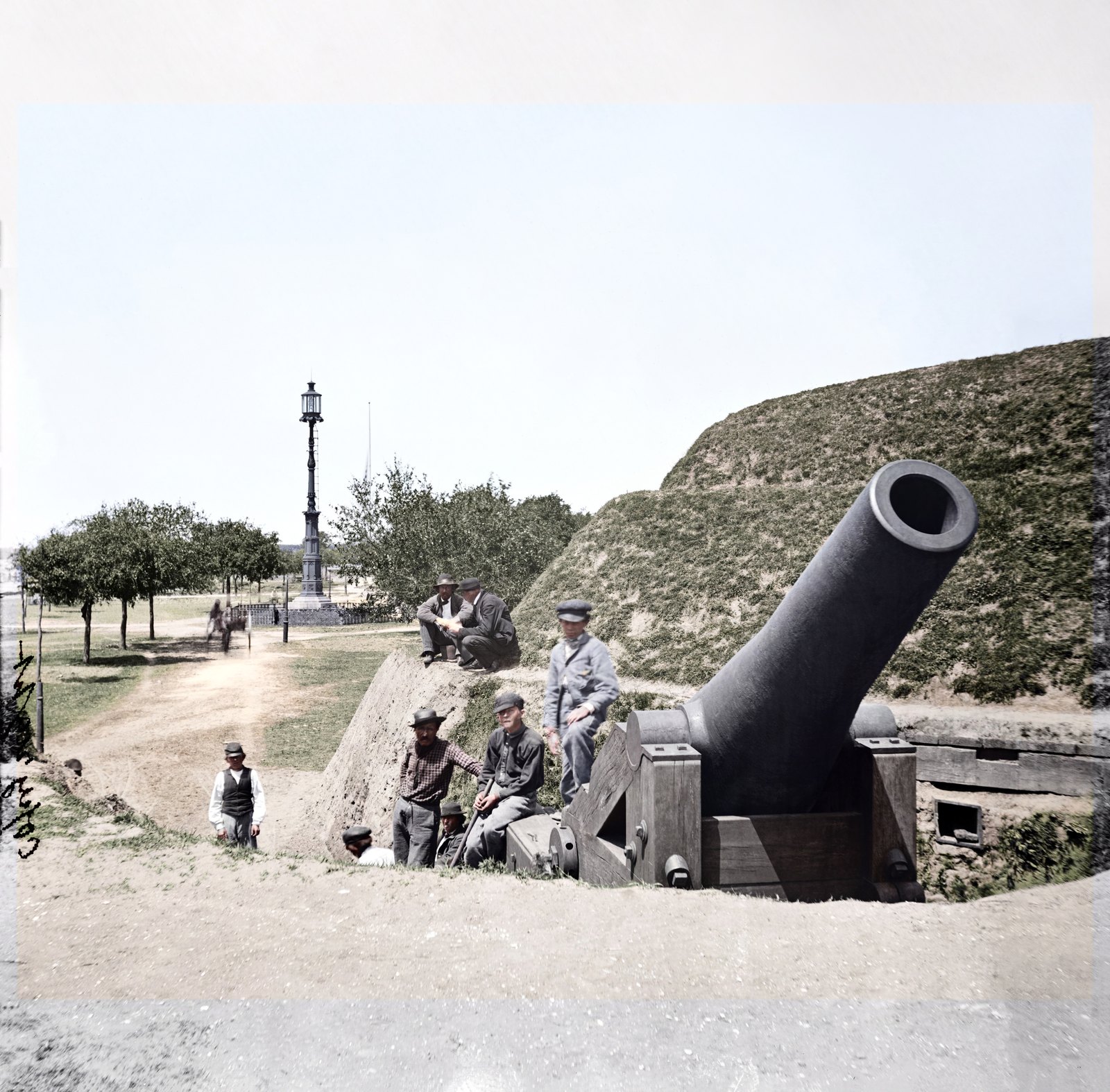
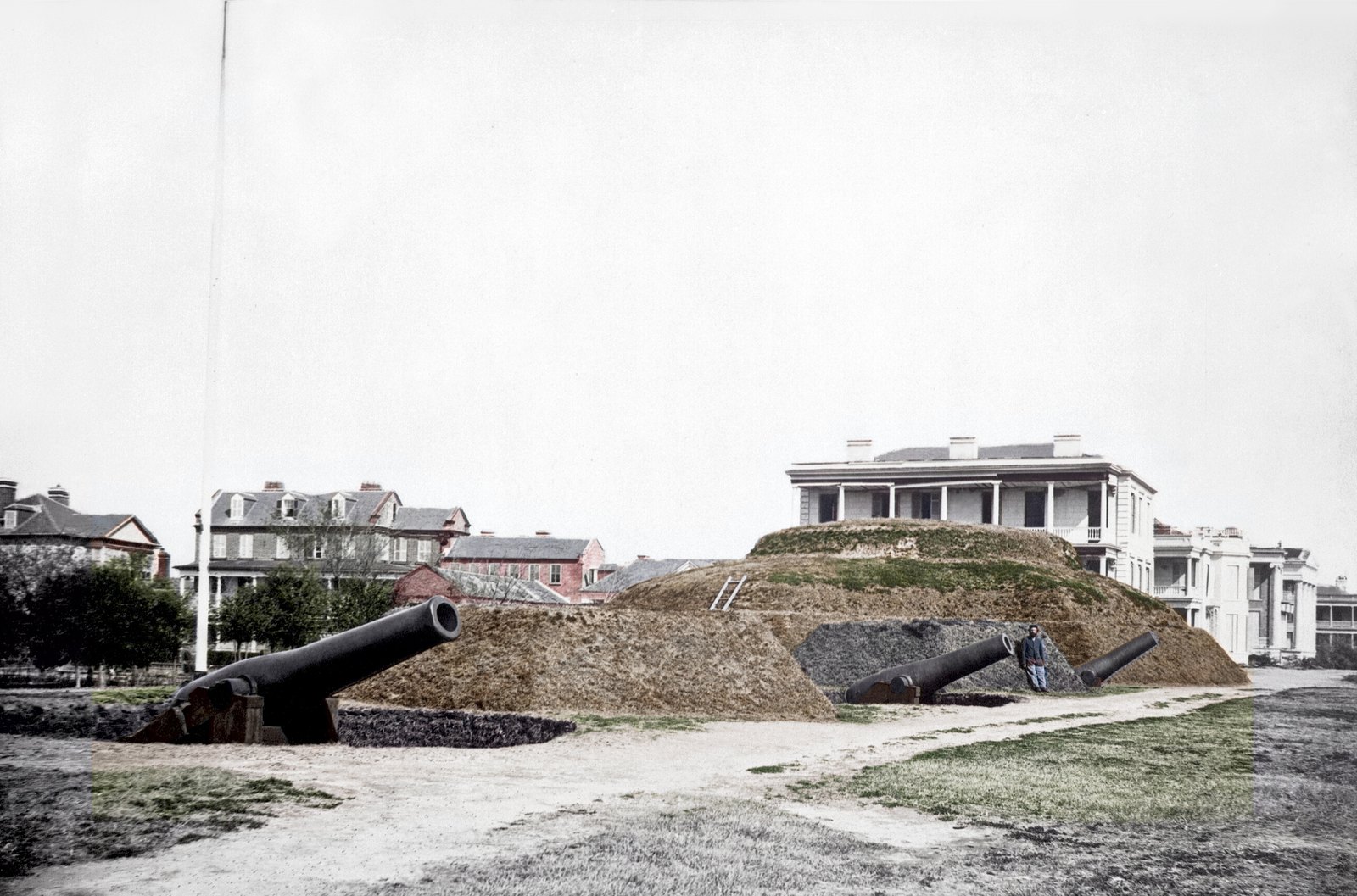
The Muzzle on the Parapet (second view)
Drag to compareLibrary of Congress
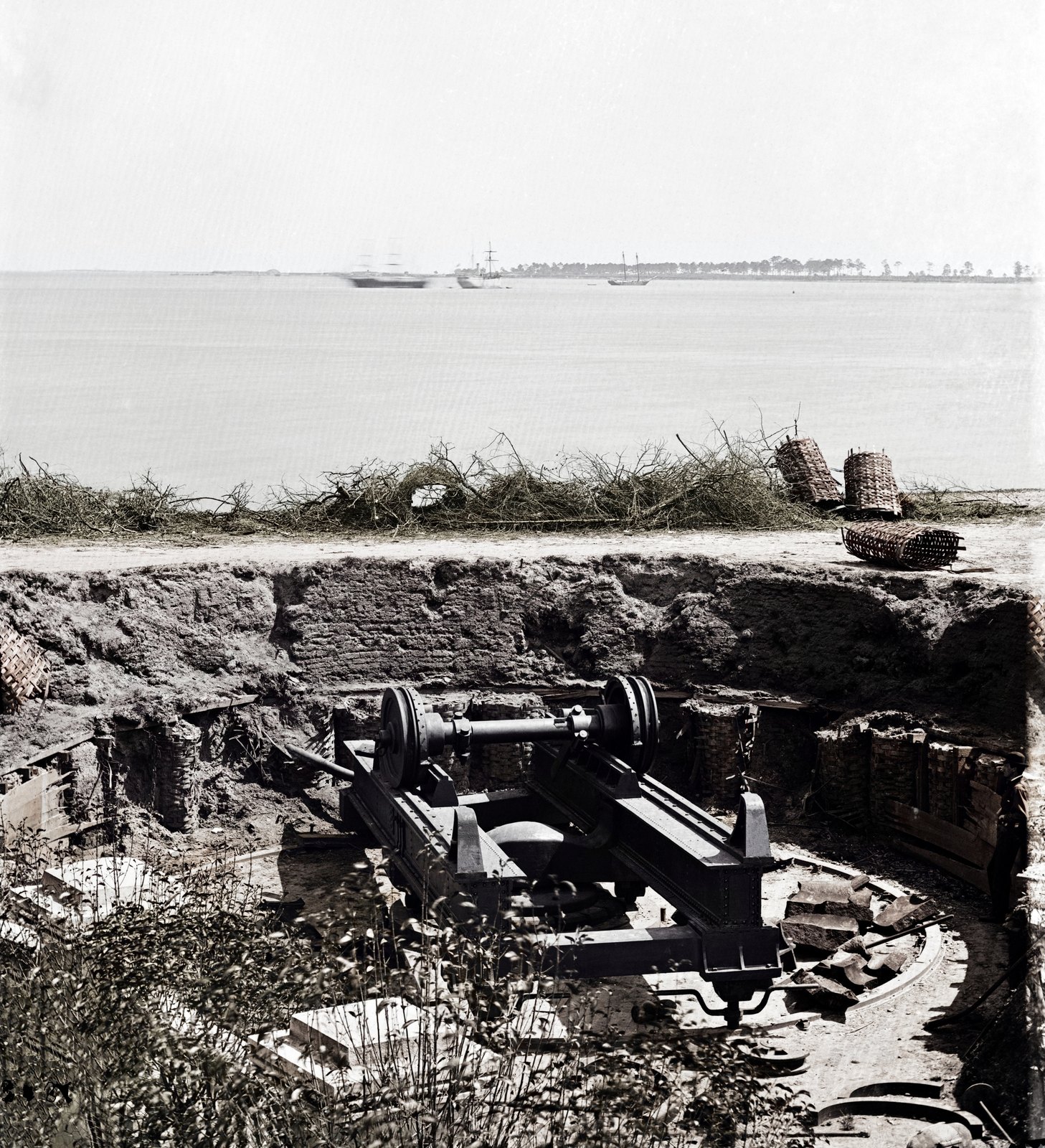
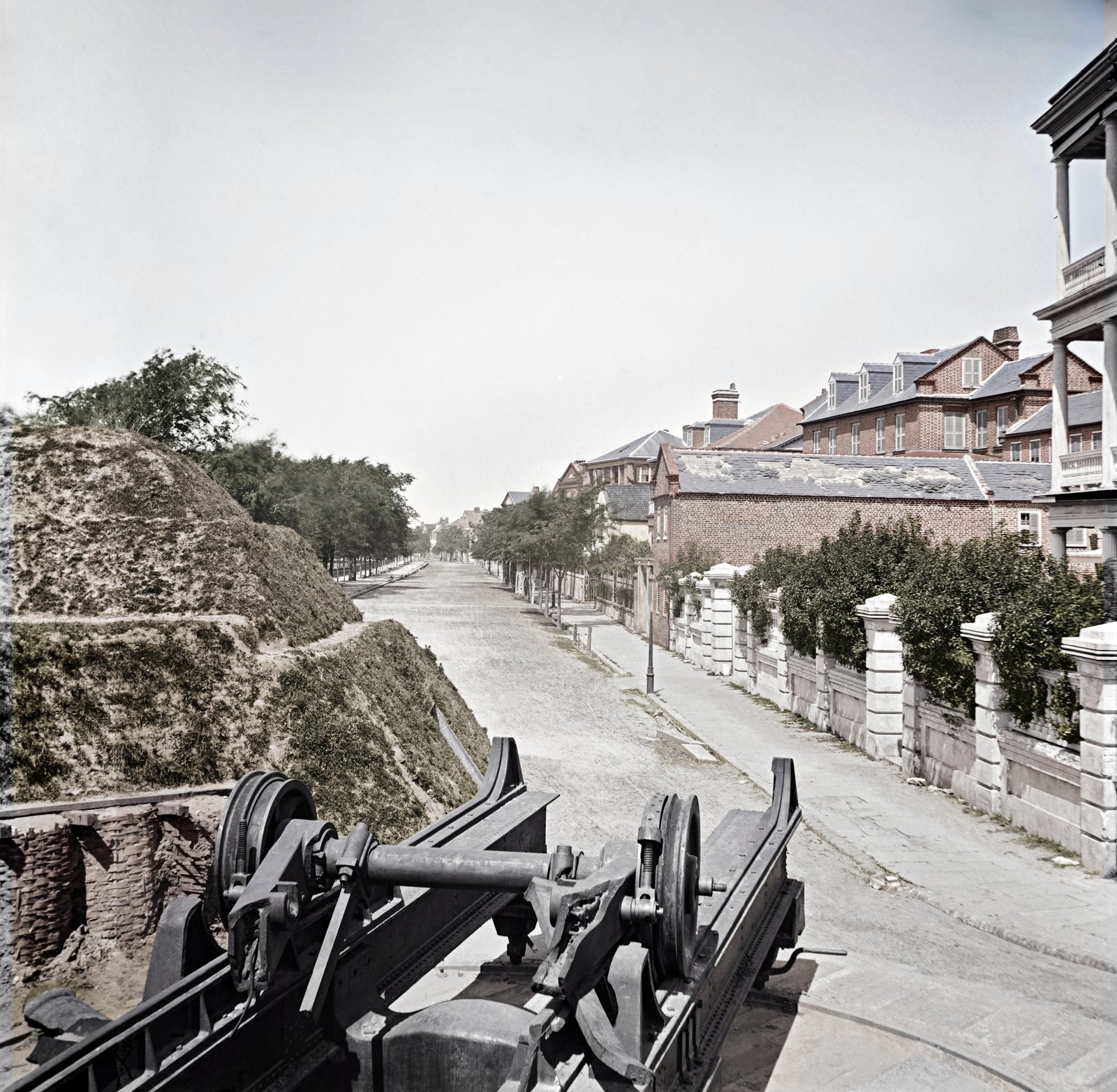
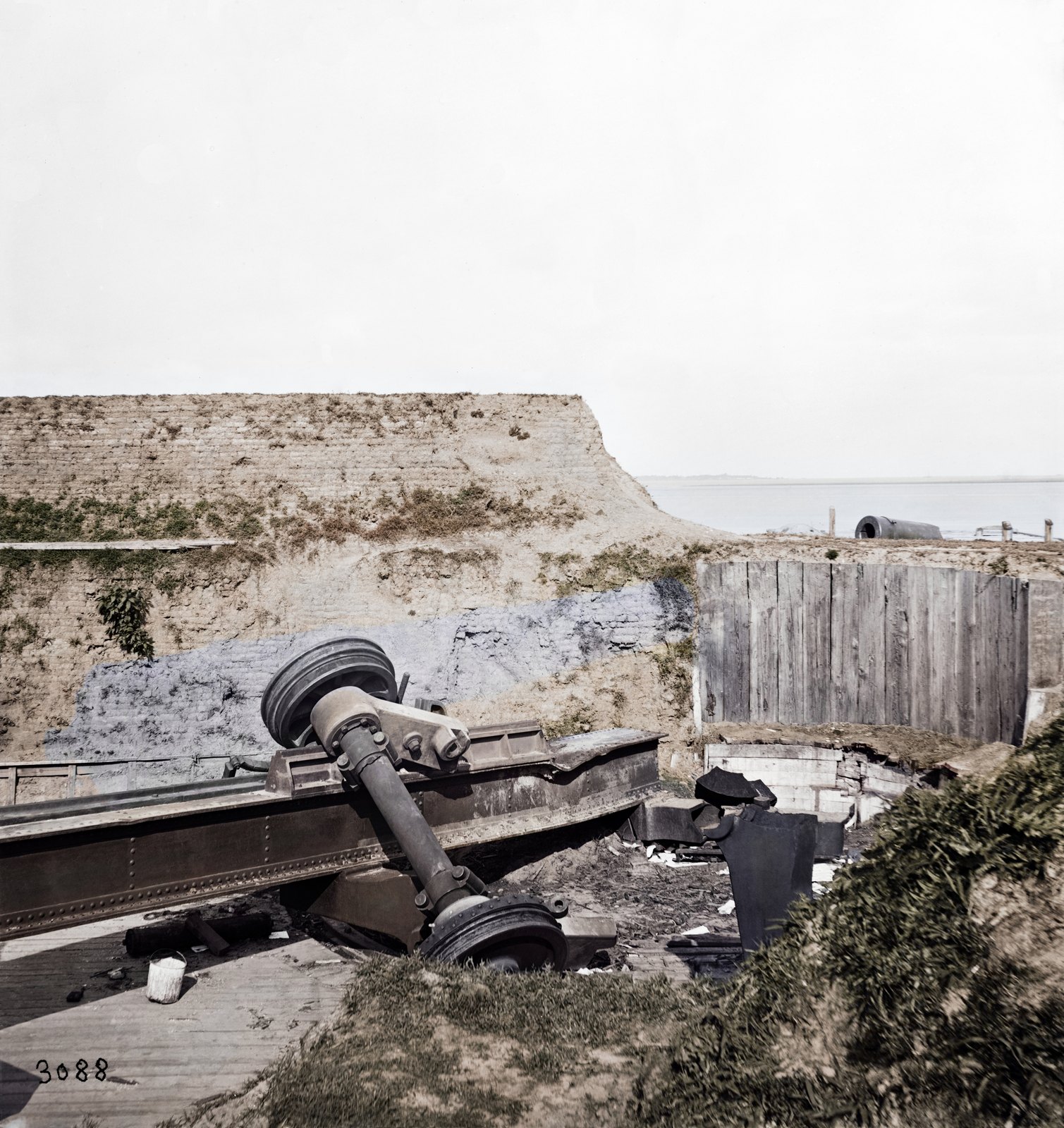
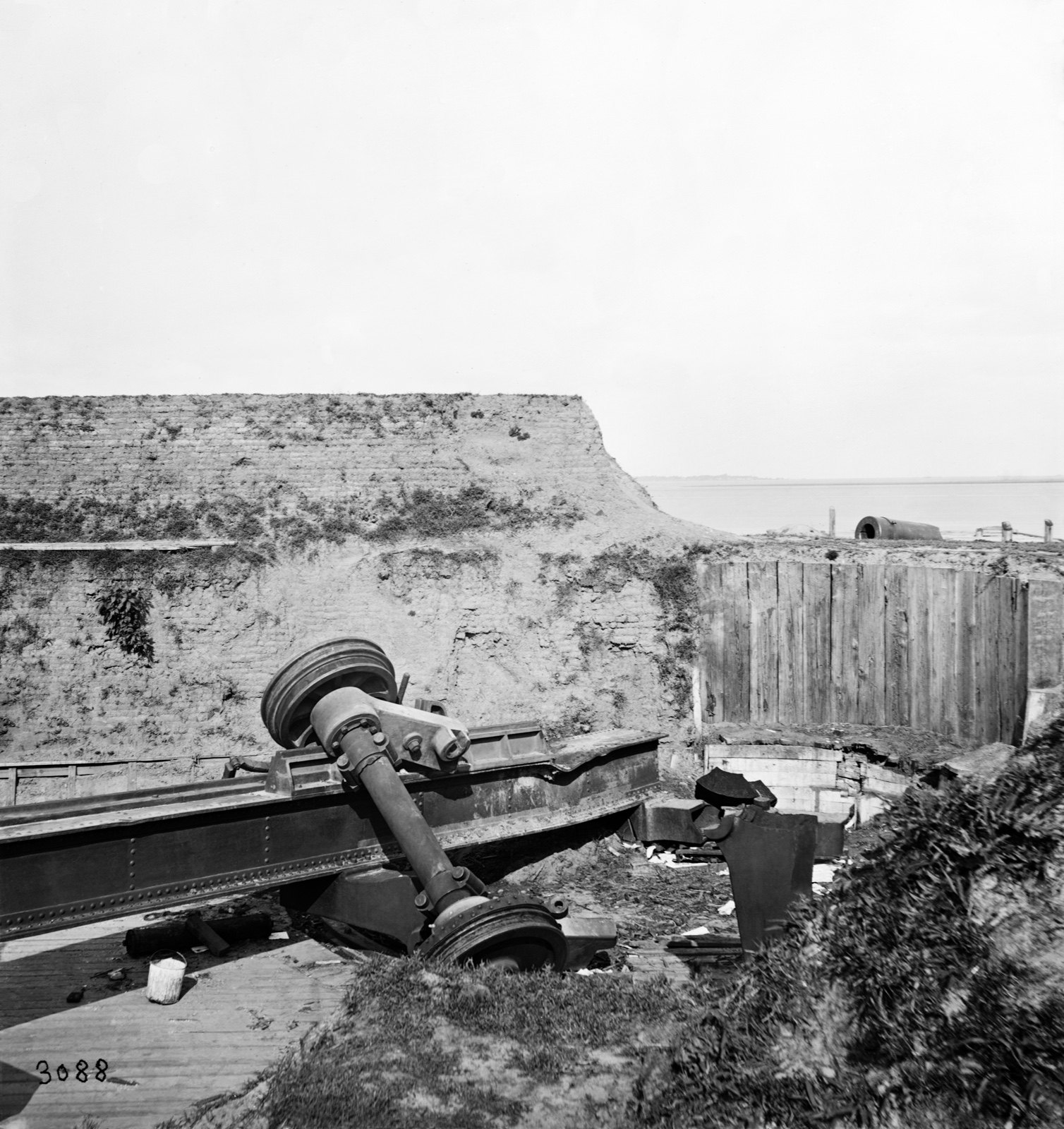
The second exposure steps back from the muzzle and takes in the emplacement that held it, which makes this the better plate for reading the engineering. At the right is the timber revetment facing the interior of the work — plank held against the earth to keep the face of the parapet from sloughing down. Beyond the parapet, over the crest, is open water.
That gap in the earth is the embrasure, the opening a gun fired through, and the water beyond it is the field of fire. The relationship is the whole argument for the position: a rifle of this size, sited here, covered the river approach to the city. It is also the reason the position was so heavily shot at, because an embrasure that lets a gun fire out lets the enemy see in.
Sergeant Augustine Smythe, a Confederate signalman, spent part of 1864 at an observation post in the steeple of St. Michael's Episcopal Church on Meeting Street — the highest point in Charleston, and the best seat in the city for watching the bombardment. On June 6, 1864, he described this very gun being fired at:
The Yankees are continuing their shelling of course. Today they are aiming at the big gun on Fraser's wharf, & some very good shots they have made. The last shell burst on the wharf, but I don't think it would have hit the gun itself.
They never did destroy it. In the end the Confederates destroyed it themselves, rather than leave a working English rifle to the army that was walking into the city.
The caption as printed in the book
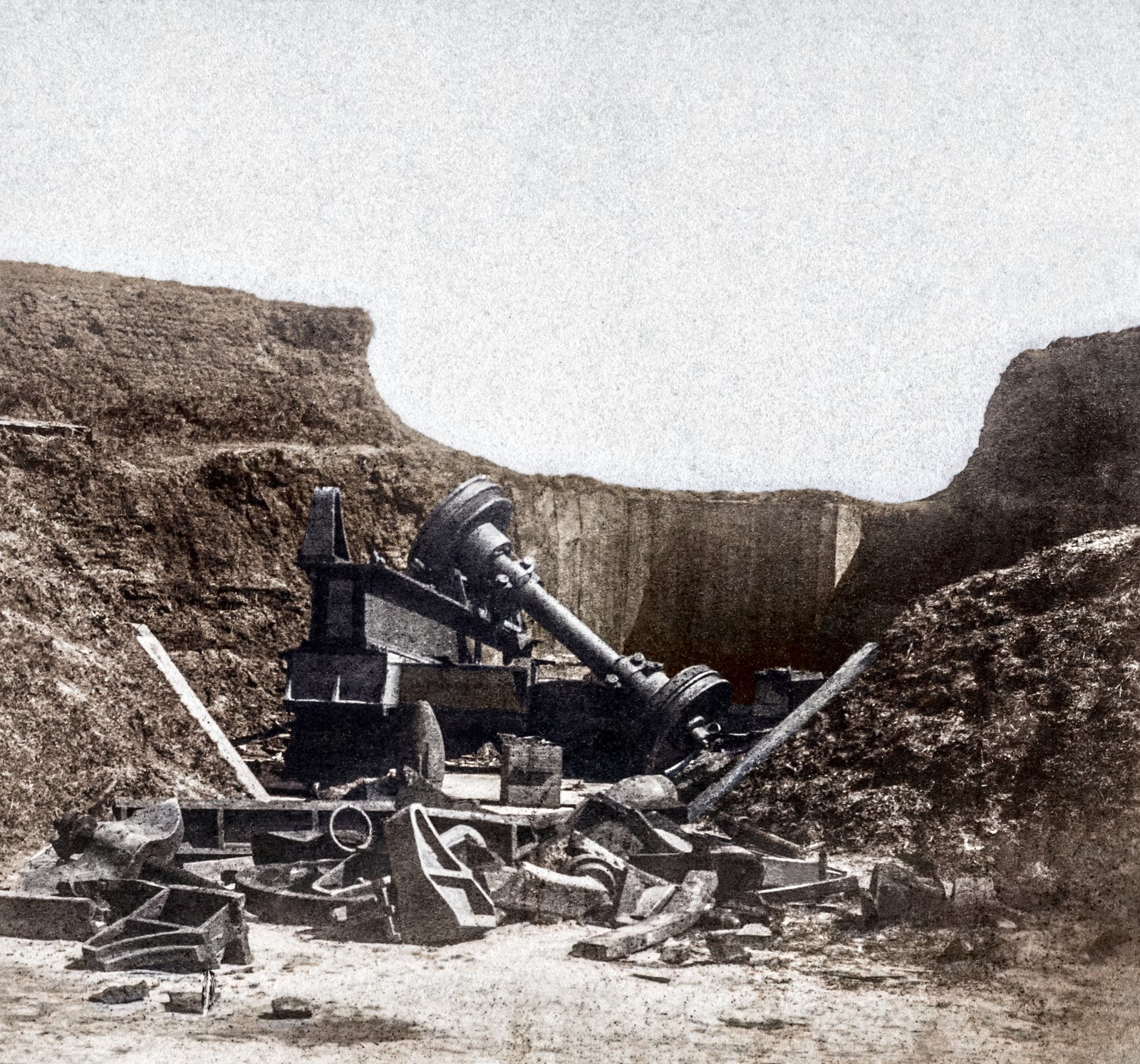
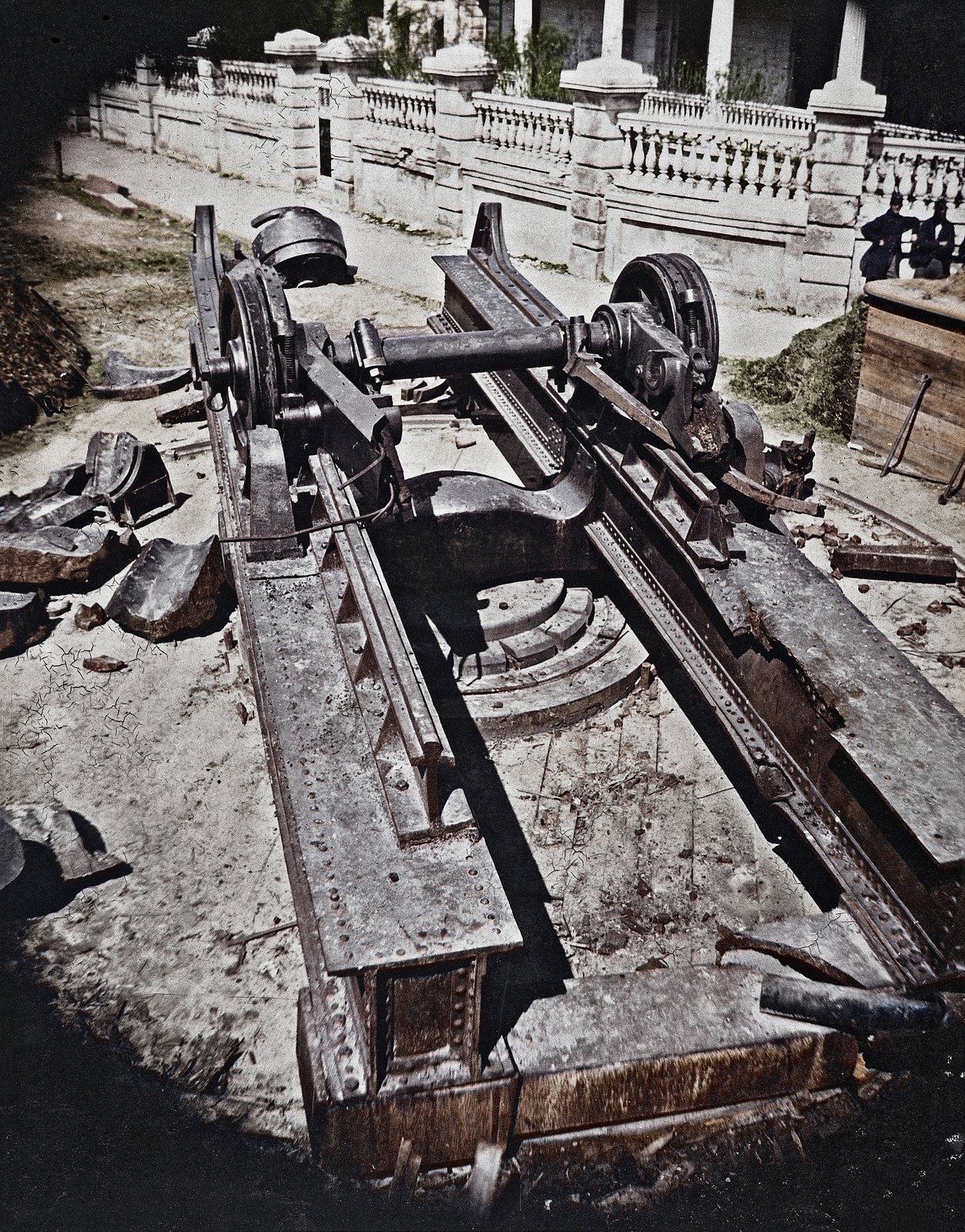
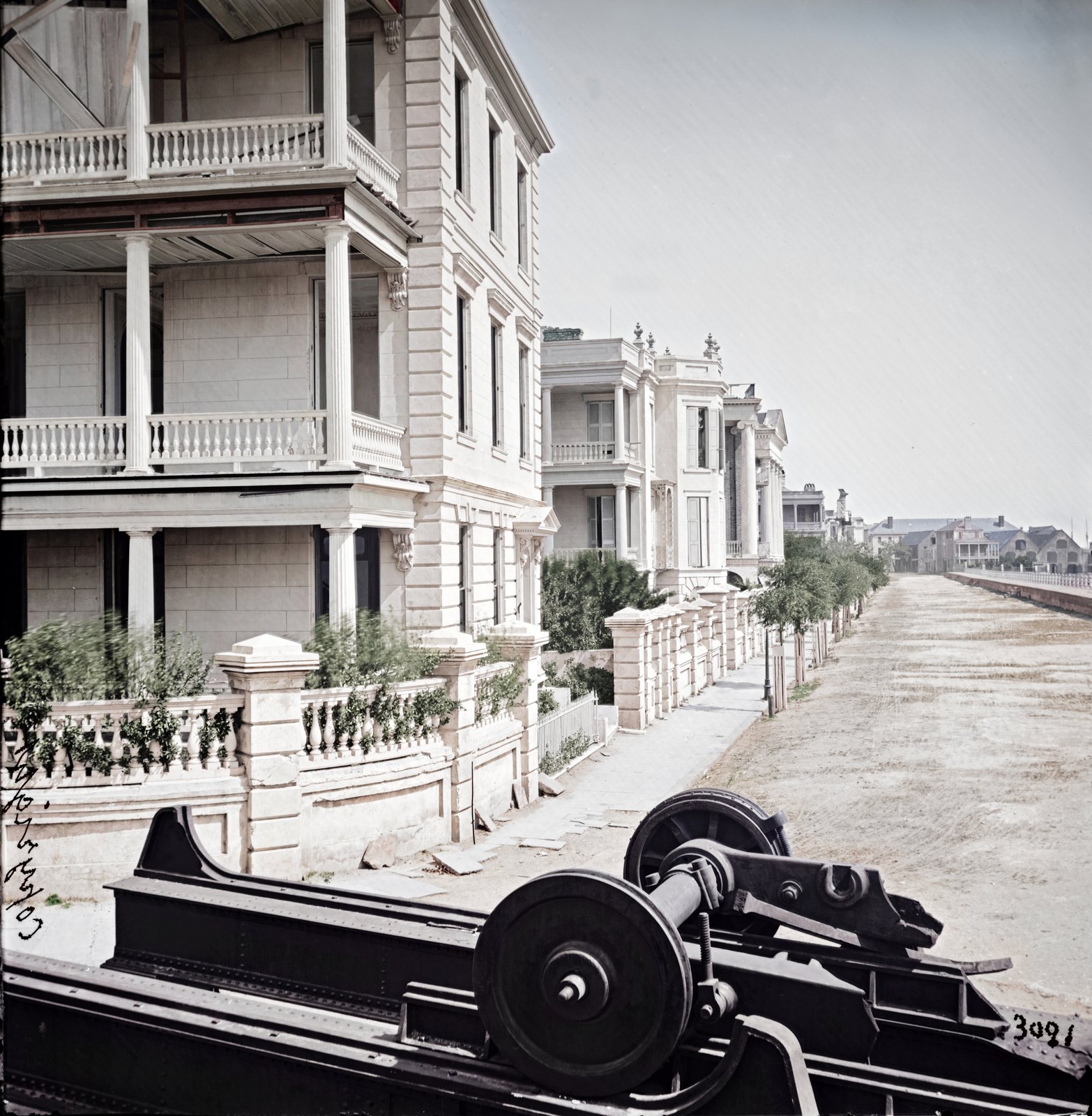
In the blast that destroyed the Fraser’s Wharf Blakely in February 1865, the front section of the gun tube was thrown onto the parapet of the embrasure. Removed first to Charleston Arsenal, the muzzle was eventually transported to West Point. There it is on display next to the breech of the blown Blakely from Battery Ramsay. This gun was apparently first tested on Oct. 12, 1863. Having learned from their mistake with the White Point Blakely, Confederate gunners were careful to follow instructions this time. Federals observed the shell skipping down the river. Both sides thus learned something: Confederates, that their second Blakely worked; Federals, that it was aimed at them. They aimed back. In March 1864, Confederate Sgt. Augustine Smythe, the signalman, was assigned to an observation post in the steeple of St. Michael’s Episcopal Church on Meeting Street. It was the tallest point in the city, so he was able to describe what happened on June 6, 1864: The Yankees are continuing their shelling of course. Today they are aiming at the big gun on Fraser’s wharf, & some very good shots they have made. The last shell burst on the wharf, but I don’t think it would have hit the gun itself.
Also at White Point Garden