The Blakelys · Book p. 91
The Muzzle on the Parapet
Drag to compareLibrary of Congress
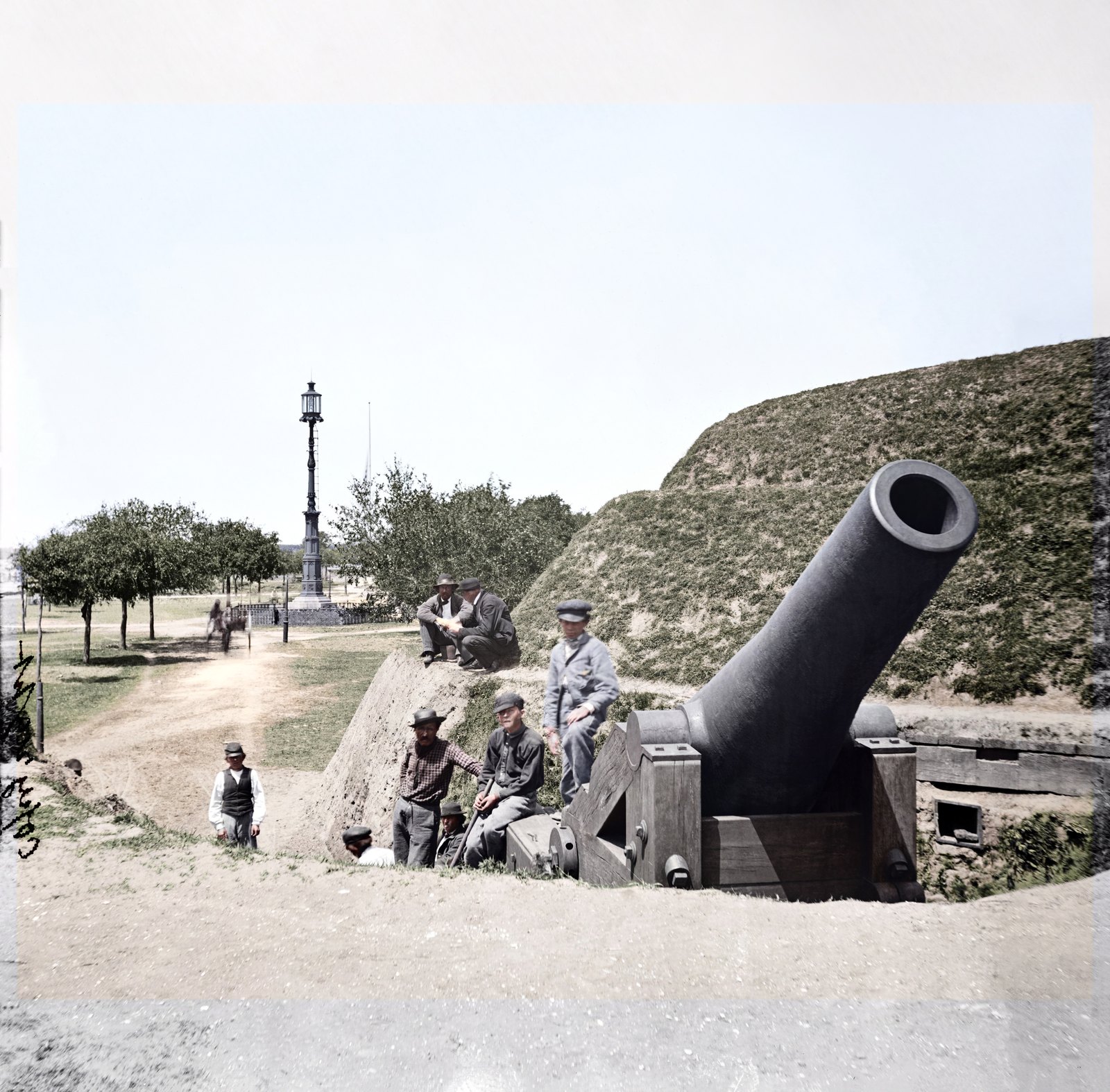
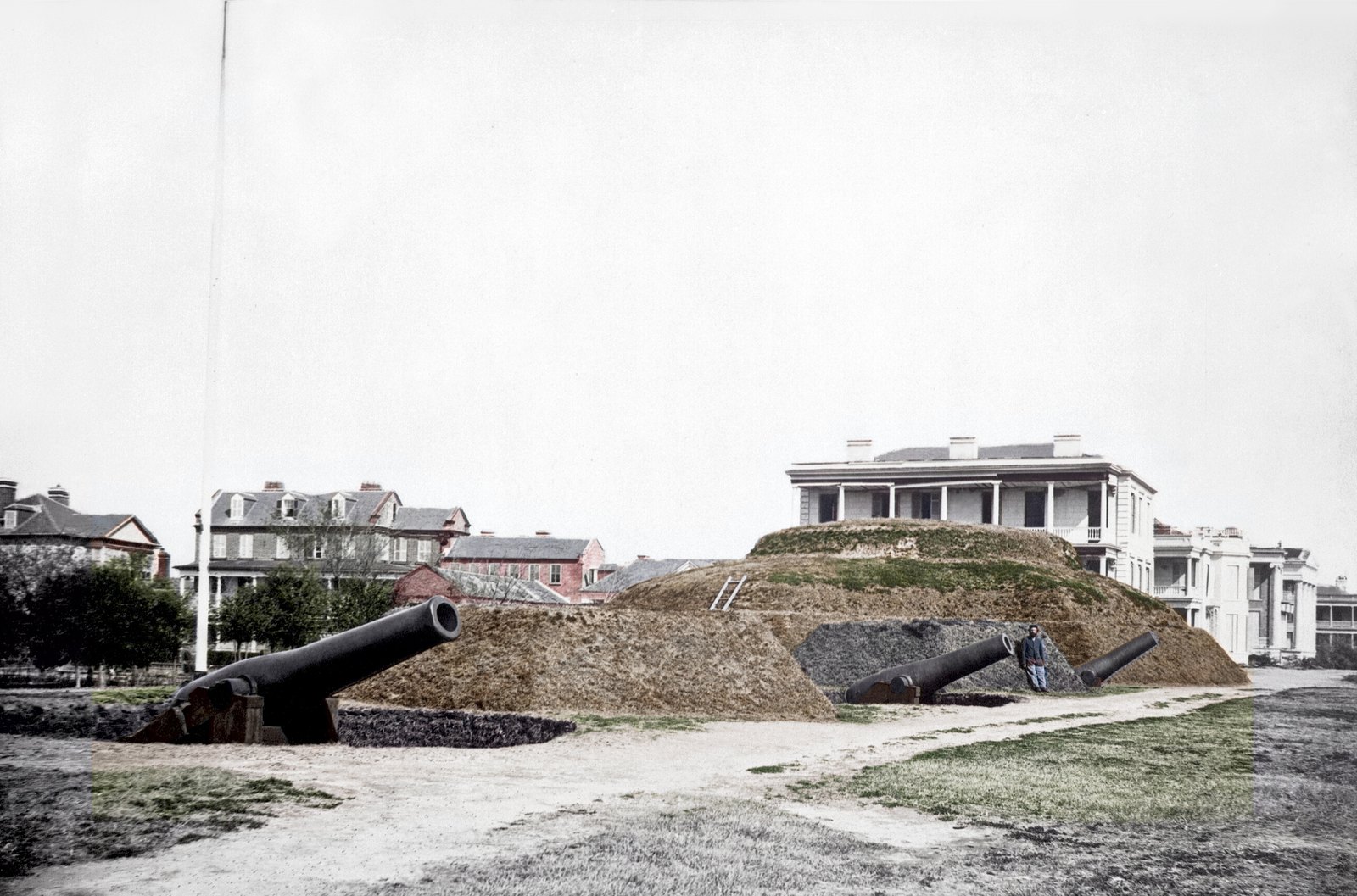
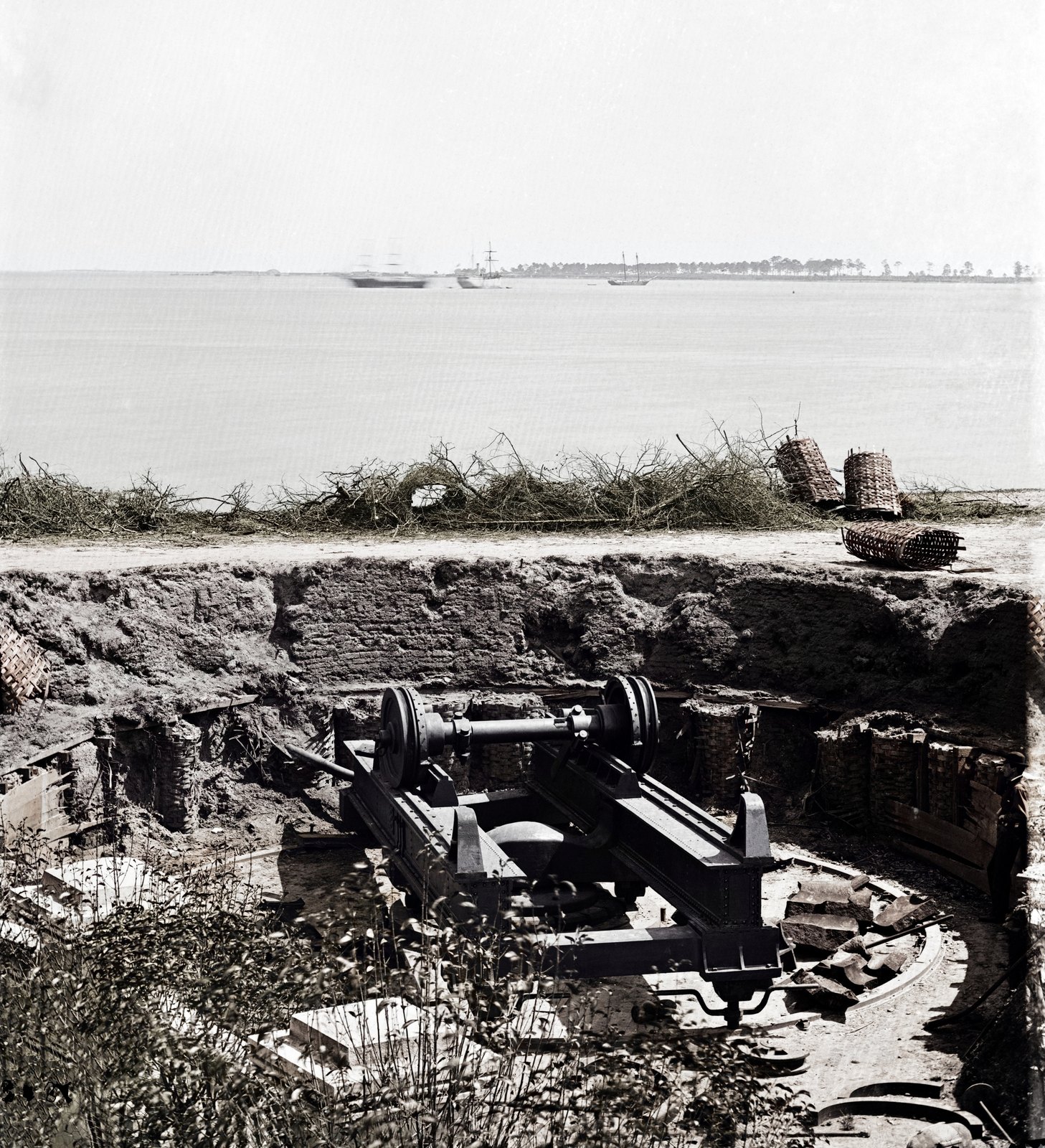
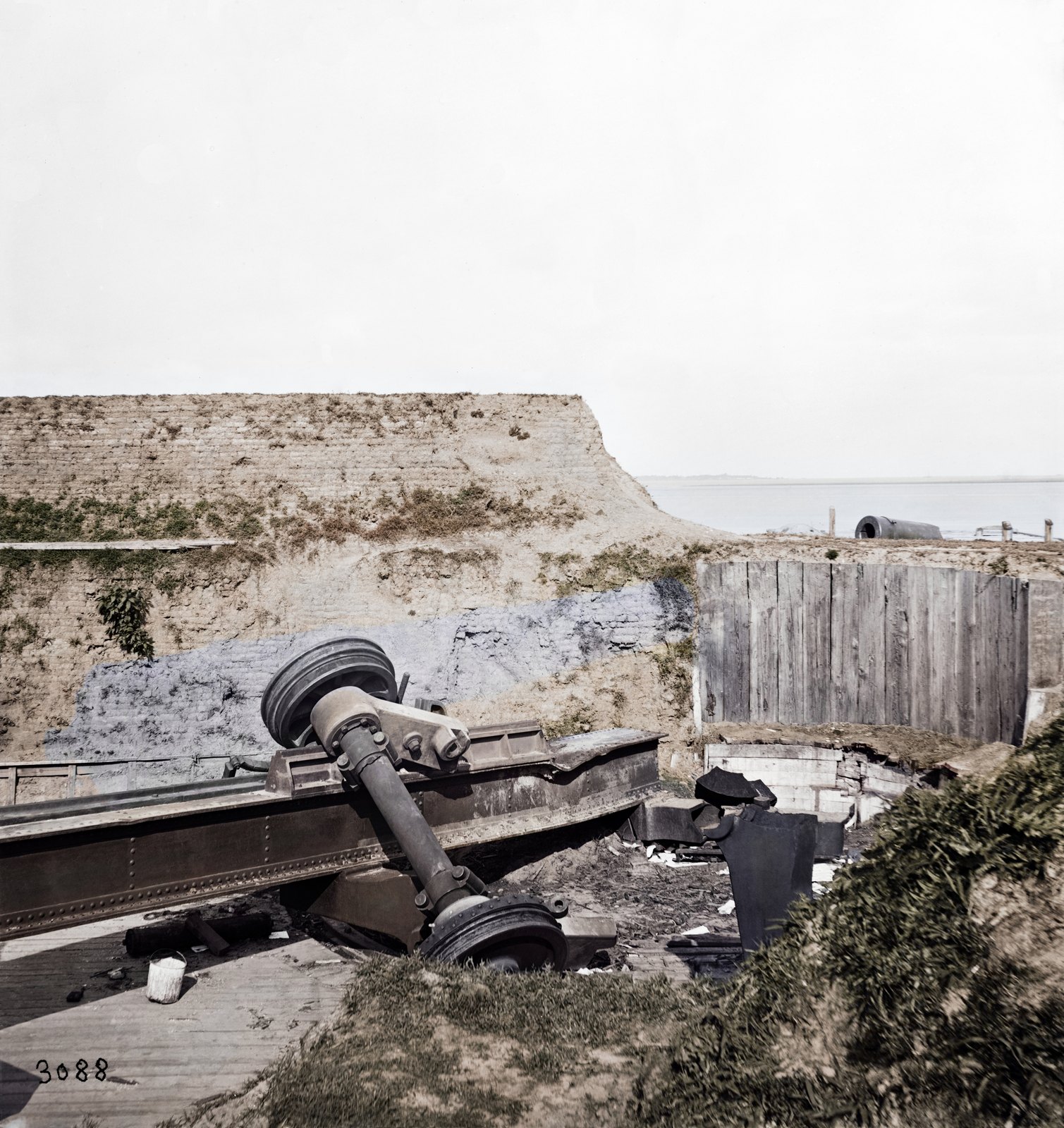
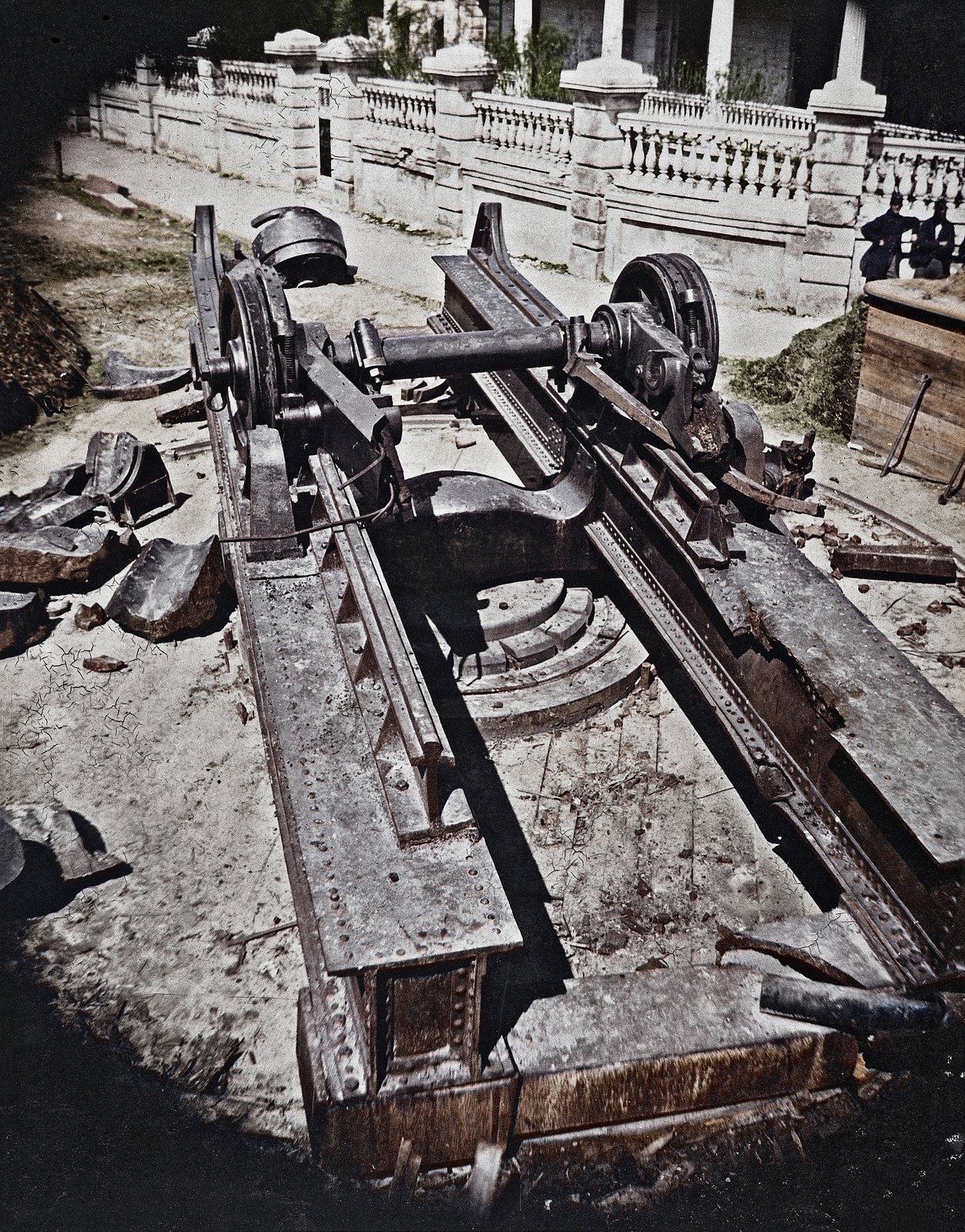
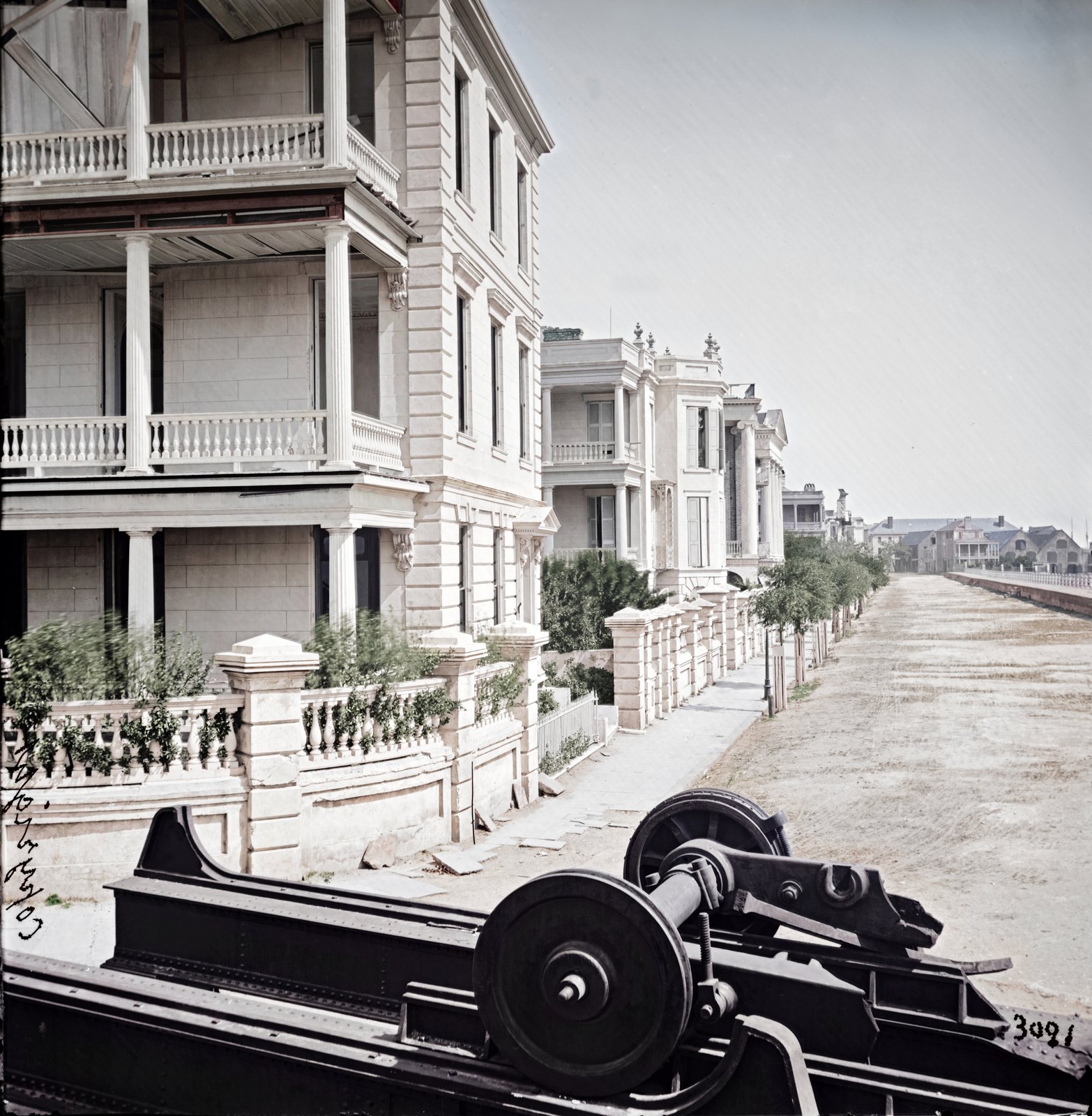
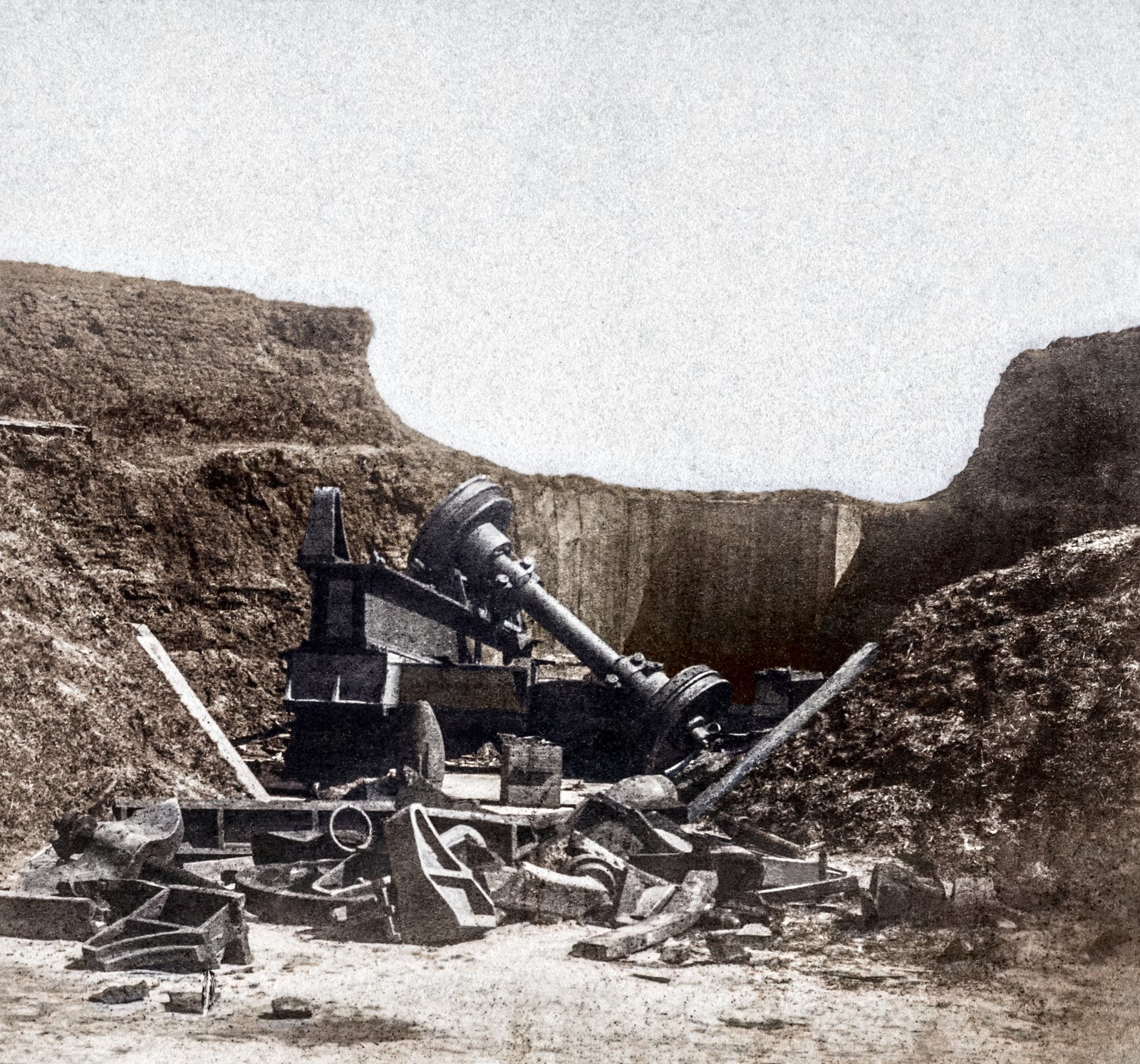
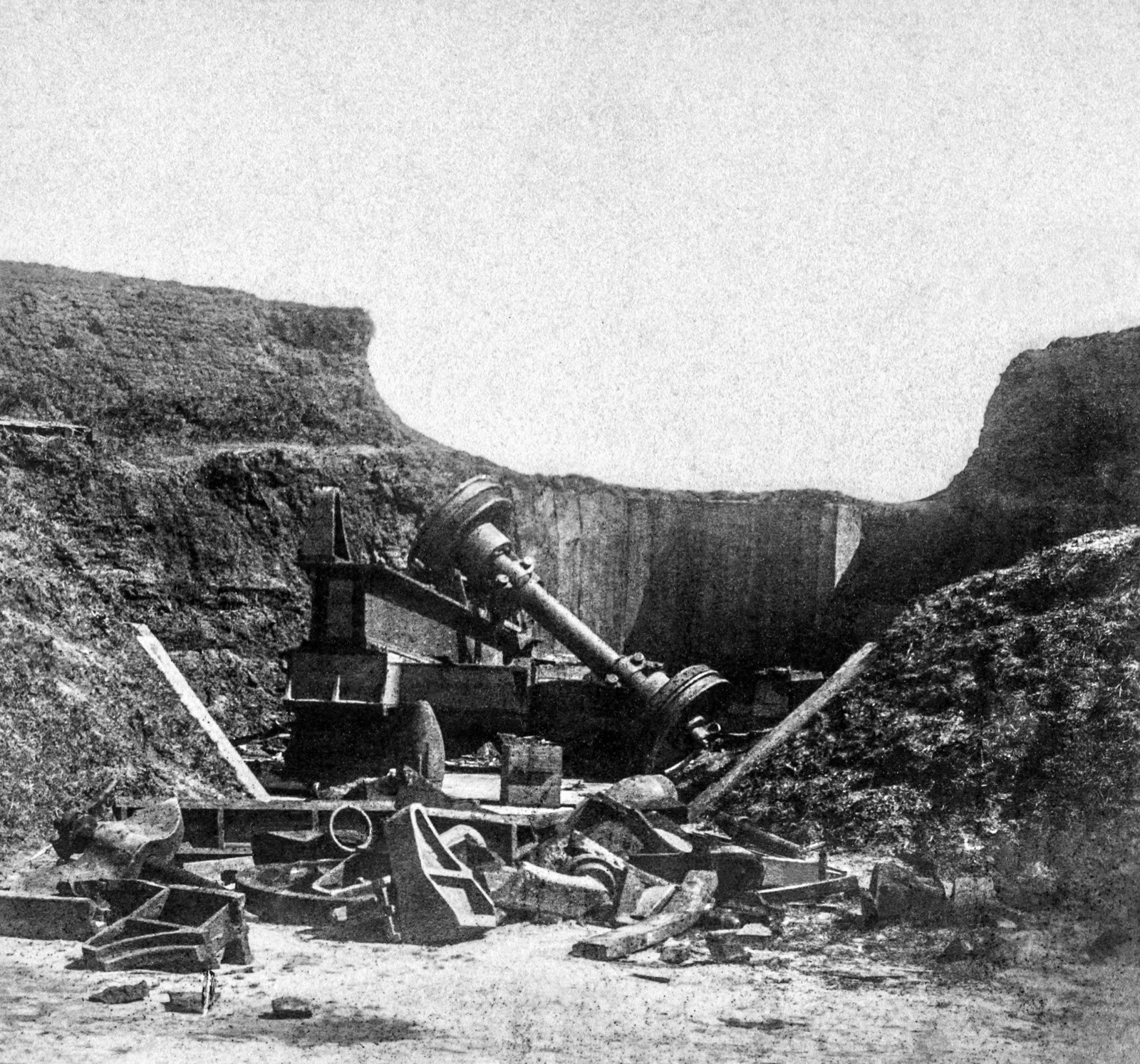
This is the other 12.75-inch Blakely — the gun at Fraser's Wharf, not the one at Battery Ramsay — and this is its muzzle. When the Confederates destroyed the piece in February 1865, the blast tore the tube apart and threw the forward section up onto the parapet of its own embrasure, where it is lying.
The muzzle was taken first to the Charleston Arsenal with the rest of the captured ordnance, and eventually to West Point. It is there still, displayed alongside the breech of the Battery Ramsay gun: the front of one Charleston Blakely and the back of the other, the two of them together making a single specimen of a weapon that no longer exists whole.
The Fraser's Wharf gun seems to have been first tested on October 12, 1863. The Confederate gunners handled it more carefully than they had its sister — the earlier gun had been damaged because the maker's loading instructions were not followed, and this time the instructions were followed to the letter. Federal observers watched the shell skip down the river. Both sides took a lesson from the trial: the Confederates learned that their second Blakely worked, and the Federals learned where it was pointed.
They replied. The gun became a marked target for the Federal batteries on Morris Island, and remained one for the rest of the siege.
The caption as printed in the book
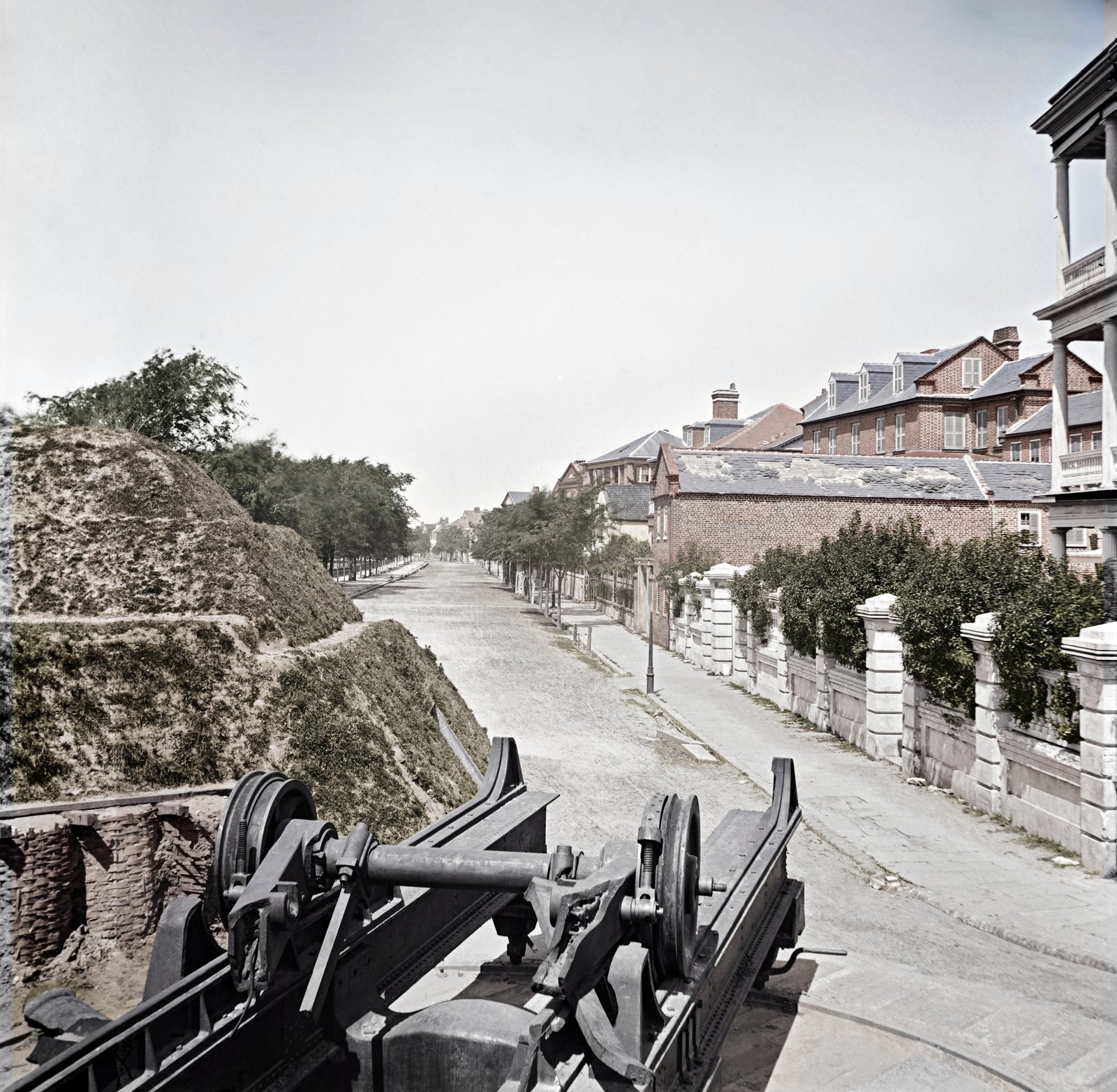
In the blast that destroyed the Fraser’s Wharf Blakely in February 1865, the front section of the gun tube was thrown onto the parapet of the embrasure. Removed first to Charleston Arsenal, the muzzle was eventually transported to West Point. There it is on display next to the breech of the blown Blakely from Battery Ramsay. This gun was apparently first tested on Oct. 12, 1863. Having learned from their mistake with the White Point Blakely, Confederate gunners were careful to follow instructions this time. Federals observed the shell skipping down the river. Both sides thus learned something: Confederates, that their second Blakely worked; Federals, that it was aimed at them. They aimed back. In March 1864, Confederate Sgt. Augustine Smythe, the signalman, was assigned to an observation post in the steeple of St. Michael’s Episcopal Church on Meeting Street. It was the tallest point in the city, so he was able to describe what happened on June 6, 1864: The Yankees are continuing their shelling of course. Today they are aiming at the big gun on Fraser’s wharf, & some very good shots they have made. The last shell burst on the wharf, but I don’t think it would have hit the gun itself.
Also at White Point Garden