The Blakelys · Book p. 87
Looking Out from White Point Garden
Drag to compareLibrary of Congress
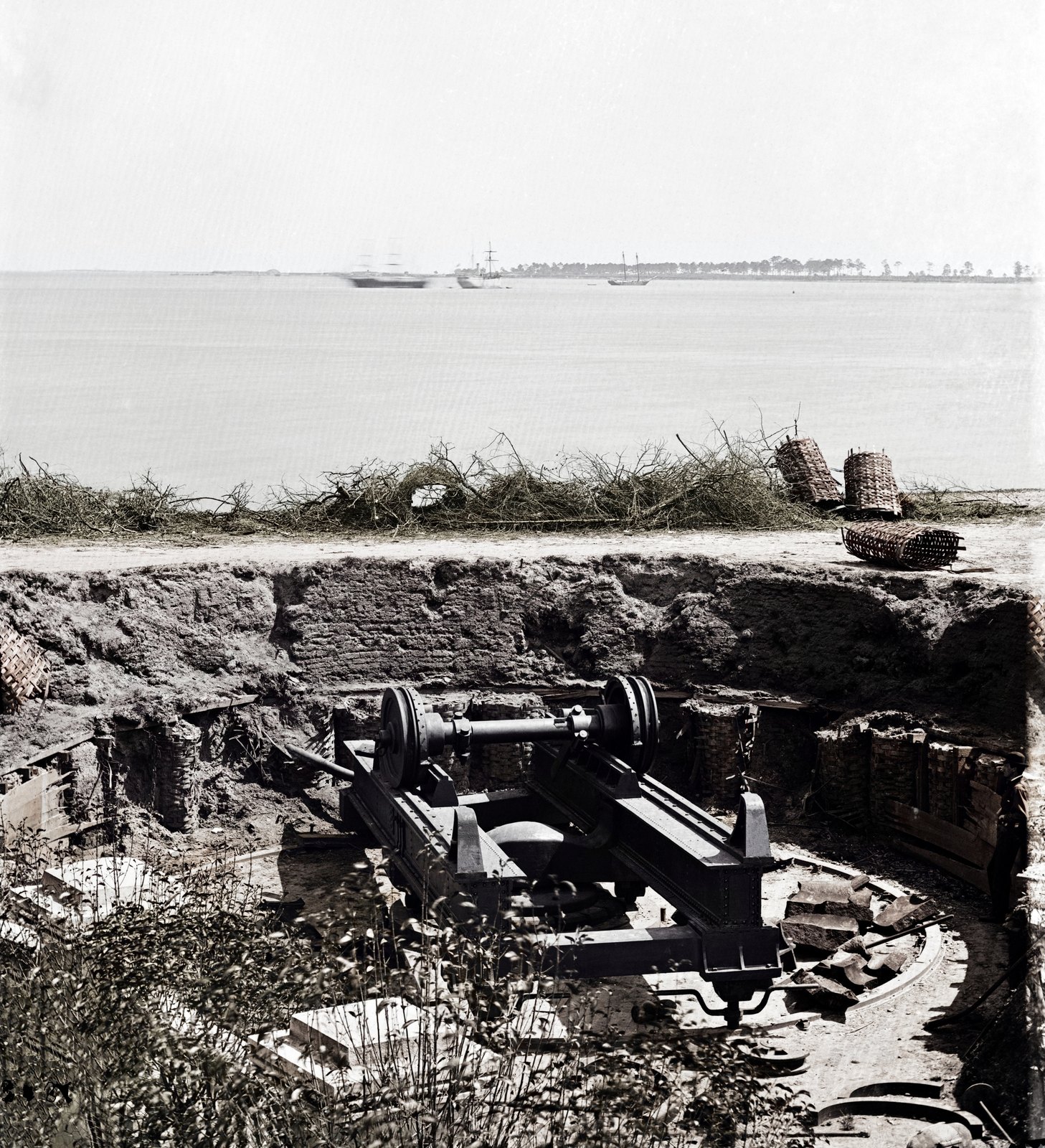
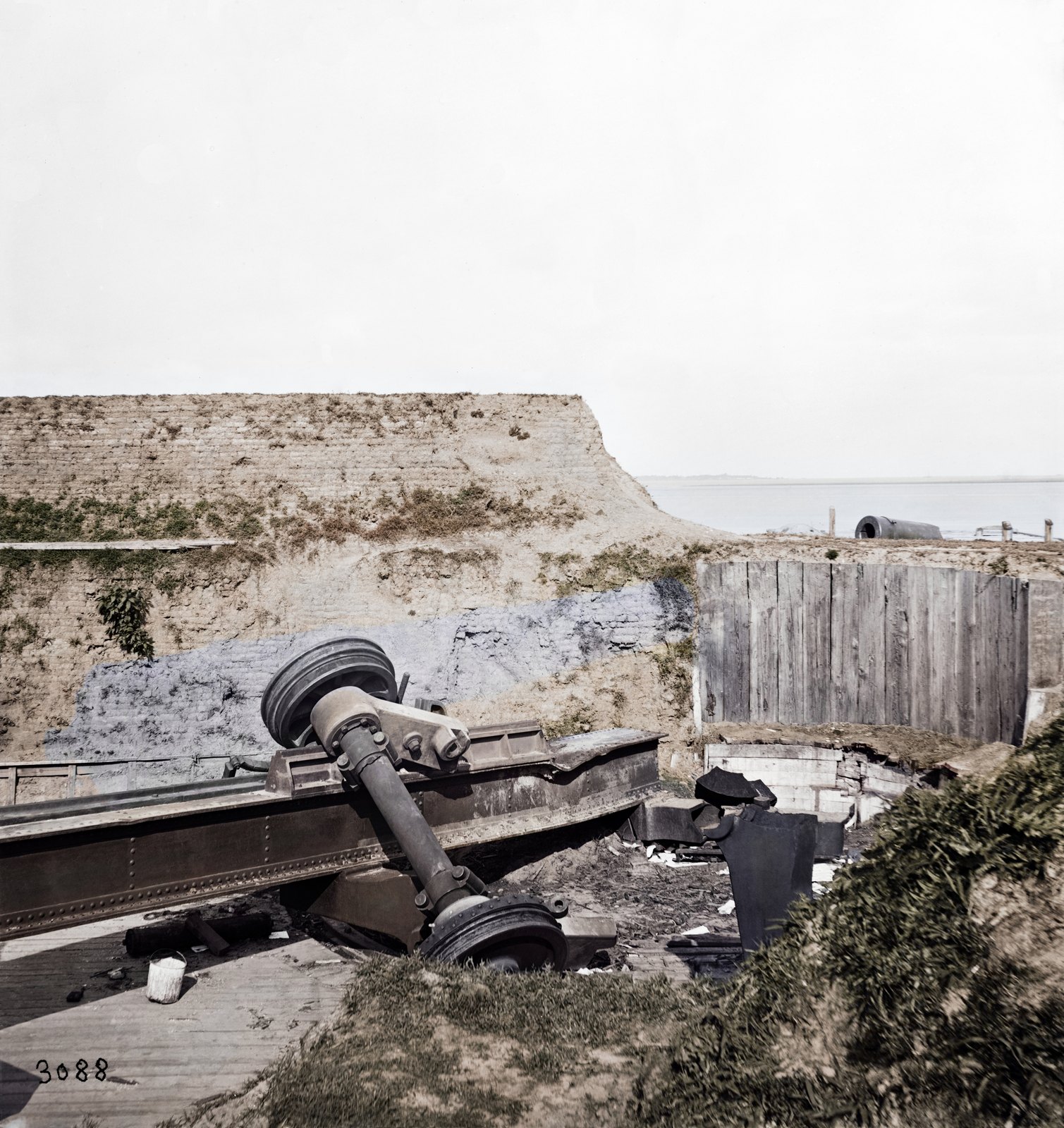
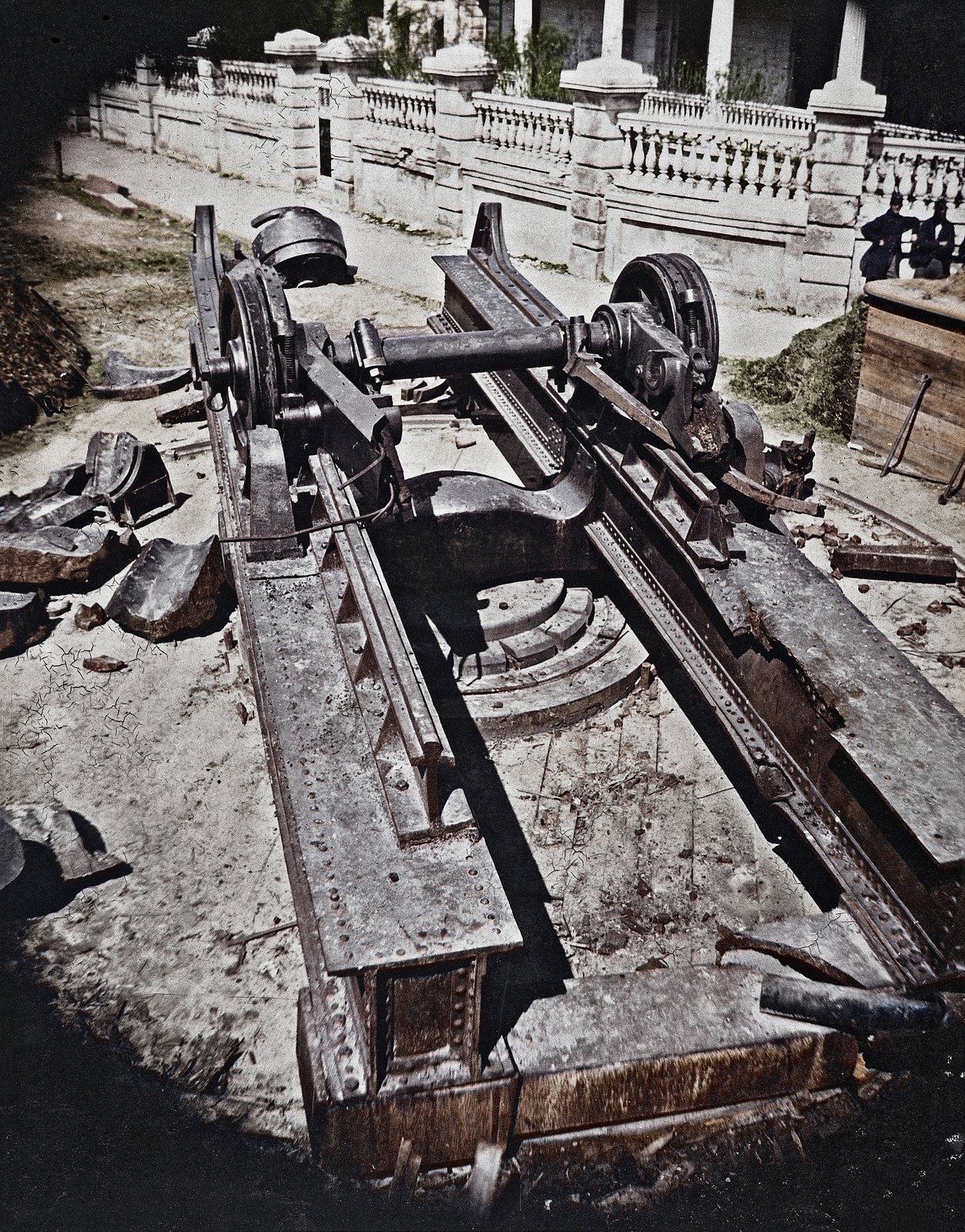
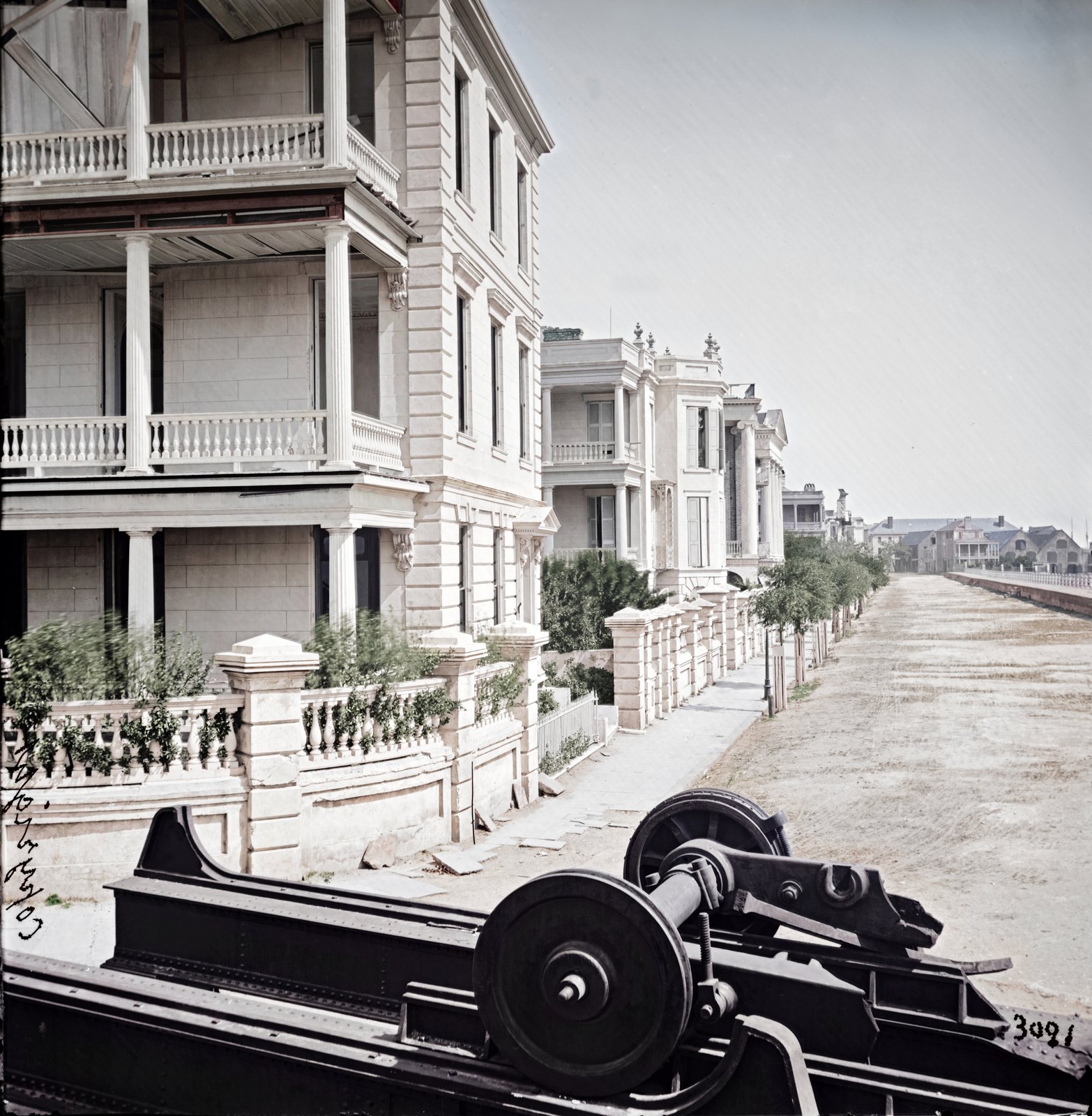
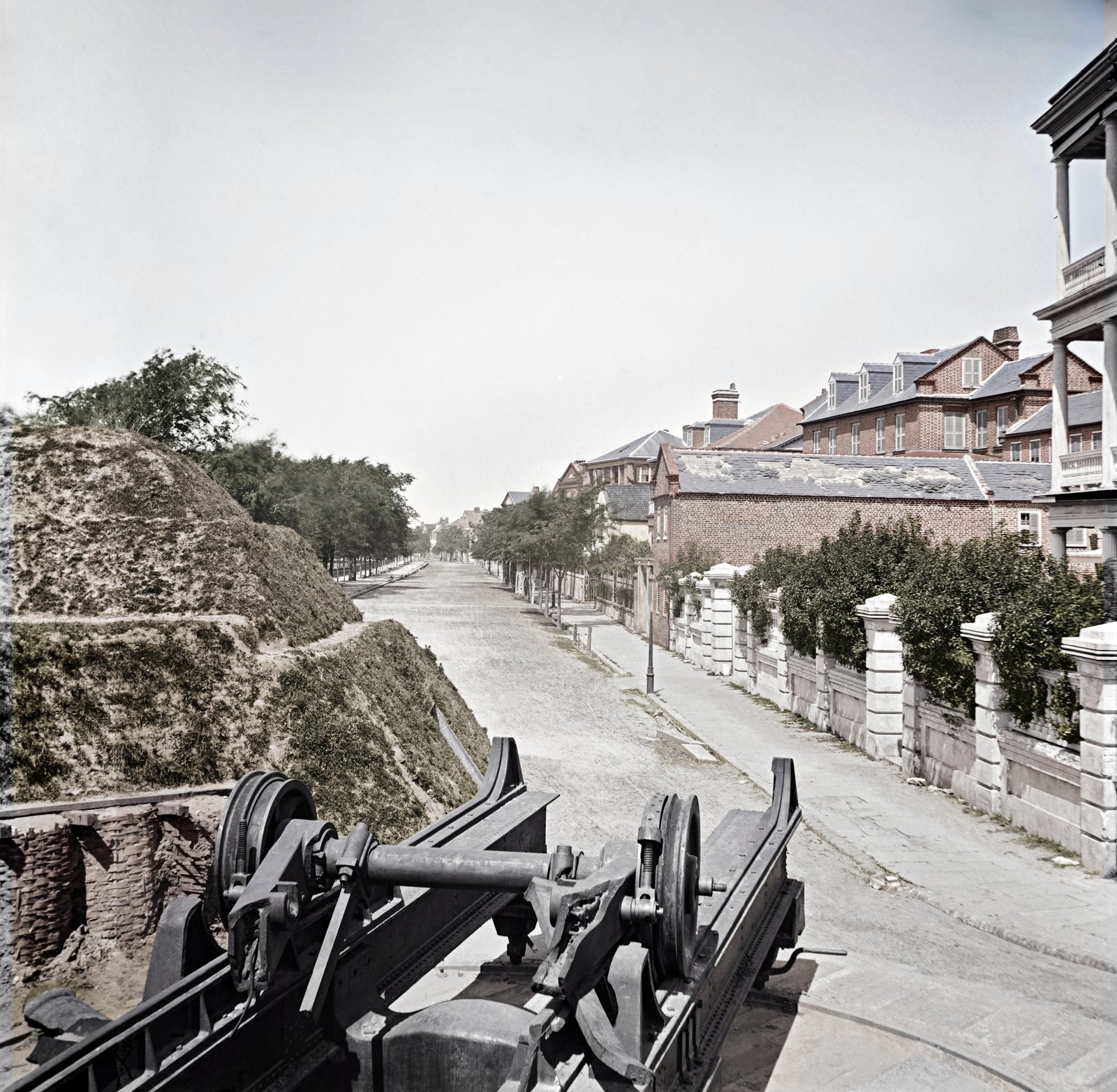
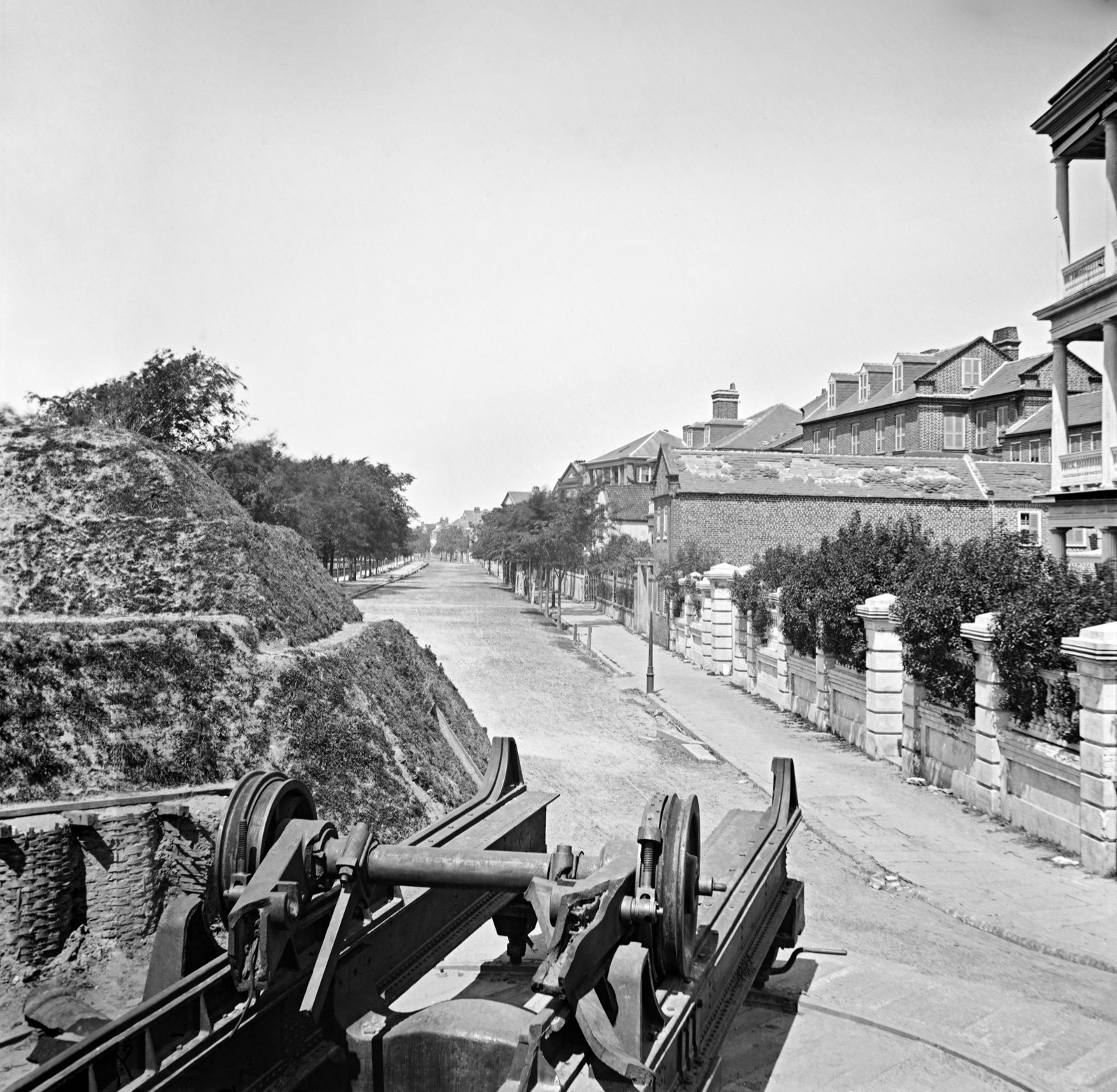
George N. Barnard made this view from the second-floor piazza of Louis D. DeSaussure's house, at the corner of South Battery and East Battery, looking inland along the street. The ironwork in the foreground is what remained of the 12.75-inch Blakely rifle at Battery Ramsay, the work the Charlestonians called the White Point Battery. Barnard had been photographing for the Union army since 1863, had followed Sherman's army through Georgia, and came to Charleston in March 1865 to record what the war had left.
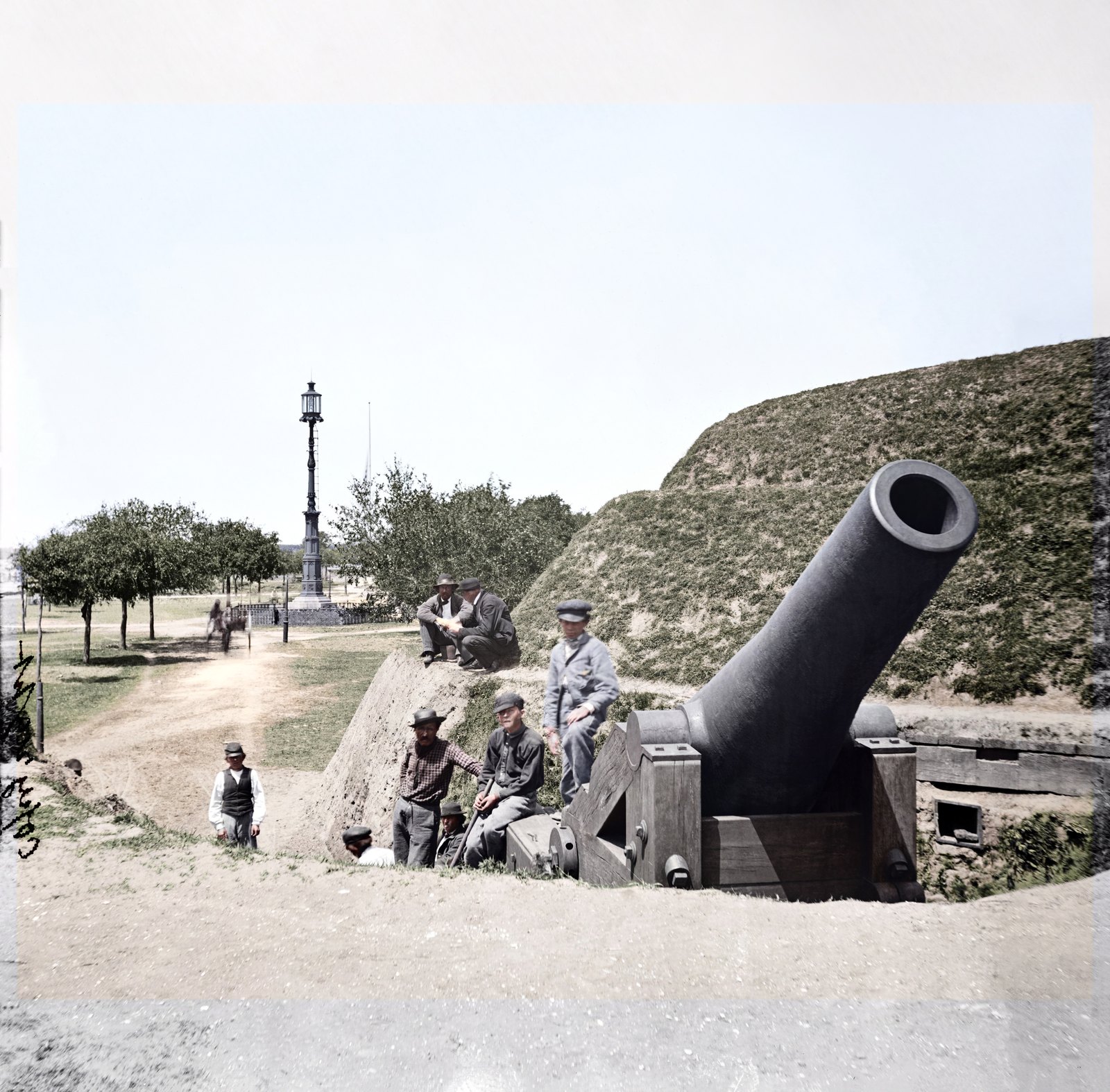
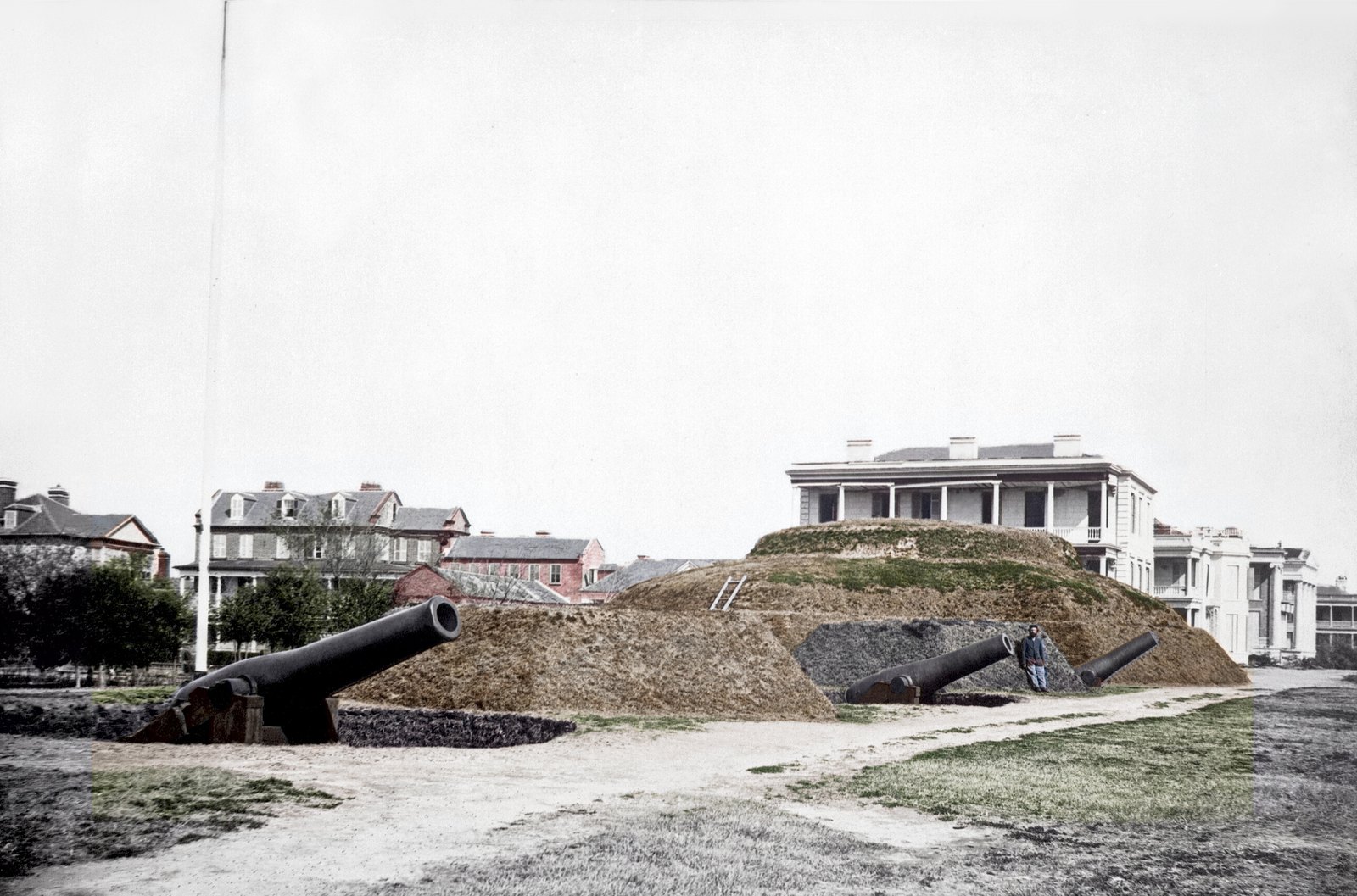
The gun had been the heaviest piece in the city's defenses. Blakely rifles were English, built to the patent of Captain Alexander Theophilus Blakely of the Royal Artillery, and the two 12.75-inch guns brought through the blockade to Charleston in 1863 were the largest rifled cannon the Confederacy ever put into service. The Confederates had no foundry capable of anything like them; heavy rifles of that caliber had to be bought abroad and run past the blockading squadron.
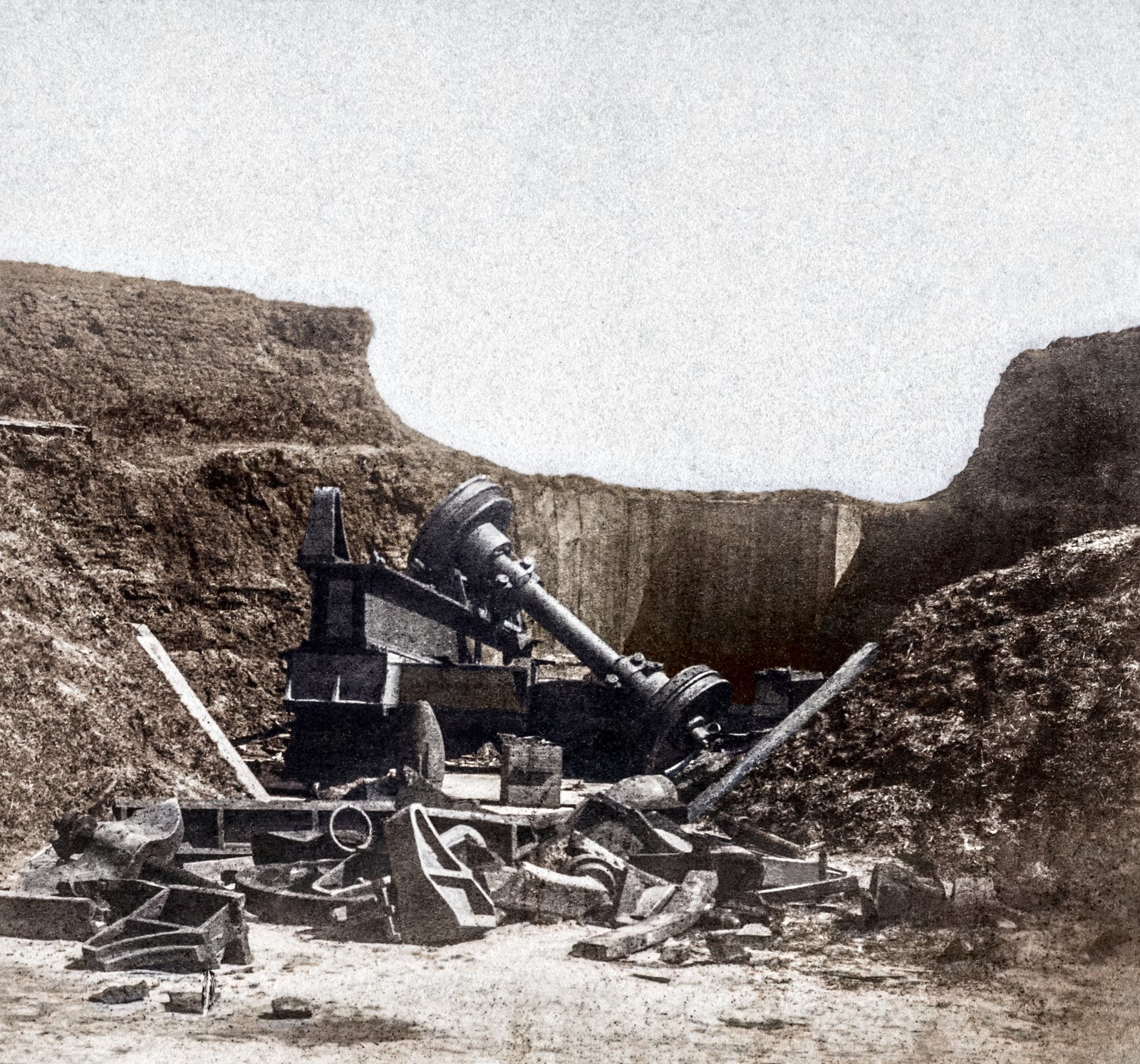
The garrison destroyed the gun on the night of February 17, 1865, as the city was being given up. The method was crude and effective: several powder charges rammed down the bore, the muzzle plugged, and the whole thing fired. The breech was thrown sixteen yards to the rear. A fragment of about five hundred pounds went through the roof of a house three lots away — the William Roper house at what was then 5 East Battery, owned by William Ravenel and lived in during the war by his nephew Alfred F. Ravenel. The address today is 9 East Battery, and the iron is still in the attic.
Inside the earthen parapet, topped with gabions that were never filled, is the rest of the gun. The gabions are the giveaway that the work was still being improved when it was abandoned: they are wicker cylinders, set in place empty, waiting for the dirt that would have made them proof against shot.
The caption as printed in the book
George N. Barnard, the New York photographer, had been hired by the Union army in 1863 to take pictures of fortifications and related scenes. He was in Atlanta during the Federal occupation of September-November 1864, making many views of the area. In March 1865 he came to Charleston and took some more photographs. One of them shows the wreckage of the 12.75-inch Blakely rifled gun positioned at Battery Ramsay, the White Point Battery. This image, taken in mid-March 1865, shows the carriage of the “Whopper” after it was blown up on February 17 (several powder charges rammed down the tube, then a plugged muzzle). The blast was so powerful that the heavy breech was blown sixteen yards to the rear. A 500-pound iron chunk was thrown into an attic three house-lots away in the William Roper house located at 5 East Battery, owned by William Ravenel and occupied by his nephew, Alfred F. Ravenel during the war (current address is 9 East Battery). It’s still there. Alfred Ravenel was president of the Northeastern Railroad Company from 1858 until his death in 1893. Barnard took this picture from the second-floor piazza of Louis D. DeSaussure’s mansion at South Battery and East Battery. Across the harbor is James Island. Inside the Southerners’ earthen parapet, topped with unused gabions (wicker baskets to be filled with dirt), are all that remains of the gun.
Also at White Point Garden