Charleston Arsenal · Book p. 121
Ordnance at the Arsenal (second view)
Drag to compareLibrary of Congress
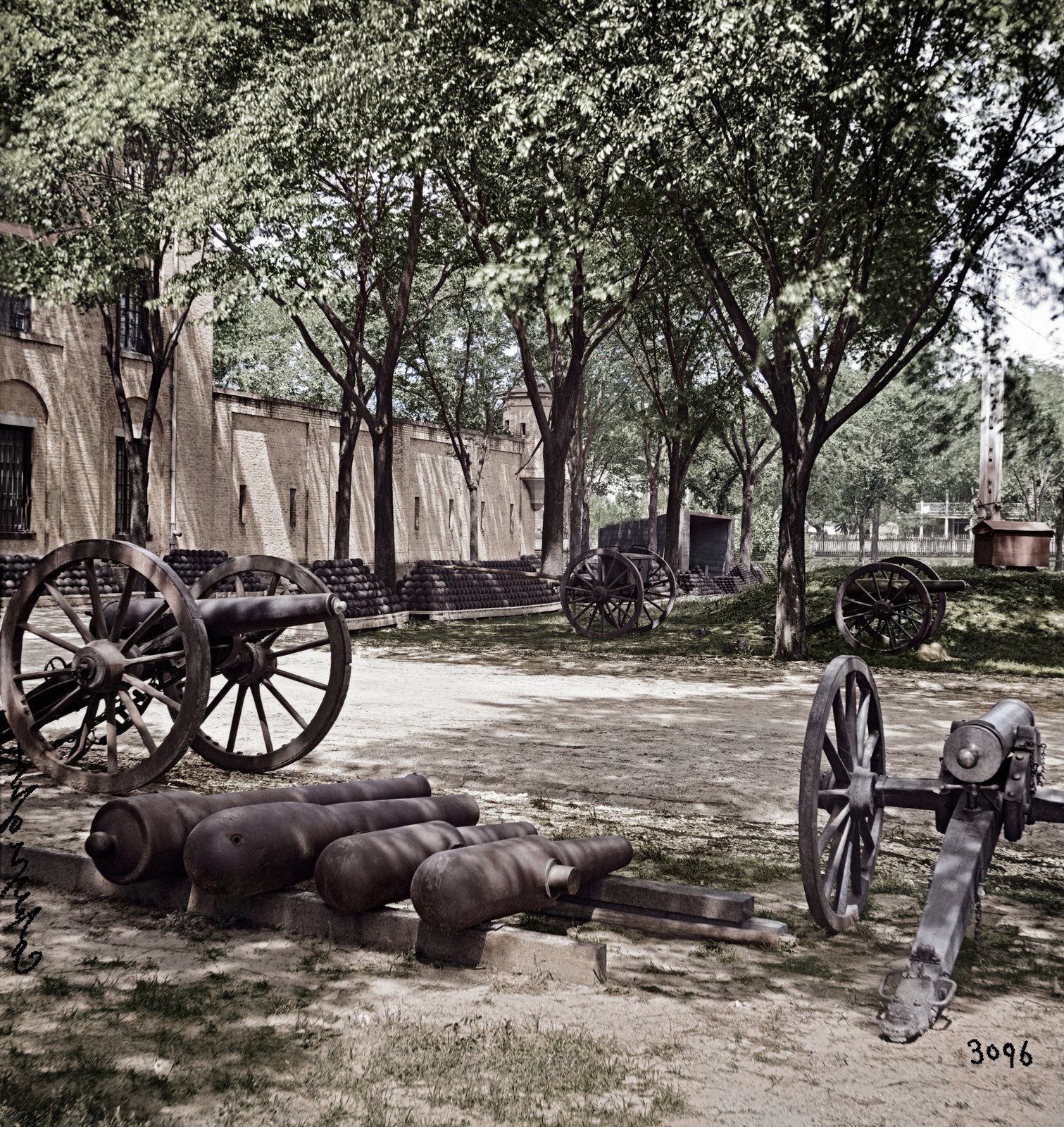
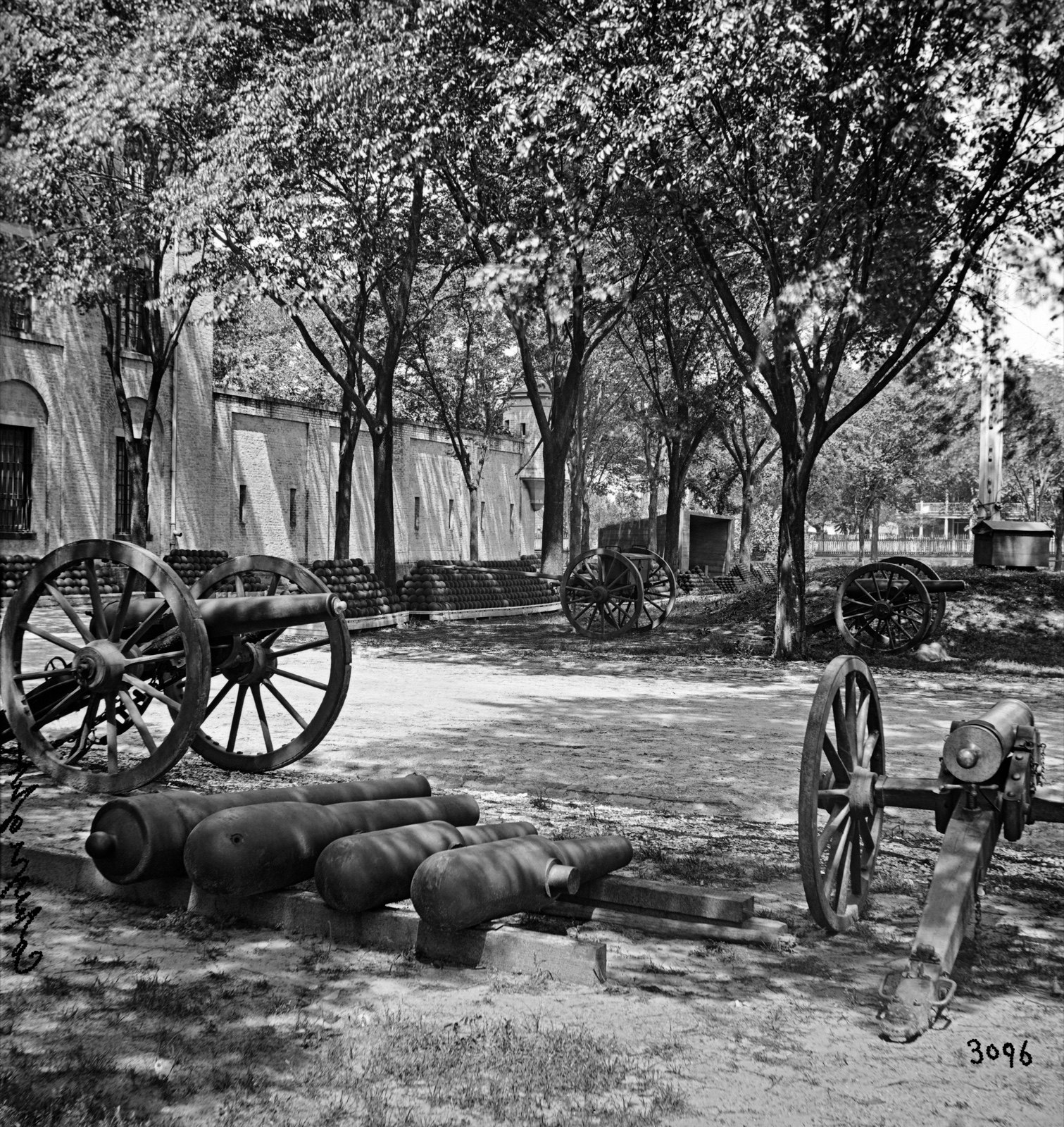
The second Arsenal view, taken from a different position in the same yard, and it adds a class of material the first one does not show: wheeled carriages. At the left and center are field pieces still on their carriages, and at the right the wheel of another, standing among the tubes laid out on the ground.
The contrast in the frame is the useful part. The heavy tubes lying in the grass are seacoast and siege ordnance, weapons that were mounted in fixed works and never moved once emplaced. The wheeled guns behind them are field artillery, built to travel with an army. Both ended in the same yard, but they belonged to different kinds of war, and Charleston's defense had required both — the heavy rifles and columbiads in the harbor batteries, and lighter guns for the lines around the city.
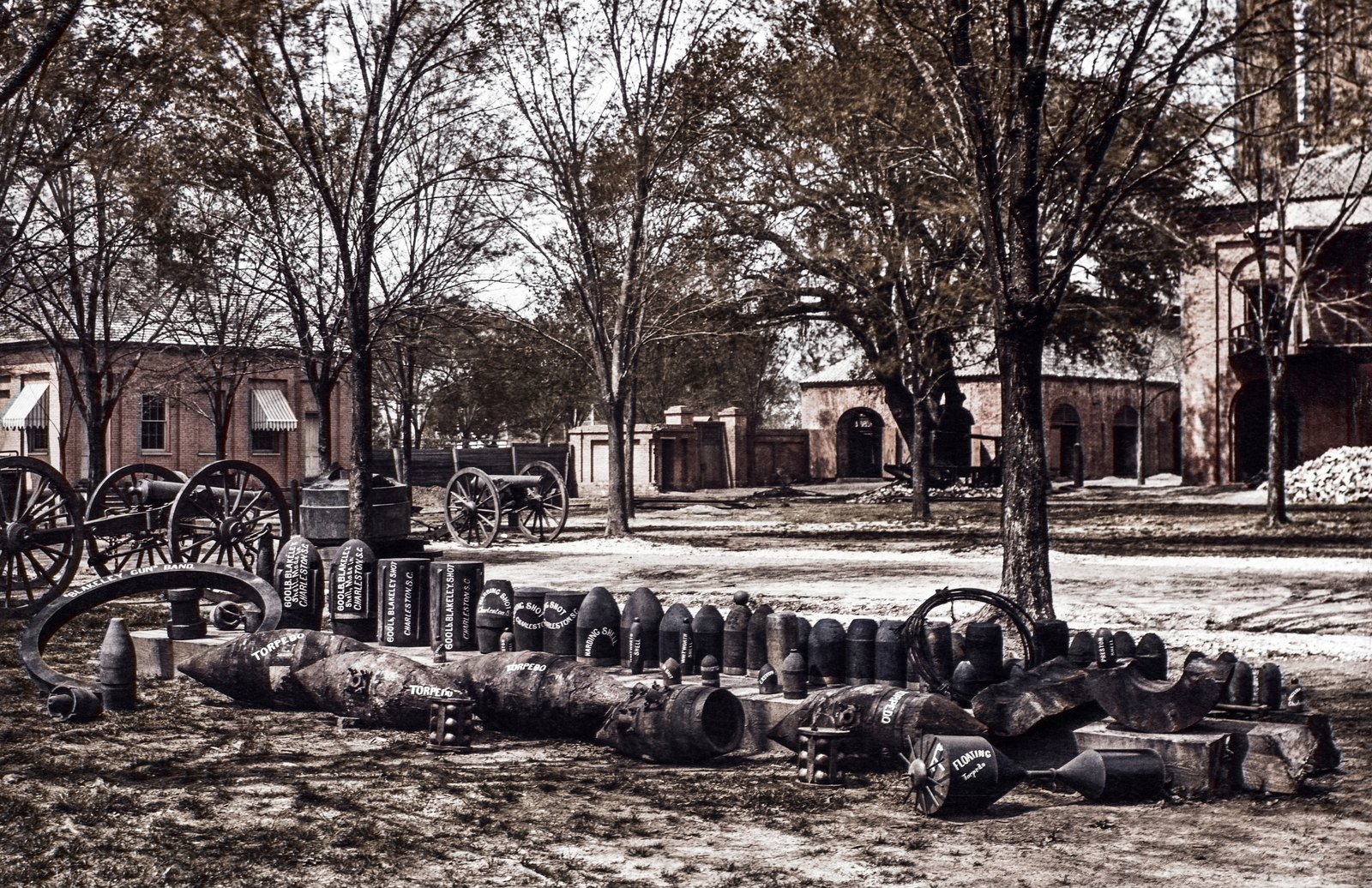
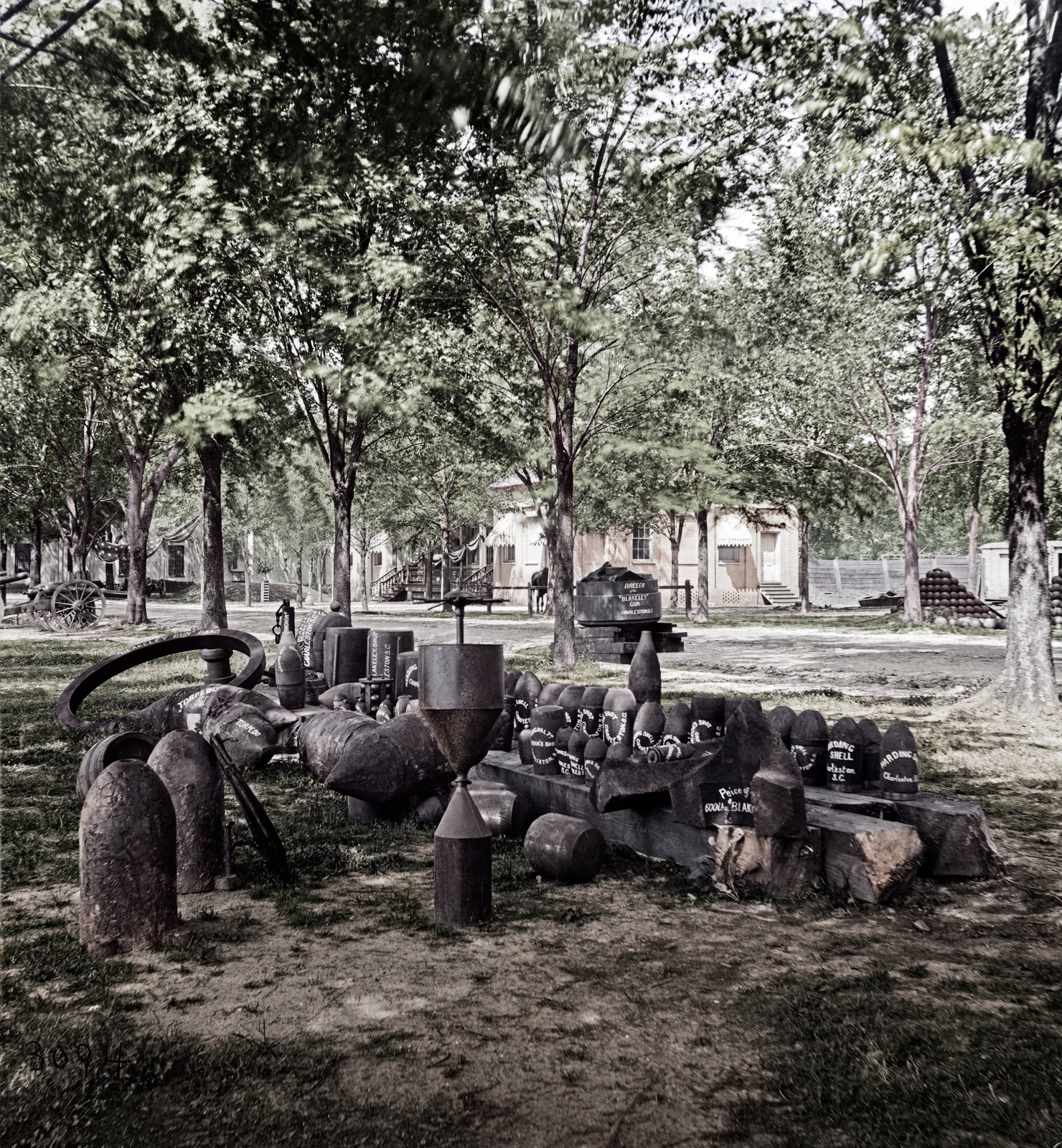
The trees and the fence wall place this in the same enclosure as the companion view, with the camera turned along a different axis. The two plates together give a fuller account of the yard than either does alone, which is presumably why Barnard made both.
Among this material, in the other Arsenal photographs, is the reinforcing band of the Blakely destroyed at Battery Ramsay — the wrought-iron hoop shrunk over the breech to contain the pressure of firing, and often the largest identifiable fragment left when one of these guns let go.
The caption as printed in the book
The Charleston Arsenal U.S. government arsenals were established to manufacture or store small arms, cannon and ammunition. The Harpers Ferry Arsenal, seized by John Brown and his followers in 1859, had been founded in 1795. The Charleston Arsenal was established in 1841. When South Carolina seceded, the arsenal, which spanned an entire city block bounded by President, Bee, Doughty and Ashley Streets, was manned by an ordnance sergeant, nine enlisted men and six hired hands. On the morning of Dec. 30, 1860—ten days after secession—state troops marched to Sgt. F. C. Humphreys’ quarters and demanded that he surrender the arsenal. Humphreys had no choice but to comply. During the war the Charleston Arsenal sent weaponry to both Lee’s Army of Northern Virginia and the Army of Tennessee. At the time of the Confederate evacuation of Charleston, demolition charges were placed at the arsenal grounds, but none went off. Federal troops occupied it on Feb. 18, 1865. In this view mounted and unmounted artillery are shown. The gun in the lower right is a 12-pounder bronze mountain howitzer; the tubes of three English Blakely rifles are to its left. A banded and rifled tube, possibly a Confederate Parrott, is lying on the timbers to the left of the Blakelys.
Also at Charleston Arsenal