The Davids · Book p. 146
David
Drag to compareNational Archives
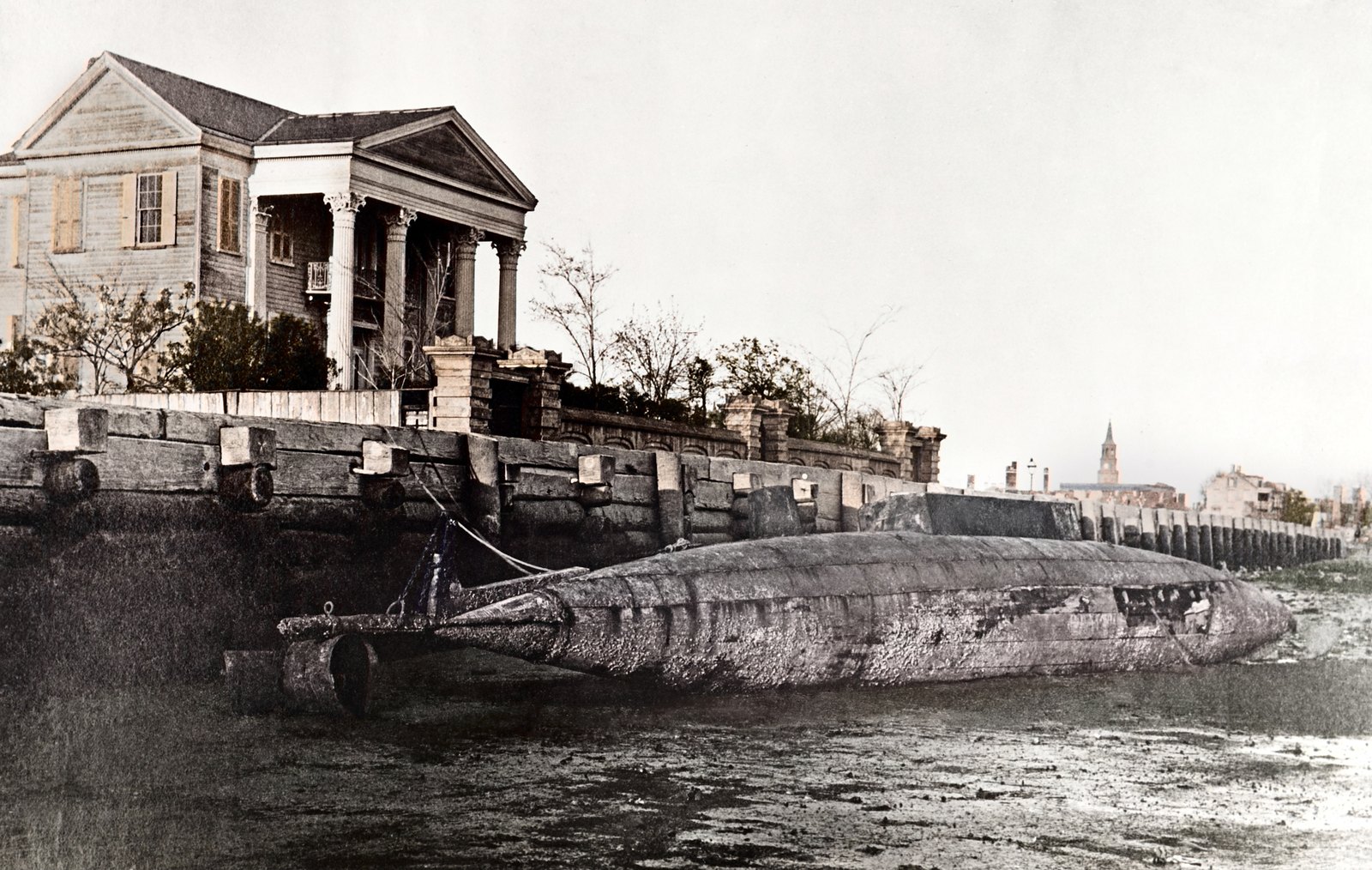
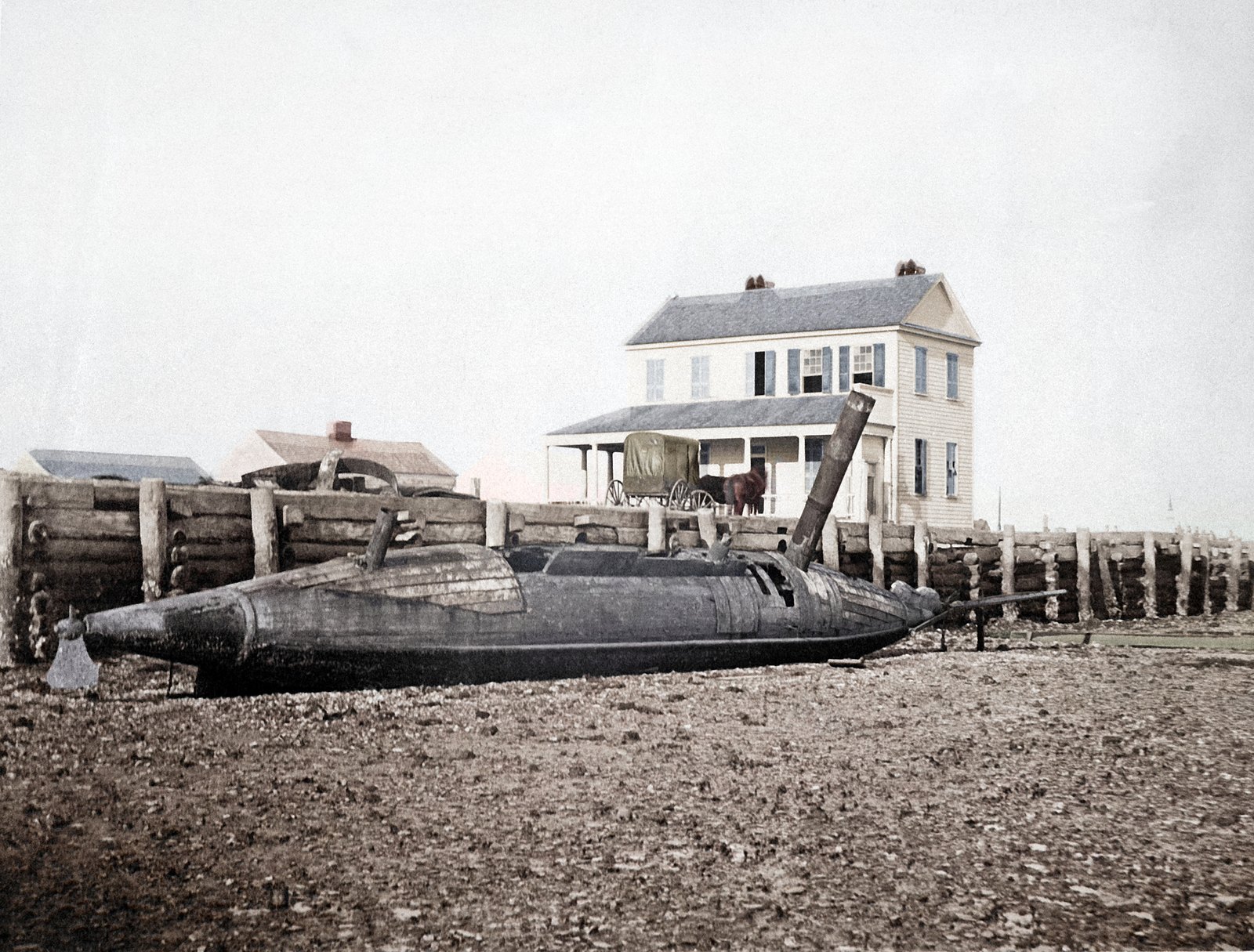
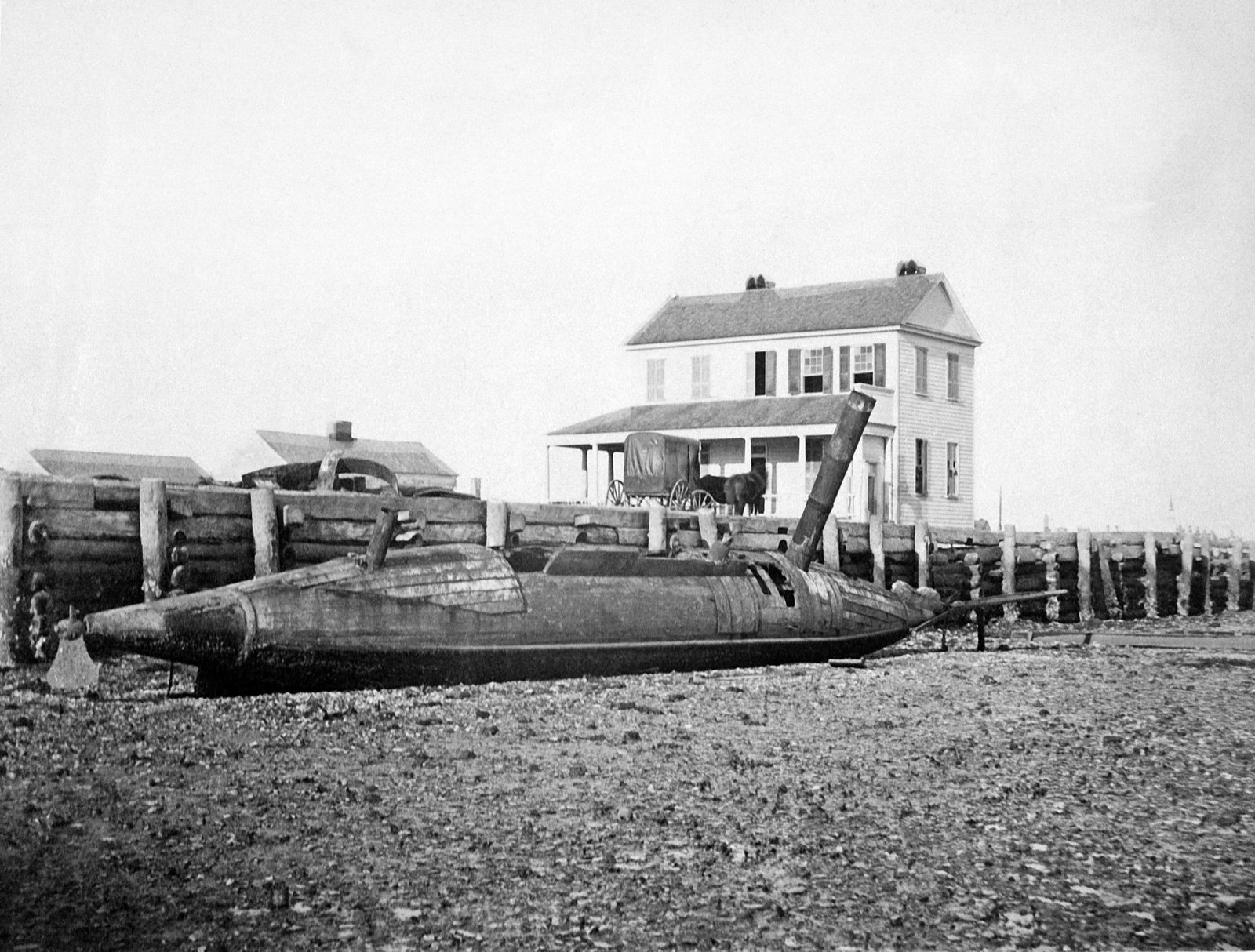
Union Rear Admiral John A. Dahlgren was furious. He called the vessel “an engine of war not recognized by civilized nations.” Dahlgren was fuming about the David, a fifty-foot long, cigar-shaped vessel designed in Charleston that, semi-submerged, could be steamed toward a Federal vessel against which a torpedo could be placed and detonated. David met its Goliath on the night of Oct. 5, 1863 in Charleston Harbor, where it shoved a hundred-pound explosive into the hull of the USS New Ironsides. The blast rocked the torpedo boat and led its four-man crew to abandon ship. The big Northern vessel was shaken and so damaged as to be towed to Philadelphia for repairs. “That single attack almost reversed the position of the two navies at Charleston,” writes Milton F. Perry in Infernal Machines: The Story of Confederate Submarines and Mine Warfare (1965). “During daylight the Federals were supreme, guarding the harbor and preventing ships from entering or leaving, but after dark, they gathered for mutual protection, allowing the Confederates the run of the waters in the outer and inner harbors unchallenged.” (David photographed by Selmar Rush Seibert lying in front of Chisholm’s Mill Miller’s and Engineer’s house, March 1865. National Archives catalog number 165-C-751) A David
This is the caption as printed in 100 Significant Civil War Photographs: Charleston in the War. It has not yet been through this site’s research and fact-checking pass.
Also at Chisolm Causeway, Ashley River