The Davids · Book p. 147
Another David
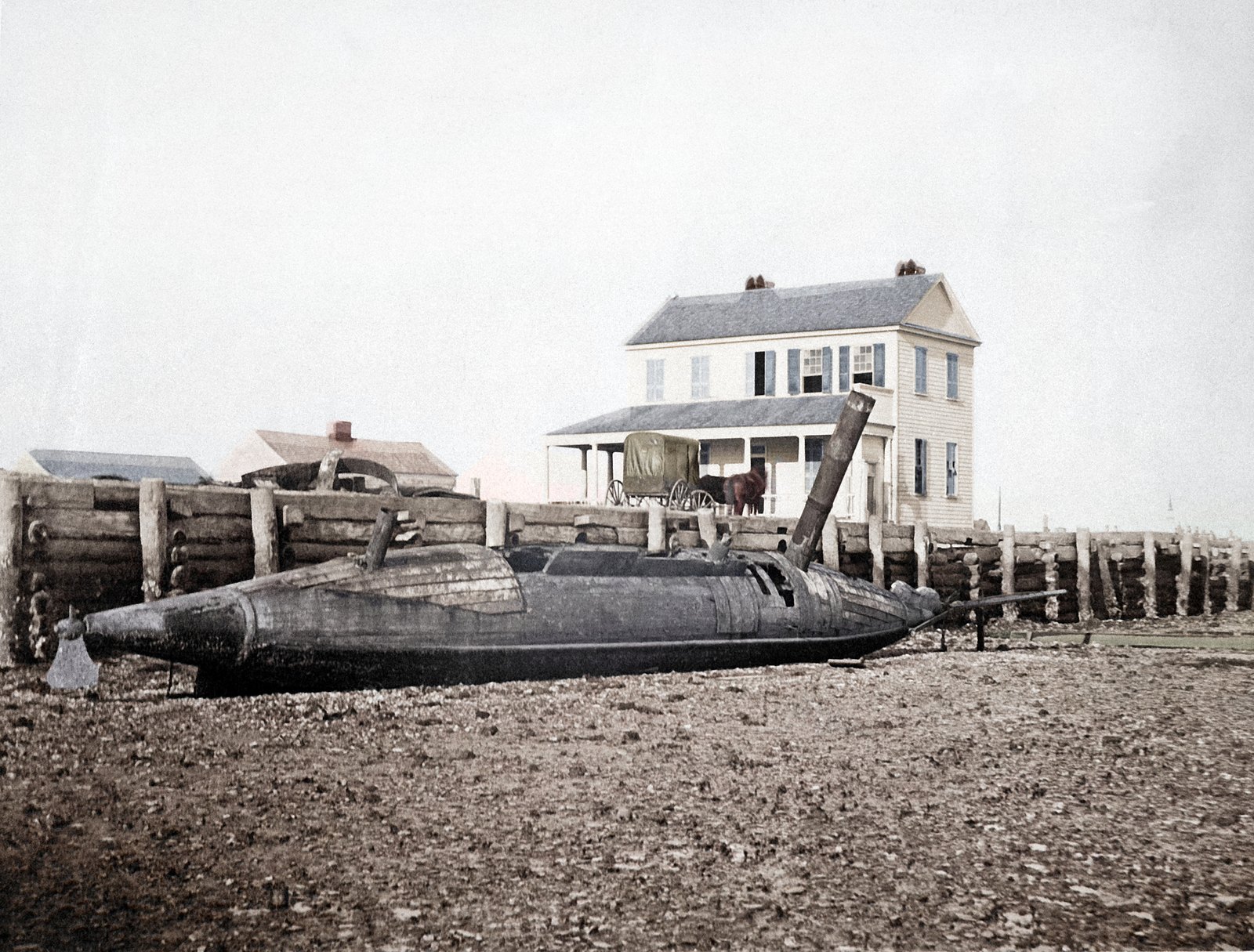
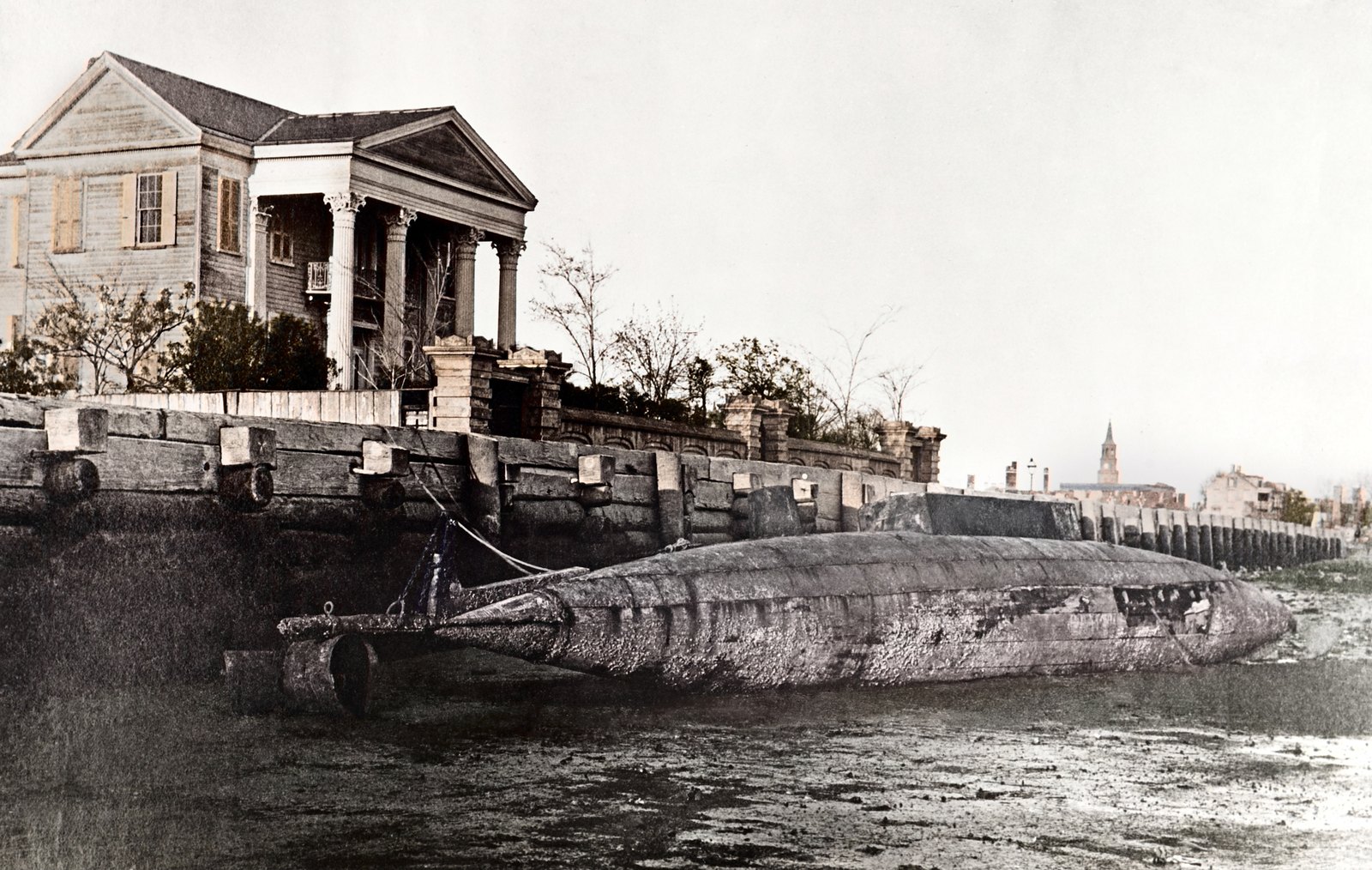
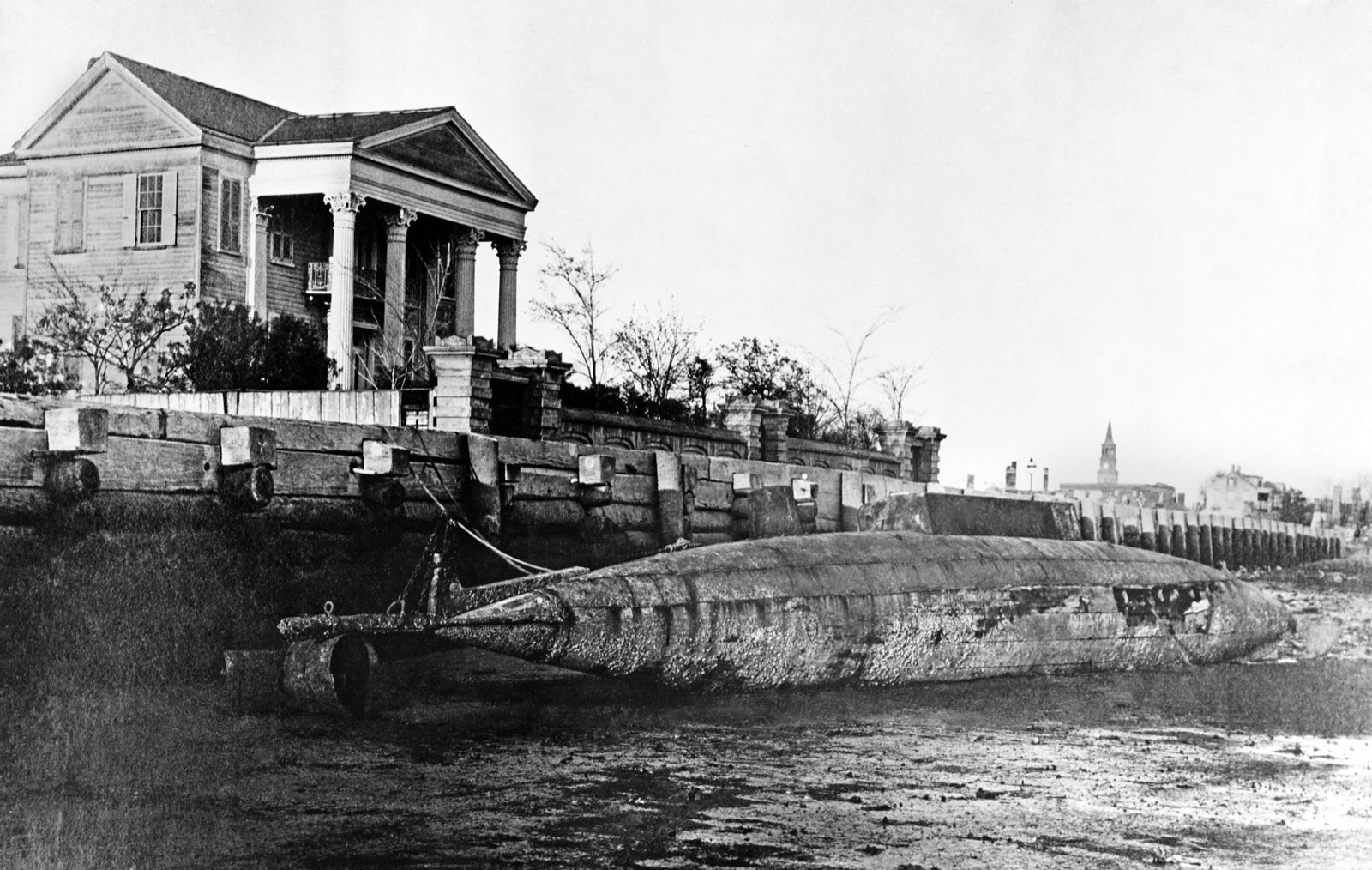
A Confederate torpedo boat hauled out on the Ashley, photographed weeks after the city fell.
Drag to compareLibrary of Congress
The David was the idea of a Charleston architect. Francis D. Lee (1826–1885) had designed churches and commercial buildings in the city before the war and had worked on the construction of Battery Wagner on Morris Island. Commissioned a captain of engineers and posted to Beauregard's staff, he turned to the problem of how a navy that did not exist might attack one that did.
His answer was the spar torpedo. Floating and towed torpedoes were unreliable and as dangerous to the attacker as the target. Lee's insight was to fix the charge on the end of a long wooden spar projecting from the bow, below the waterline, and drive it into the enemy's hull — delivering the explosion where a ship was thinnest and where its armor was not. The tactic required a vessel small enough to be missed in the dark and low enough to be hard to hit, which is what produced the David type: a cigar-shaped, steam-powered, iron-plated boat, ballasted down until only the hatch coaming and funnel showed above water, carrying a pilot and a handful of crew.
They were not submarines. They ran awash, not submerged, and that distinction cost lives — a David's own torpedo blast could and did swamp the boat that delivered it.
The first of them was a private venture, built at Charleston in 1863 by Theodore Stoney and others rather than by the Confederate navy. On the night of October 5, 1863, that boat drove a charge of some 130 pounds of powder into the side of the ironclad USS New Ironsides off Morris Island. The blast damaged the ship, nearly sank the David, and put a genuine fright into the Federal blockading squadron, which thereafter rigged booms and chains and kept steam up at night. Beauregard, who understood what he had, oversaw the building of more boats of the type.
This one is ashore in front of the John Ashe Alston house on the Chisolm Causeway, on the Ashley River side of the peninsula, where a number of the boats were found after the evacuation. The photographer was Selmar Rush Seibert; Jack Thomson dates the exposure to March 23, 1865.
The caption as printed in the book
The David was the brainchild of Charlestonian Capt. Francis D. Lee. An architect before the war, Lee had helped in the construction of Fort Wagner on Morris Island. On the staff of General Beauregard, he became interested in explosives with chemical fuses. After experimentation Lee developed a workable torpedo, then devised a vessel that would carry it through the water to its intended target: a Yankee vessel lying offshore. An iron-hulled boat, steam-powered, armored on top, manned by a pilot and several crewmen and mostly submerged, would carry the explosive on a long wooden spar mounted on the prow. Lee called the vessel a “torpedo ram,” as it would do just that: ram the explosive into the hull of an enemy ship several feet underwater, then churn backward to get away before the torpedo exploded. Beauregard oversaw the construction of several David-class torpedo rams. This one is shown ashore in front of John Ashe Alston mansion on the Chisolm Causeway into the Ashley River. Photograph was taken by Selmar Rush Seibert; Jack Thomson dates it as having been shot on March 23, 1865.
Also at Chisolm Causeway, Ashley River