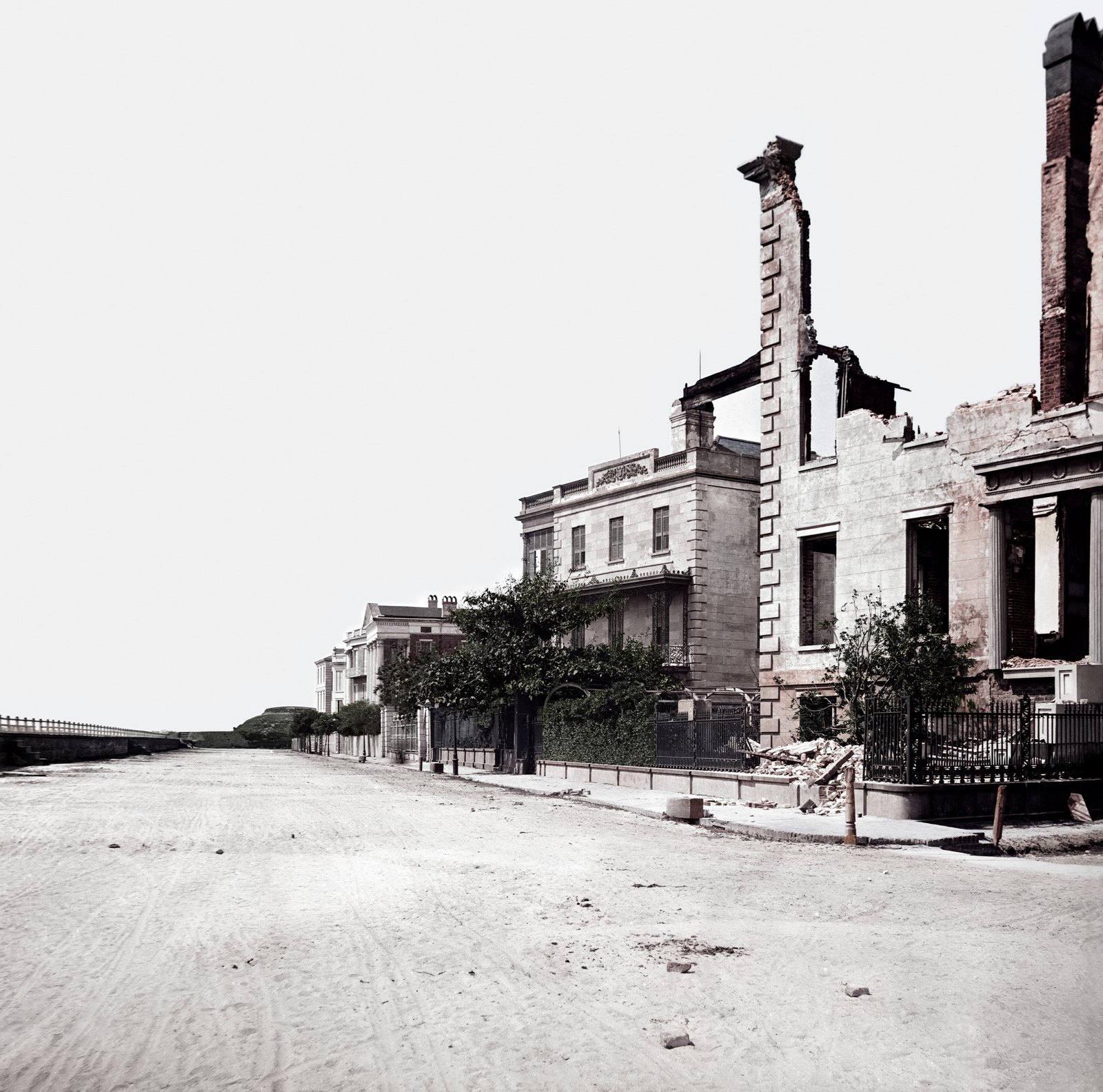
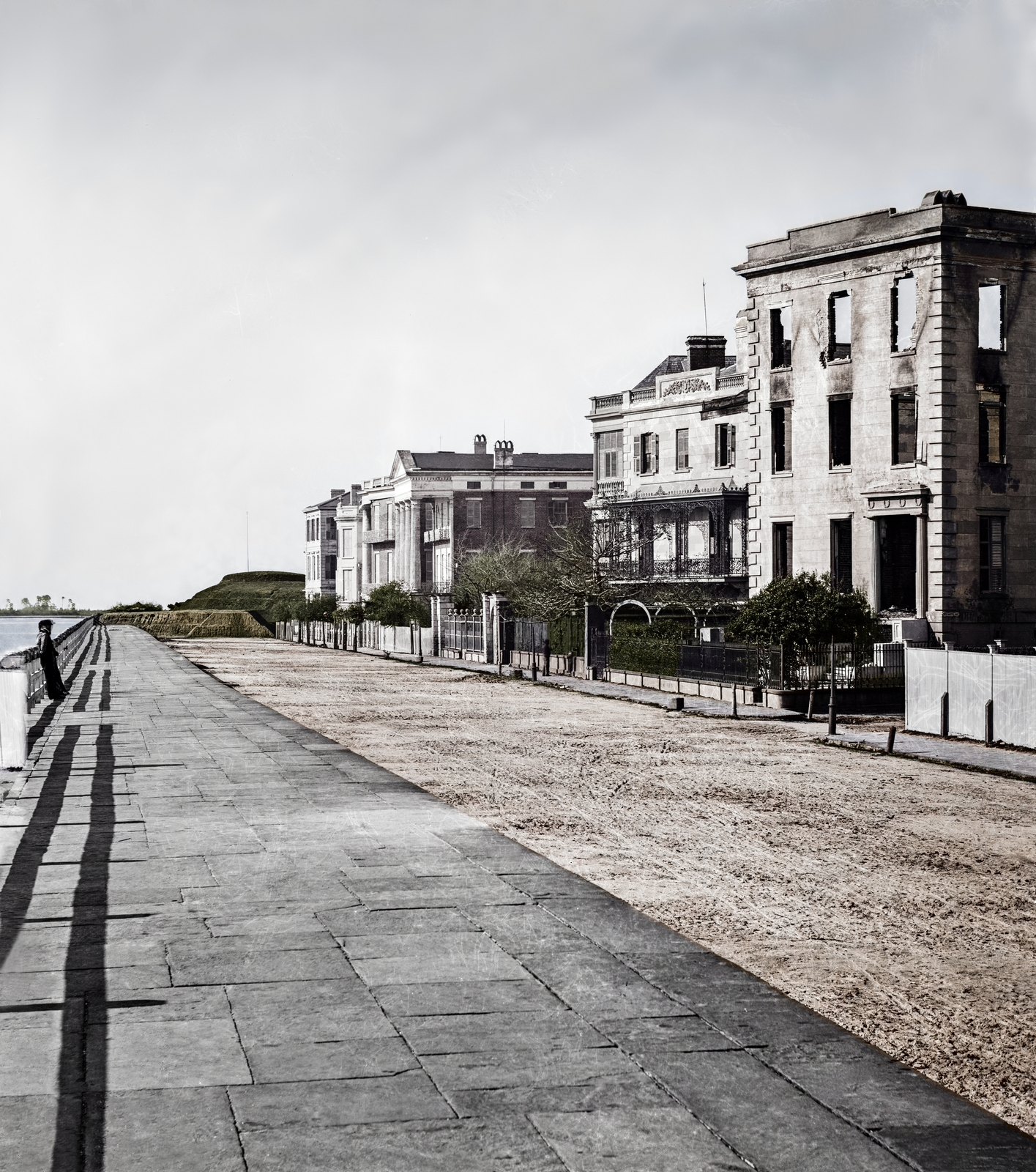
The Blakelys · Book p. 92
View on the Battery
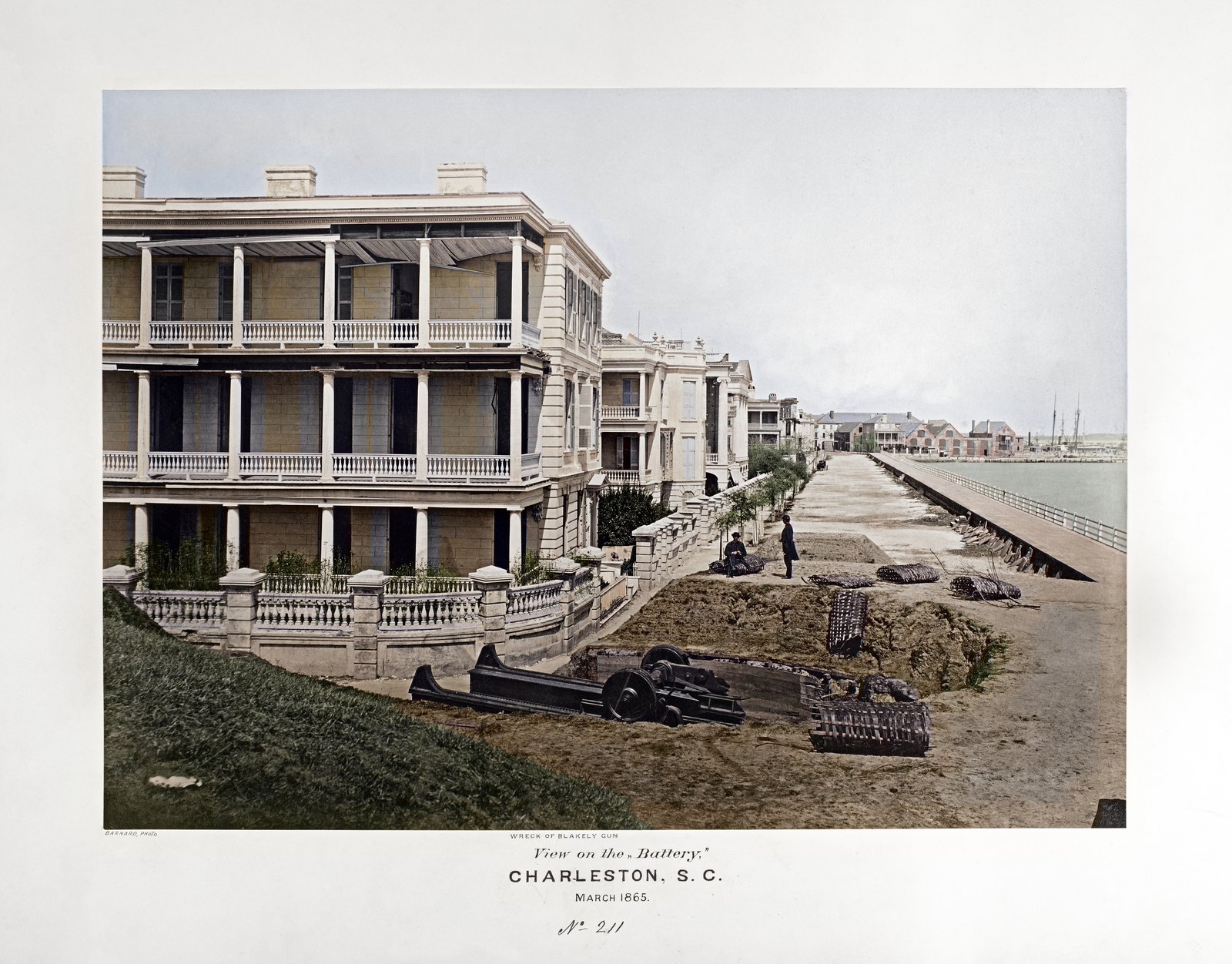
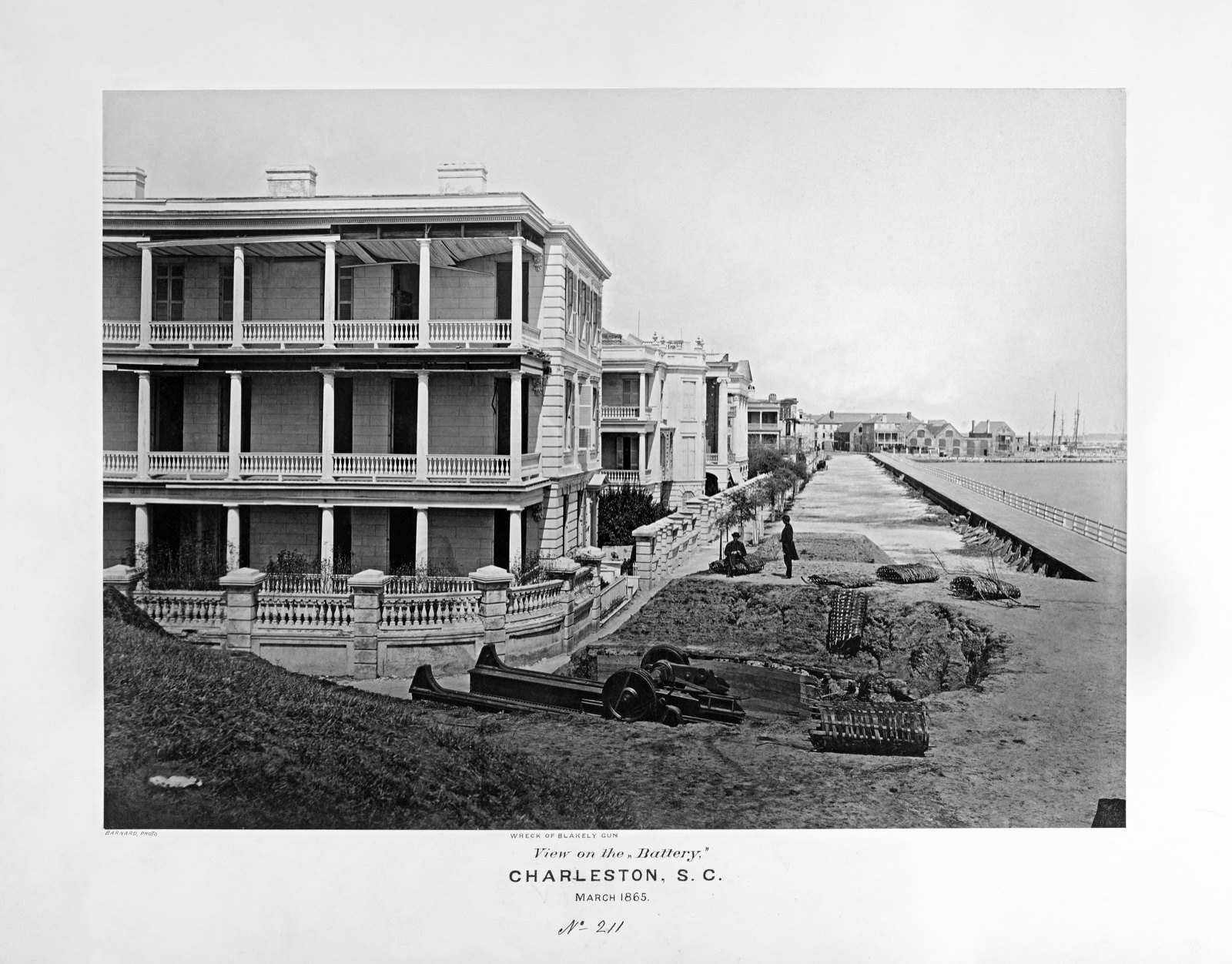
Drag to compareOrlando M. Poe Papers, Special Collections, USMA Library
This print comes from a different source than most of the Charleston views, and its provenance is worth stating. It is one of the photographs given to the United States Military Academy by the widow of Captain Orlando M. Poe, Sherman's chief engineer. In the typed list that accompanied the donation it is number 211, described as “View on ‘The Battery,’ Charleston, with wreck of the 12 inch Blakely gun.”
The list is slightly off on the caliber. The English Blakely rifles at Charleston were 12.75-inch, not 12-inch — a small discrepancy, but the kind that propagates through catalogs and secondary accounts once it is written down, and worth correcting where the original document can still be checked.
The photograph is Barnard's. It shows the Battery with the wreckage strewn along it and the Confederates' earthen parapet still in place around the gun position, not yet leveled. Keith F. Davis, who has done the closest work on Barnard's movements, places his arrival in Charleston in March 1865 and has him working there for at least several weeks.
The parapet is what dates this frame relative to the others. Comparing it against the March 14 views, part of the timber in the embrasure has been taken away here, so this exposure is the later of the two. Photographs of a wreck can often be put in sequence this way, by watching what has been carried off between one plate and the next.
The caption as printed in the book
This photograph is by George Barnard. In the typed listing of images donated by the widow of U.S. Captain Orlando M. Poe to West Point, this is No. 211, “View on ‘The Battery,’ Charleston, with wreck of the 12 inch Blakely gun.” The English imported Blakely rifle was 12.75-inch caliber. The Confederates’ earthen parapet to protect the gun had not yet been cleared away. According to historian Keith F. Davis, Barnard arrived in Charleston sometime in March 1865 and spent at least several weeks there taking photographs such as this one. This photograph was taken after March 14 (see page 89), due to the fact that part of the wood in the embrasure has been removed.
Also at The Battery