The Burnt District · Book p. 107
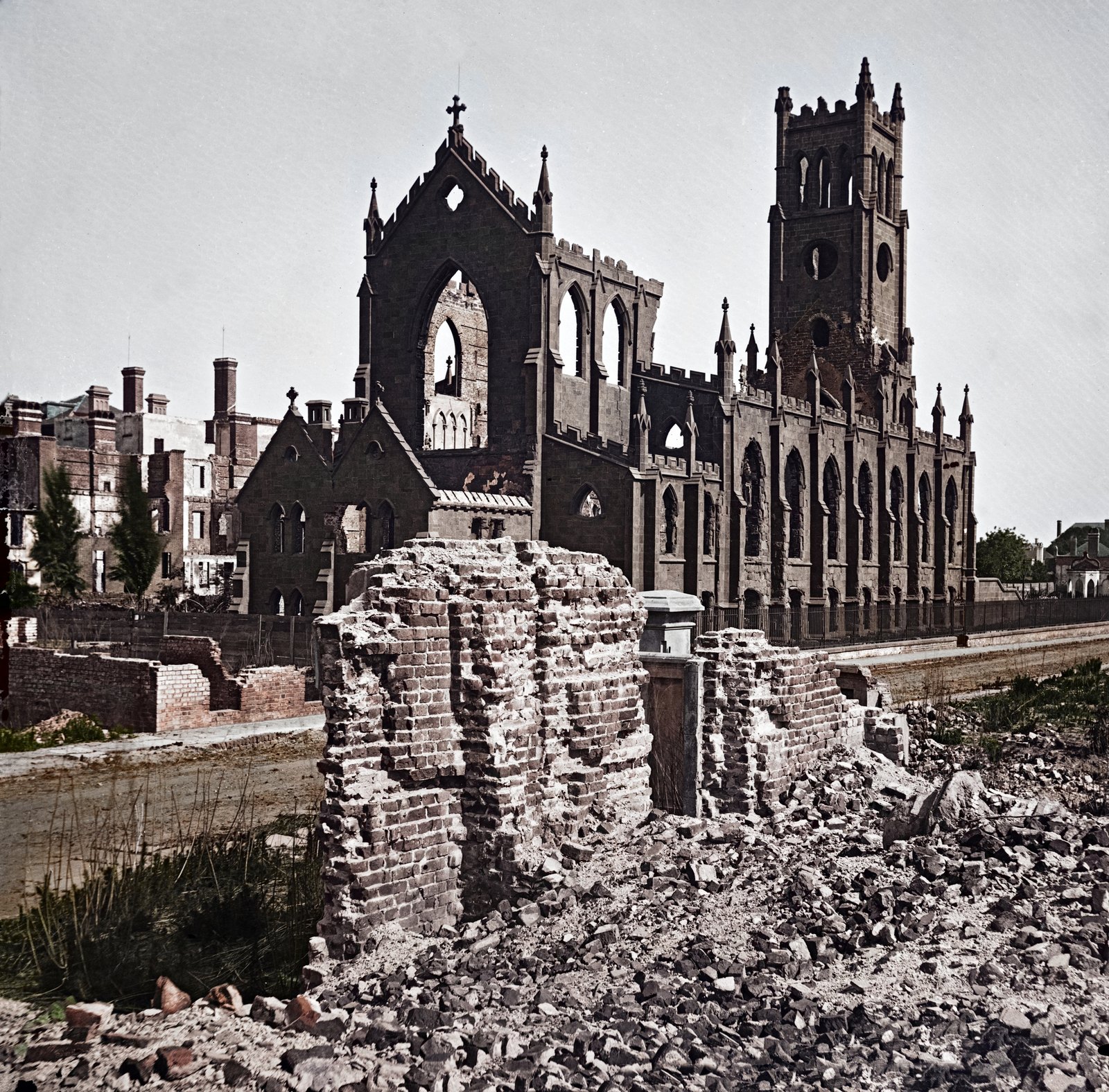
Ruins of the Cathedral (second view)
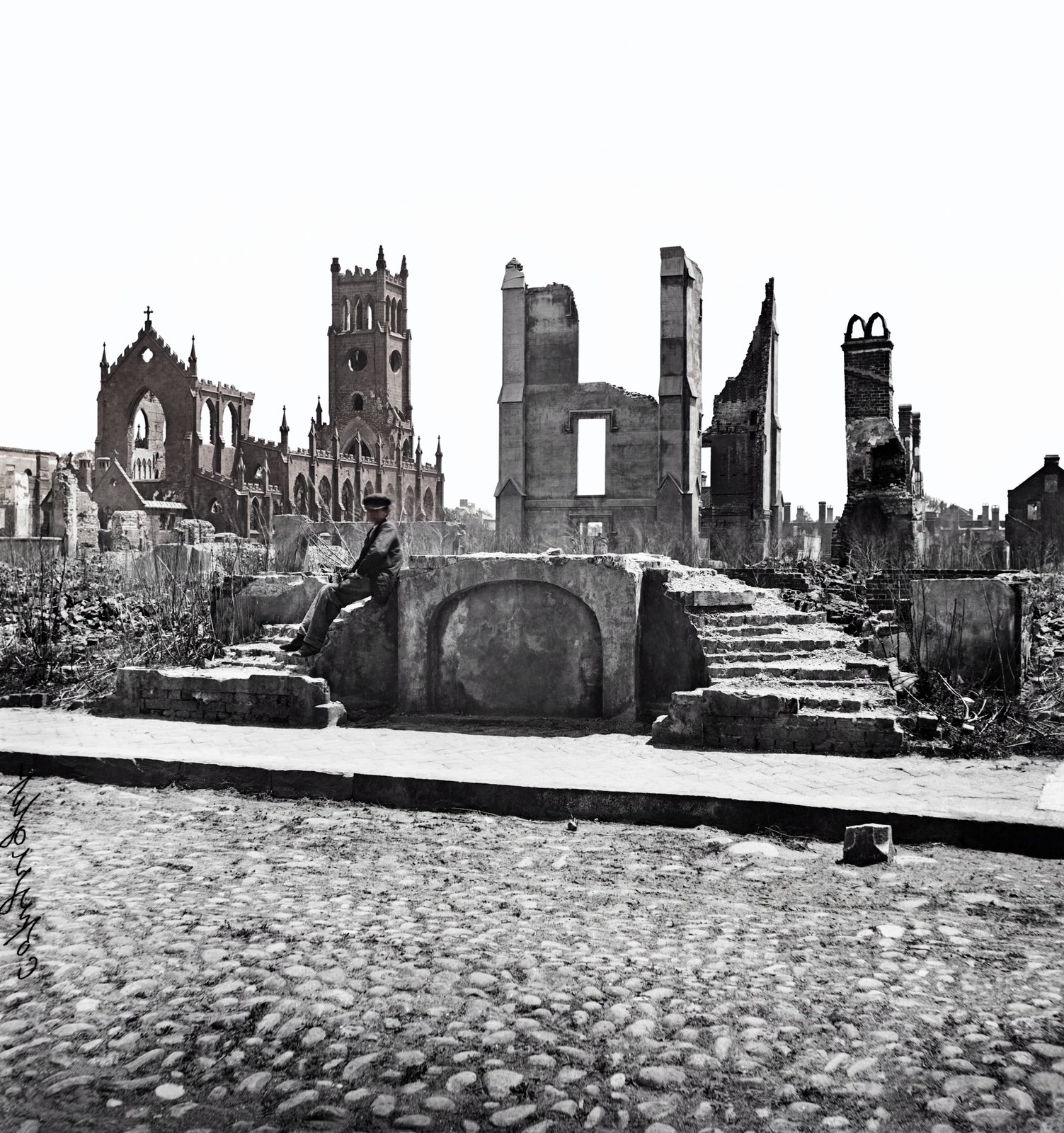
A second exposure of the Queen Street steps and the cathedral ruins beyond.
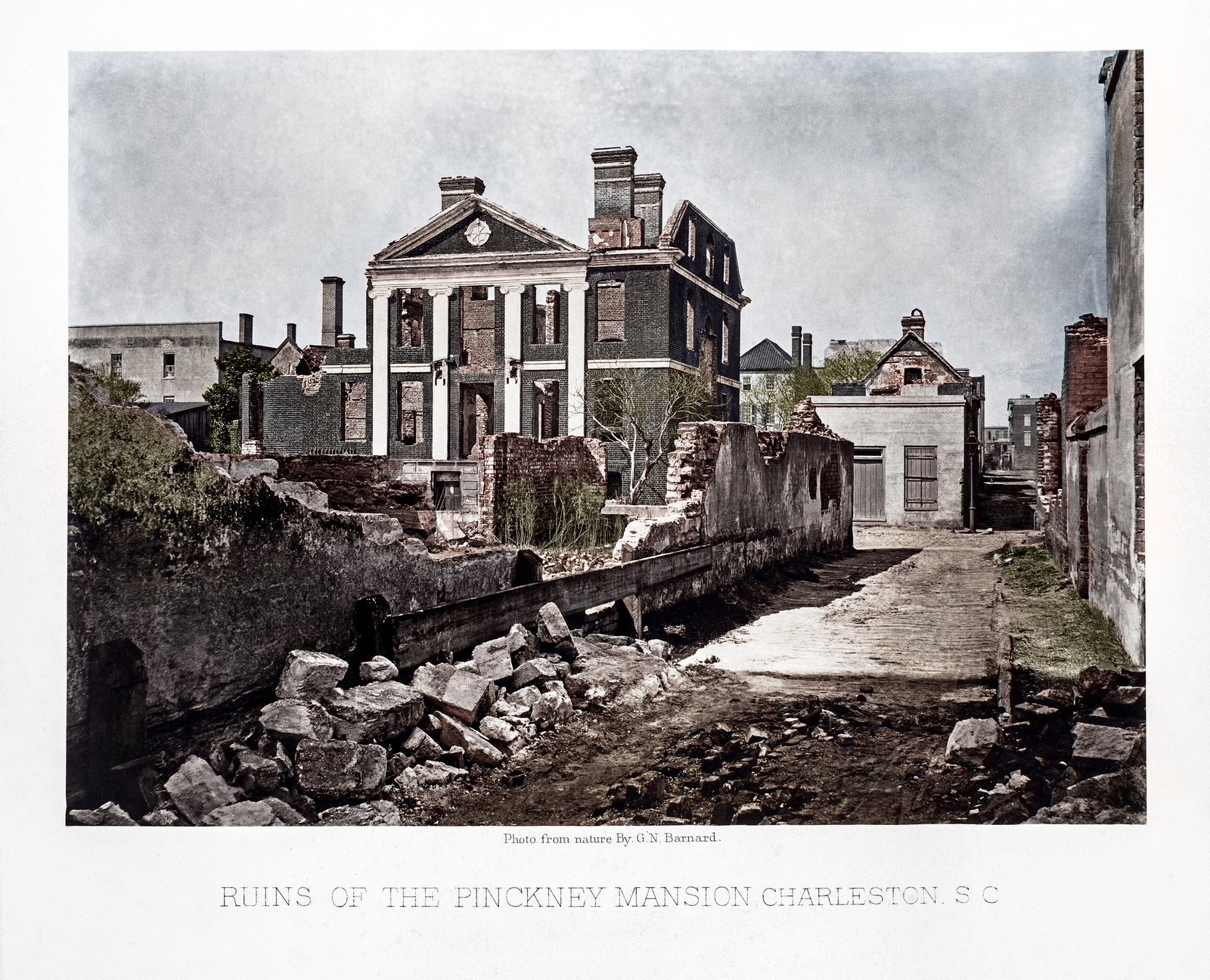
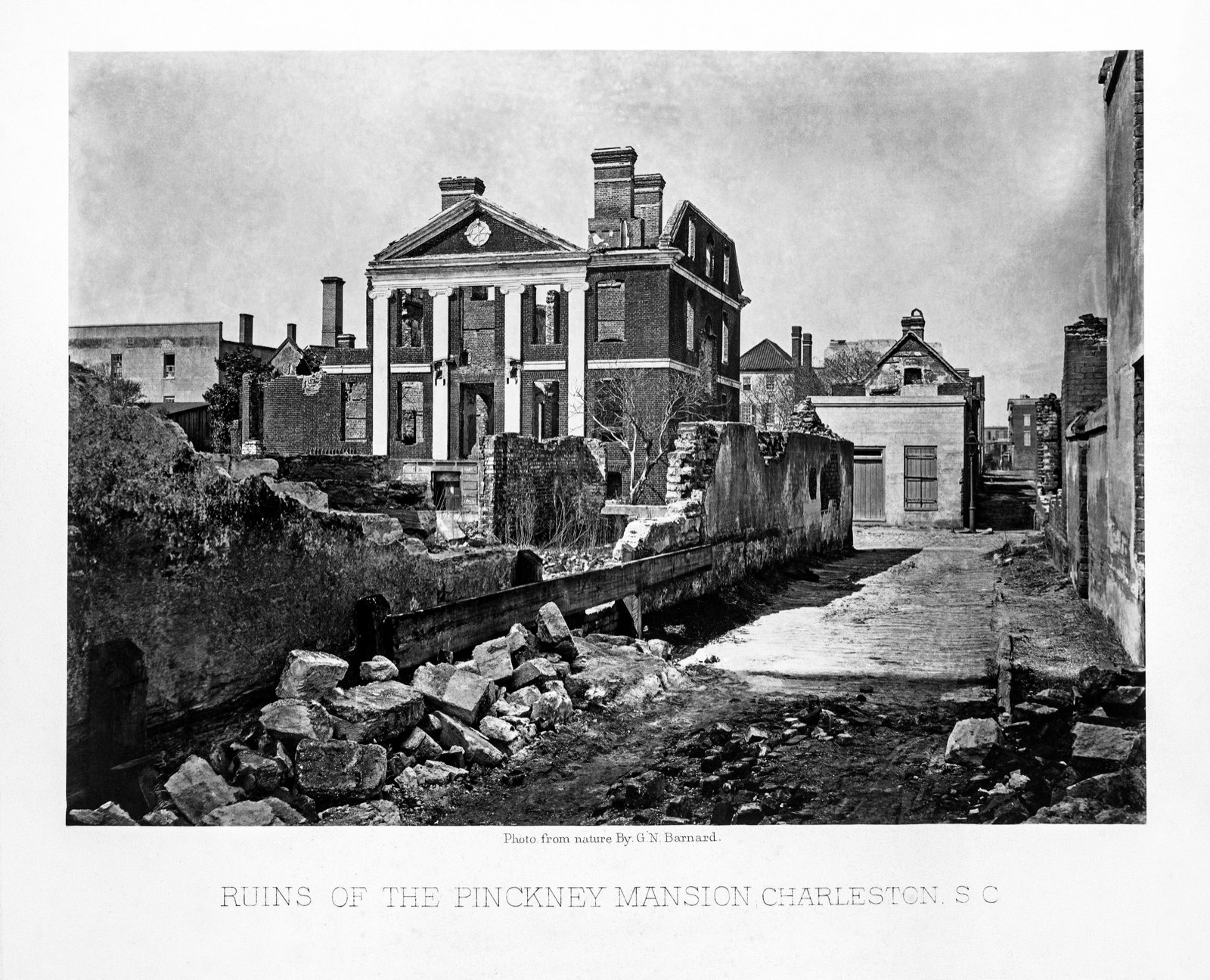
Drag to compareLibrary of Congress
A second view of the same ground: the marble steps of 91 Queen Street, and beyond them the burnt shell of the Cathedral of St. John the Baptist and St. Finbar on Friend Street.
Barnard frequently made more than one exposure of a subject, shifting the camera a little between plates. The differences between the two are worth attention — the position of the figures, the angle on the steps, how much of the cathedral wall he chose to include. These were compositional decisions, not accidents, and comparing the pair is one of the few ways to watch a Civil War photographer think.
The fire broke out on the evening of 11 December 1861 at the foot of Hasell Street near East Bay — the Mercury put it at Russell & Co.'s sash and blind factory, though others thought it was already burning in Cameron & Co.'s machine shops across the street. Driven by a hard northeast wind, it cut a diagonal swath southwest across the whole peninsula and did not stop until it reached the Ashley River below Tradd Street. It burned some 540 acres and more than a thousand buildings in a single night.
The cathedral had been finished only seven years before it burned. Reconstruction did not begin until 1890 and was not completed until 1907; the spire the original design called for was not added until 2010, a hundred and forty-nine years after the fire took the first one.
The caption as printed in the book
The marble steps here, looking south across Queen Street near its corner with Friend Street, once led to a fine wooden house, 91 Queen. Now they lead to nowhere. To the left are the ruins of St. Finbar’s Catholic Cathedral on Friend Street. This area had been swept clear by the Great Fire. Emma Holmes observed, “the whole of Friend St, from Queen, was burnt, including the very large new Public School, nearly to Tradd,” a distance of three blocks. Included in that stretch was the city’s free public school; it had just been built in 1859.
Also at Cathedral of St. John the Baptist and St. Finbar