The Burnt District · Book p. 117
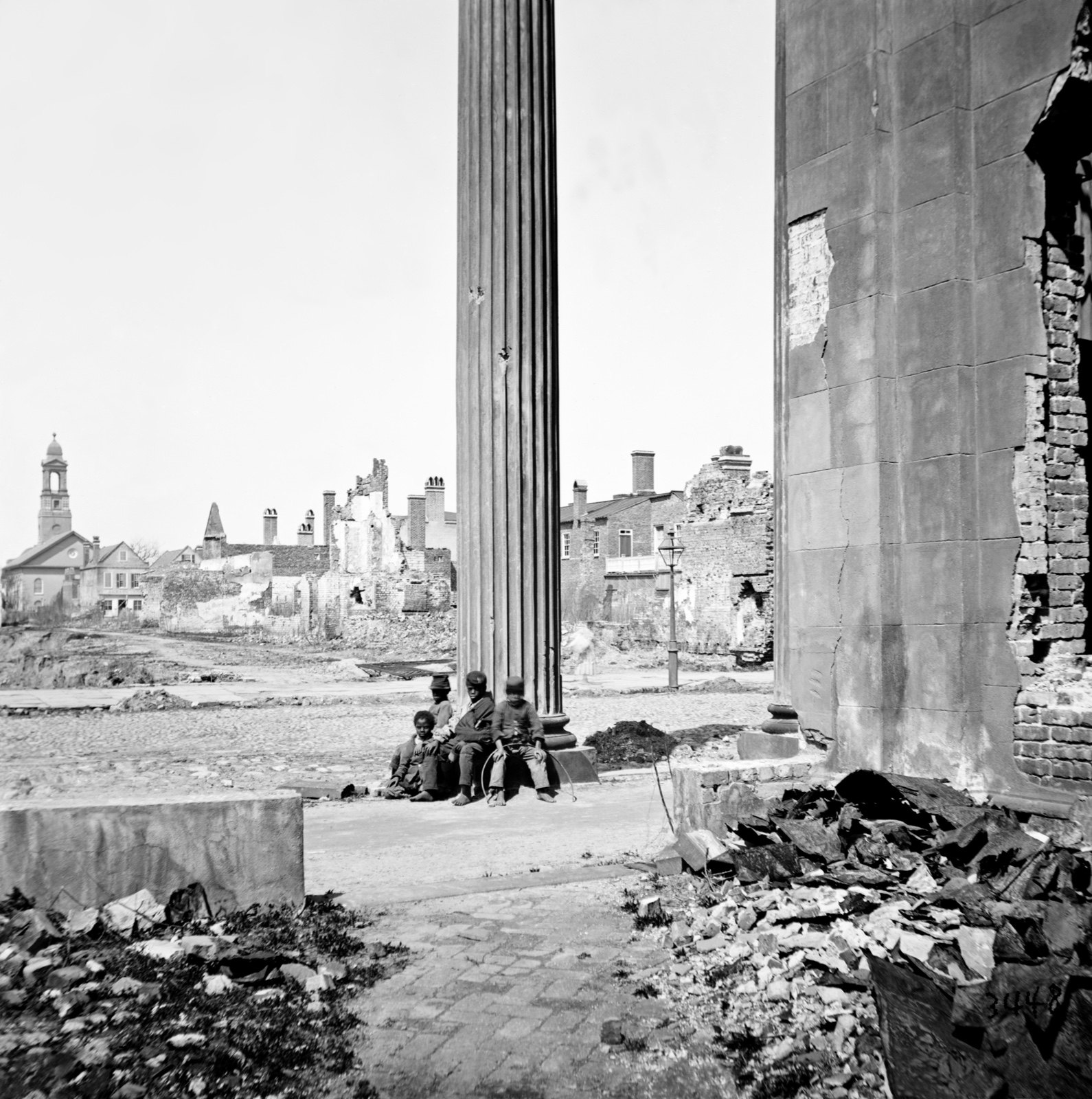
Ruined Buildings from Circular Church
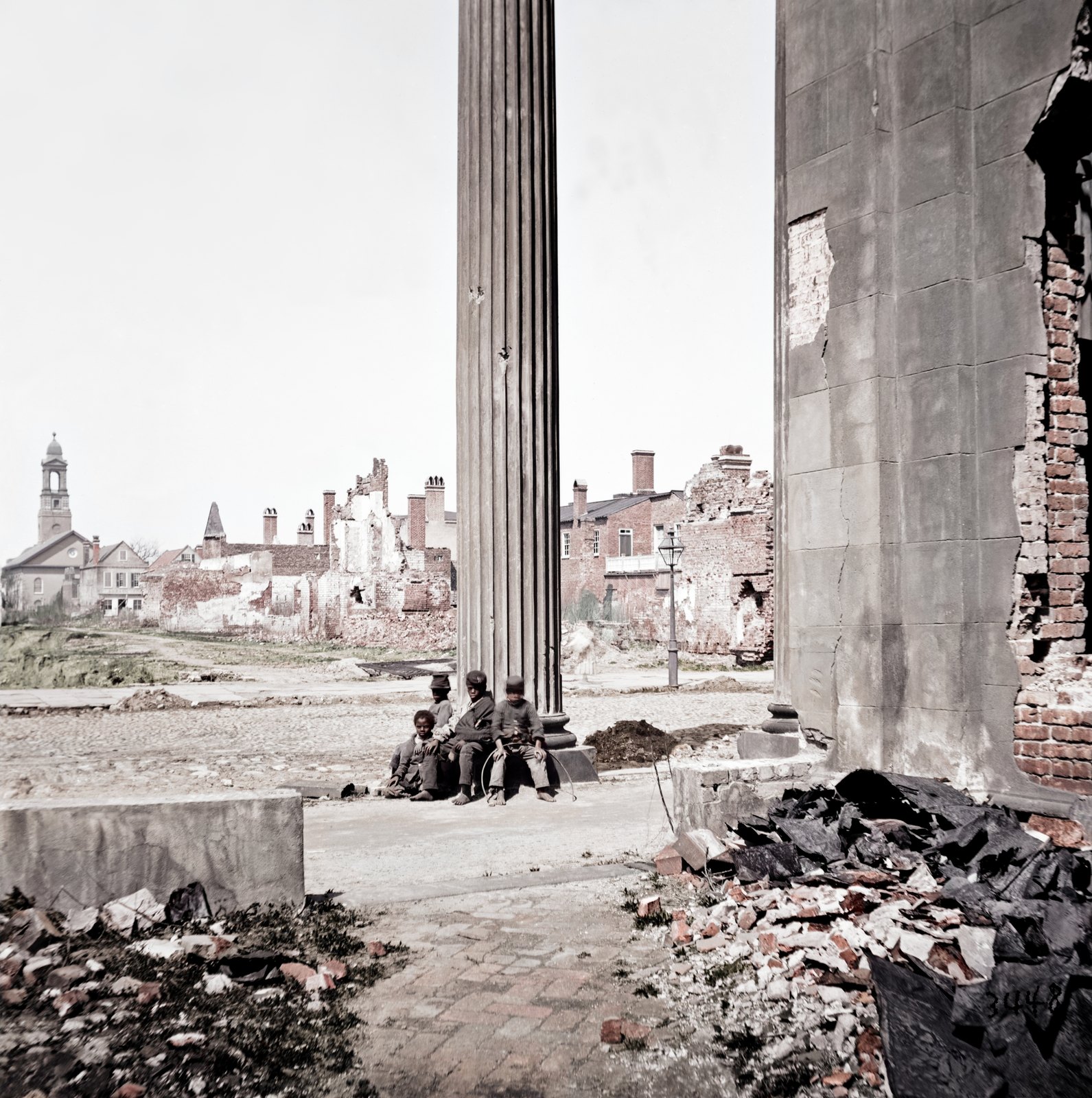
Barnard shoots past a surviving column of the Circular Church — and four boys stop for him.
Drag to compareLibrary of Congress
In March 1865 George Barnard set his camera behind one of the columns that had carried the portico of the Circular Congregational Church, and used it to frame the ruins beyond. The column was all that was left of the front of the building.
The church was among the oldest institutions in the city — the congregation dates from 1681 — and the building the fire took had been designed by Robert Mills, the Charleston architect who later gave the country the Washington Monument. Mills's church was round, which is where the name comes from, and fronted by a portico of six columns under a pediment. The fire of December 1861 left only the brick walls standing. They stayed up for twenty-five years, until the earthquake of 1886 made them dangerous, and the congregation finally rebuilt in 1890–92 — a new church in Richardsonian Romanesque, faced with brick salvaged from Mills's building. It stands at 150 Meeting Street today.
But the photograph is not really about the column. Look at the four Black boys at the center of it. The one on the right is holding a hoop. They were almost certainly playing in the street when Barnard called them over and asked them to sit. Three of them held still for the exposure; the boy with the hoop moved, and his face and upper body are blurred.
Barnard composed carefully and thought hard about what his pictures were saying. The historian Megan Kate Nelson reads a redemptive narrative in this one — the destruction of the war on one side of the frame and, at its center, four young African Americans newly free, with everything still in front of them.
It is worth noting what Barnard did not say. These ruins are from the fire of 1861, not from the Federal bombardment, and he never corrected the impression that Northern shells had made them. The photograph does honest work and carries a quiet untruth at the same time, and both are part of what it is.
The caption as printed in the book
In March 1865, George Barnard aimed his camera past a column that supported the portico of the Circular Congregational Church before the edifice was destroyed by the Great Fire of 1861. But look at the four black boys at the center of the picture. The one on the right holds a hoop. Were they playing in the street when Barnard might have hailed them to sit for his camera? Three dutifully sat still while Barnard exposed his glass plate; the hoop-holder moved slightly, so his face and upper torso are blurred. George Barnard thought a lot about his pictorial compositions. Looking at this photograph, historian Megan Kate Nelson sees “a redemptive narrative:” war’s destruction (Barnard didn’t mention that these ruins were from the fire, not the Union bombardment of 1863–65), plus its promise, as embodied by four young African Americans, newly emancipated, but with their futures very much ahead of them.
Also at Circular Congregational Church